
Updated: January 2026
Portuguese Caminos: routes, variations and what to expect
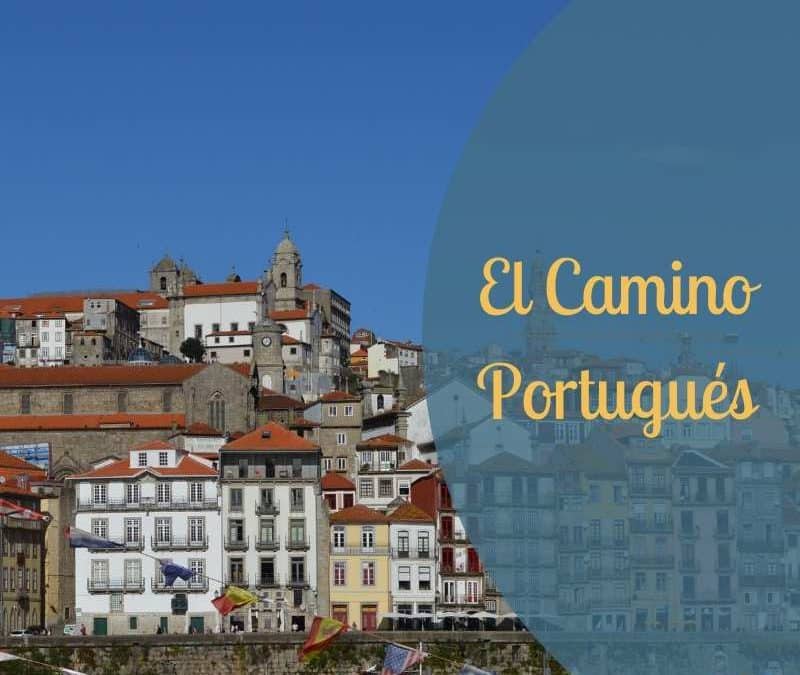
For the second Camino in this series I’ve chosen el Camino Portugués (Portuguese Way). It’s the second most popular route to Santiago de Compostela, after the Camino Francés. It also happens to pass through the area where I live.
As the name suggests, the Camino Portugués starts in Portugal and leads pilgrims north towards Santiago de Compostela. But there isn’t just one route from Portugal to Santiago.
Main routes in Portugal
- The best known, more traditional one is the central route. The most popular starting point for the Camino Central Portugués is Porto (Oporto in Spanish), which is 240 km from Santiago. You will need around 10-12 days to complete it, walking about 25 km per day.
You can also start your pilgrimage from the Portuguese capital, Lisbon (Lisboa in Spanish), which is further south. In this case, you will have to cover a distance of around 600 km. You will need approximately 25 days to complete it.
The pilgrim infrastructure from Lisbon is not as good as from Porto, so you may need to plan a bit more and possible have some longer days.
- If you decide to start from Lisboa, you could also take el Camino Portugués interior once you reach Coimbra. This route will take you through the Portuguese towns of Viseu, Vila Real and Chaves. Once you enter Galicia the Camino Portugués interior joins the Vía de la Plata.
- After Oporto, you have two options too: you can continue on the central route through Barcelos, Ponte de Lima and Valença. Or you can take the Camino Portugués por la costa (coastal route). The coastal route is becoming more and more popular in recent years.
Because Portugal and Spain belong to the European Union and the Schengen Area, there is free movement of people between the two countries. In practice, this means there are no border checkpoints or passport controls when you cross from Portugal into Spain on the Camino.
Central Camino Portugués in Spain
If you follow the central route, these are some of the most important towns you’ll pass through in Galicia:
Tui will be the first Spanish town you will encounter after crossing the bridge over the river Miño, which serves as a natural border between both countries.
- Tui. The first Spanish town after crossing the bridge over the river Miño, which form the natural border between Spain and Portugal. Tui was a key town in medieval times and its historic centre still has many buildings dating back to 15-16th centuries, including its cathedral. More info on Tui here.
- O Porriño. Located at the centre of an important industrial area and known internationally as one of the world’s biggest granite producers.
- Redondela. This is where the central and coastal routes converge.
- Arcade. A small coastal town famous for its oysters. Every year, at the beginning of April, Arcade celebrates a popular oyster festival.
- Pontevedra. One of the most important historical centres in Galicia, after Santiago de Compostela. Most of the city centre has been pedestrianised and Pontevedra has received international recognition, including the UN Habitat Award and the Active Design Award.
Pontevedra is also the starting point of the last of the route variations on el Camino Portugués: the Spiritual Variant or Variante Espiritual, which includes a boat ride and rejoins the central route in Padrón.
- Caldas de Reis. Well-known for its thermal waters. Your legs will feel like new after soaking in them for a while.
- Padrón. Famous for the Padrón peppers. If you haven’t heard about them yet, don’t worry! I’m sure you will get the chance to try them on your Camino.
For more details on these stages of the Camino Portugués in Spain:
Coastal route of the Camino Portugués
There’s no bridge on the coastal route to cross from Portugal to Spain. You’ll have to take a boat from Caminha to A Guarda.
A Guarda is a fishing town with lots to see and do… and amazing seafood! More info in this other post.
From A Guarda, you will continue along the coast through Oia and Baiona towards Vigo, which is the biggest Spanish town on this Camino. After Vigo, the coastal route joins the central route in Redondela.
There is also a variation of this coastal route, going from Caminha to Valença, along the river Minho. After Valença you then continue on to Tui, on the central route.
Tui is a very popular starting point if you don’t have so muh time. It’s about 119 km from Santiago, enough to get a Compostela and easily done in less than a week.
On the coastal route, Vigo and Baiona are both quite popular too.
**Heads up: Regardless of the route you choose, you should know that Spain and Portugal are on different time zones. Once you cross over to Spain, you will be one hour ahead.
Today’s Spanish words
Camino Portugués
Lisboa
Oporto
Central
Interior
Por la costa
A Guarda
Vigo
Tui
Porriño
Redondela
Arcade
Pontevedra
Caldas de Reis
Padrón
Variante espiritual
Want more?
Make sure you don’t miss any posts or announcements by subscribing for free here. You’ll receive a free Spanish vocabulary guide with your first Spanish words + cultural tips. And… you’ll get access to exclusive content too.

