
La Semana Santa (Holy Week) is one of the main religious celebrations in Spain. Unlike la Navidad (or other holidays, religious or not), it doesn’t have fixed dates. Instead, la Semana Santa is celebrated on the Sunday after the first full moon of spring, which could be anytime March 22 and April 25.
Each Spanish region, or even town, has its own particular Easter customs. But they all have some elements in common:
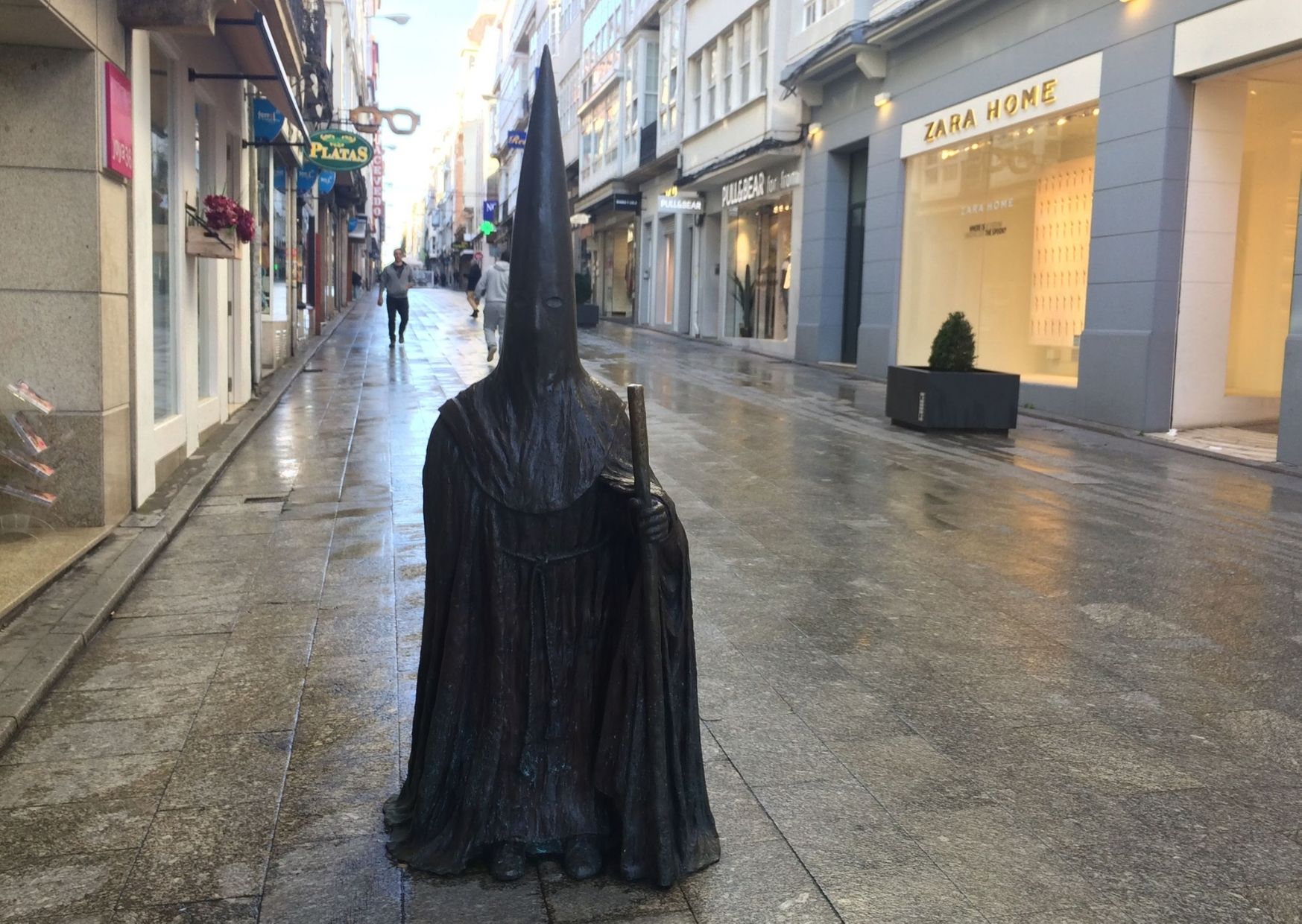
- One of the most characteristic features of la Semana Santa is procesiones (processions).
- Cofradías (brotherhoods) are religious groups devoted to Jesus Christ or Mary. Among other things, they carry out charity work throughout the year. During Easter, they take their pasos out in a procesión.
- Pasos are large floats with religious statues of Jesus or Mary, lavishly decorated with flowers and candles. The members of the cofradía carry these pasos on their shoulders.
Many cofradías date back to the Middle Ages and they have owned and cared for their pasos for centuries.
The best known and intense Easter celebration in Spain takes place in Sevilla, starting point for the Vía de la Plata. There are more than 70 cofradías in Sevilla. Each brings out their own paso out in a processions, which means there are around 70 different processions between the Friday before Palm Sunday and Easter Sunday.
On the Camino Francés, we can highlight El Encuentro, in León, the solemn moment when the pasos of Saint John and La Dolorosa meet in Plaza Mayor.
So, what happens during Semana Santa?
- Celebrations begin on Domingo de Ramos (Palm Sunday). There’s a procesión reenacting the arrival of Jesus in Jerusalem. People carry a palm or olive branch to be blessed.
- Although there are procesiones all week, the most important ones take place on Jueves Santo (Maundy Thursday) and Viernes Santo (Good Friday).
Viernes Santo is a national holiday). Jueves Santo is not a holiday nationwide, it is in most regions. Make sure you plan your shopping ahead.
- Domingo de Resurrección (Easter Sunday). The procesiones on this day are less solemn and more festive than those on Thursday and Friday, as people celebrate Jesus’ resurrection.
- Lunes de Pascua (Easter Monday) is the last day of Easter. It is a public holiday in some regions, including Navarra, on the Camino Francés. So keep it in mind if you are in that area.
If you prefer to listen in Spanish, check the podcast.
Easter food
But not all is about procesiones. Most Spanish people get at least a few days off work, so many use this opportunity to travel and enjoy their holidays. And, of course, food is part of the enjoyment.
There are several Easter treats that may tempt you; they vary from one region to another, but there is one you will find everywhere during Semana Santa: torrijas.
Torrijas are similar to French toast. They were traditionally made with leftover stale bread. You slice the bread, soak it in milk and egg and fry it in olive oil. You then sprinkle it with sugar and cinnamon.
So, if you are in Spain doing your Camino during Semana Santa, I would advise you to take some time off and enjoy the celebrations. You don’t have to be religious to appreciate the culture, the art, the music… all that Easter involves.
In this other podcast episode 2 guests share how they celebrate Easter in their regions:
Today’s Spanish vocabulary
Semana Santa
Cofradía
Procesión
Paso
Domingo de Ramos
Jueves Santo
Viernes Santo
Domingo de Resurrección
Lunes de Pascua
Vía de la Plata
Sevilla
Torrijas
¡Buen Camino!
Want more?
Make sure you don’t miss any posts or announcements by subscribing for free here. You’ll receive a free Spanish vocabulary guide with your first Spanish words + cultural tips. And… you’ll get access to exclusive content too.

