
Updated: January 2026
The Spiritual Variant of the Camino Portugués
When I wrote about the Camino Portugués, I mentioned the Variante Espiritual. This alternative route starts from Pontevedra and takes you to Padrón, where it joins the traditional Portuguese route.
The Variante Espiritual is a very recent route. It was created around 10 years ago, connecting places that were historically related to the Camino.
- The initial part of the Variante Espiritual is based on the pilgrimage taken by Padre Sarmiento in 1745. Fray Martín Sarmiento, or Padre Sarmiento, was a Spanish scholar and monk. He wrote on a variety of subjects, including his pilgrimage to Santiago de Compostela. In his record of this pilgrimage he mentions some of the places along the Variante Espiritual.
- The third stage follows the same route as the remains of St. James on arrival to Galicia, across the Ría de Arousa and up the river Ulla.
Where does the Spiritual Variant start?
The starting point for the Variante Espiritual is a couple of km outside of Pontevedra and it’s clearly marked with two big signs.
However, if want to be elligible to receive a Compostela, you must start walking at least in Porriño (central route) or Vigo (coastal route). Pontevedra does not meet the distance requirements for a Compostela.

At this point, you can decide to go right under the bridge and follow the traditional Camino Portugués. Or you can go left and follow the Variante Espiritual.

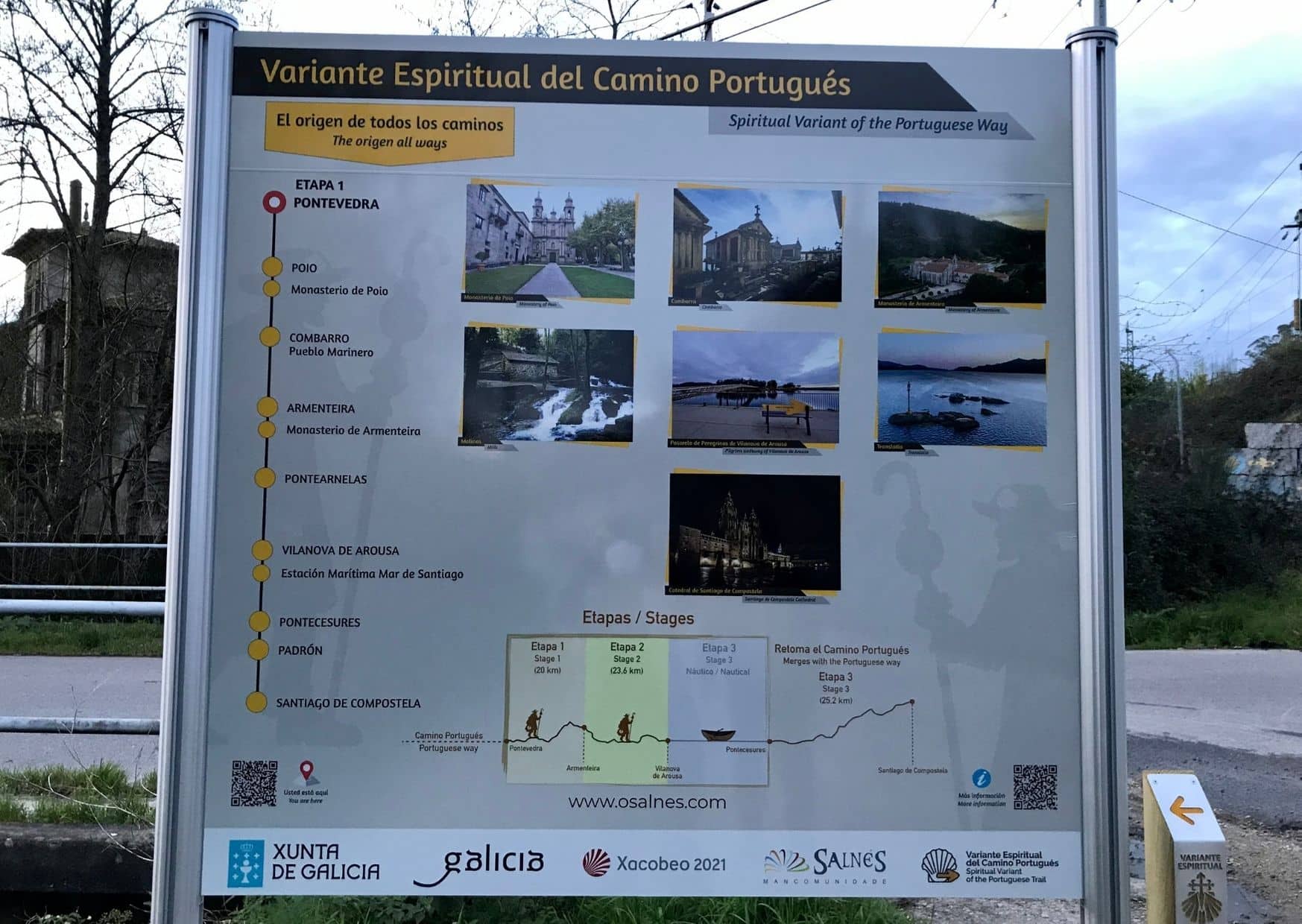
Go left to follow the Spiritual Variant route.
I walk up to this point frequently on my daily walks, but I’ve also kept walking to Santiago.
Leaving Pontevedra
After you leave Pontevedra, you walk through rural areas until you reach the monasterio (monastery) in Poio. You can actually spend the night there, since they have an area for guests. For more info, you can check their website: http://monasteriodepoio.es.
After Poio, you go down to sea level and walk a stretch along the coast of the Ría de Pontevedra before you reach Combarro.
There is a couple of small sections on the main road, but there is plenty of space to walk.
Combarro
Combarro is a beautiful fishing town, famous for its hórreos (granary), a typical Galician construction. Hórreos are used to store grain; they are raised from the ground by pillars ended in flat stones that prevent access by rodents. They are made of stone or a combination of stone and wood.

You enter Combarro through the beach

One of the many hórreos you will see
Armenteira and the Ruta da Pedra e da Auga
After Combarro, you’ll be climbing most of the way to Armenteira. The first section is the steepest, but the views over the ría compensate for it. So, remember to look back every now and then.
There are not many accommodation options in Armenteira. There’s a monasterio, where you could stay More info on their website: https://www.monasteriodearmenteira.es/ There’s an albergue too. As for food, there are a couple of bars next to the monastery.

View of the ría
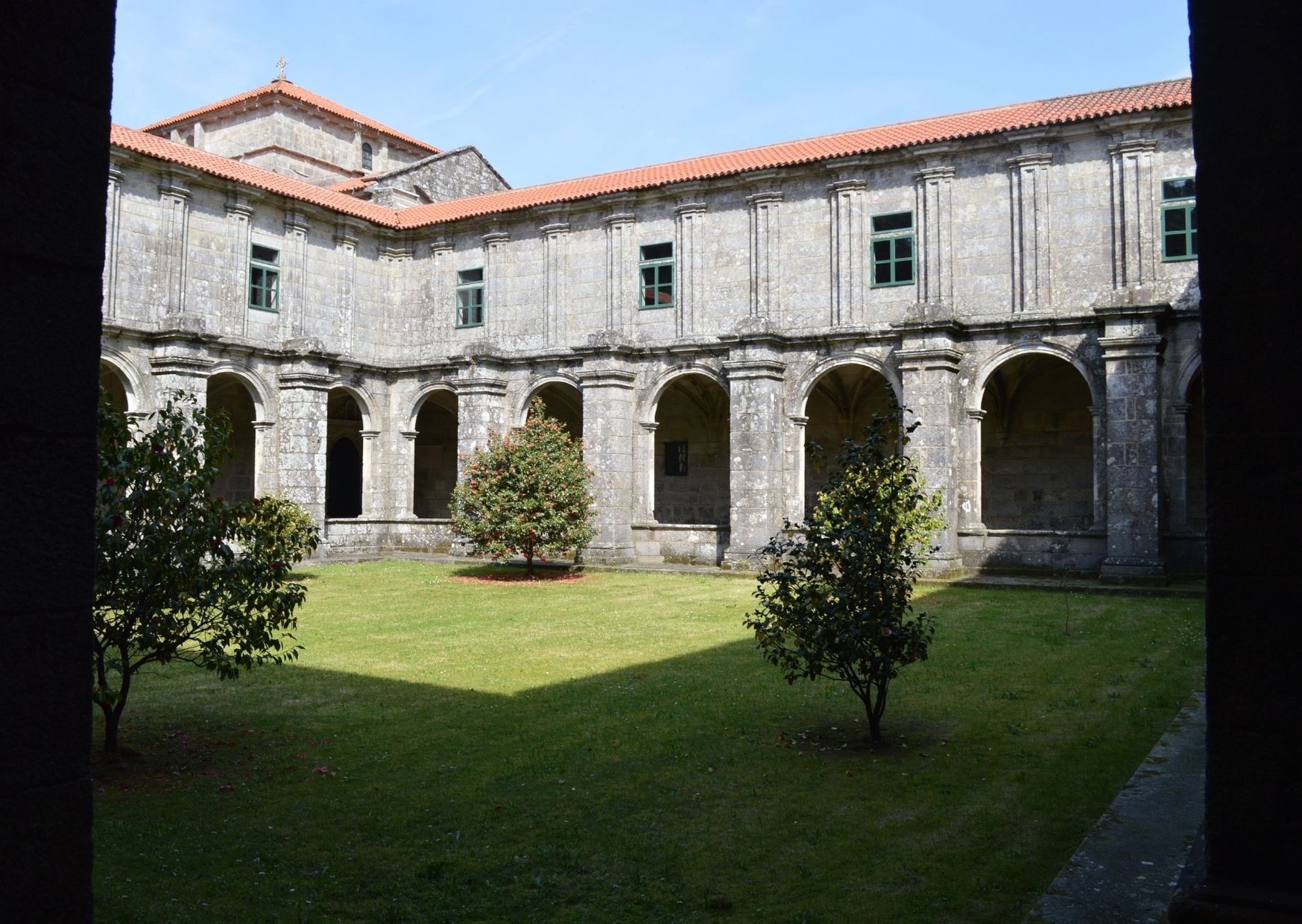
Monasterio de Armenteira
Ruta da Pedra e da Auga
The section after Armenteira is one of great natural beauty. It’s called Ruta da Pedra e da Auga (route of stone and water) and it goes along a river where you can see the remains of many old water mills.
It’s very popular with the locals, so it might be busy during weekends and holidays.
There’s a picnic area at the end of this route, and a café a few meters down the road.
After that, there’s a very pleasant walk along the river Umia.
This area up to Vilanova de Arousa is known for its vineyards; it’s where the albariño wine comes from.
Vilanova is another lovely fishing town, and the place of birth of Spanish writer Valle-Inclán. There’s a statue of him sitting on a bench in Santiago’s Alameda. You’ll find many references to him in Vilanova. You could even visit his home, which has been turned into a museum.
The Armenteira monastery inspired one of his books. Years later, Valle-Inclán’s son instigated the reconstruction of the monastery.
The boat trip to Padrón
Once in Vilanova de Arousa, you have 2 options:
- You can take a boat to Pontecesures, right beside Padrón.
- Alternatively, you can walk a 28km stage.
Most people take the boat. It takes about an hour during which you’ll see the only maritime Via Crucis in the world, 17 stone crosses identifying the way followed by St. James’s remains.
There are at least 2 boat companies covering this route. It’s advisable to contact them in advance. During busy periods, you might need to book your tickets a few days before your trip. During the low season, boats might not run if they don’t get a minimum number of passengers.
If you decide to walk, be aware that it’s a long stage. There are some beautiful sections, but there is also a lot of walking on asphalt or next to the train tracks.
Whatever you decide, after this stage, you join the traditional Camino Portugués in Padrón.
The route is well marked. I walked it with no apps or maps, simply following the yellow arrows and didn’t have any issues.
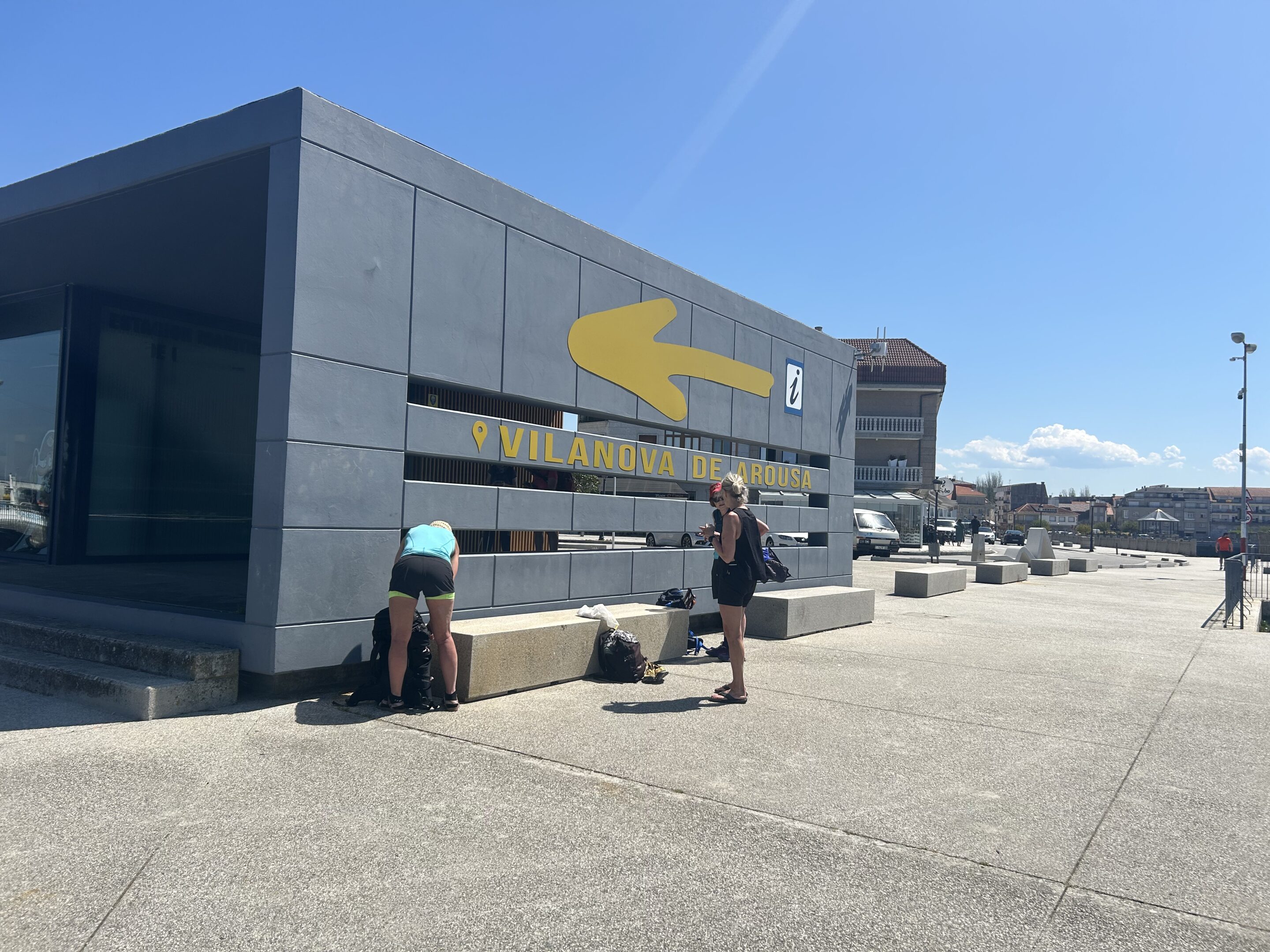
This is where you take the boat to Pontecesures
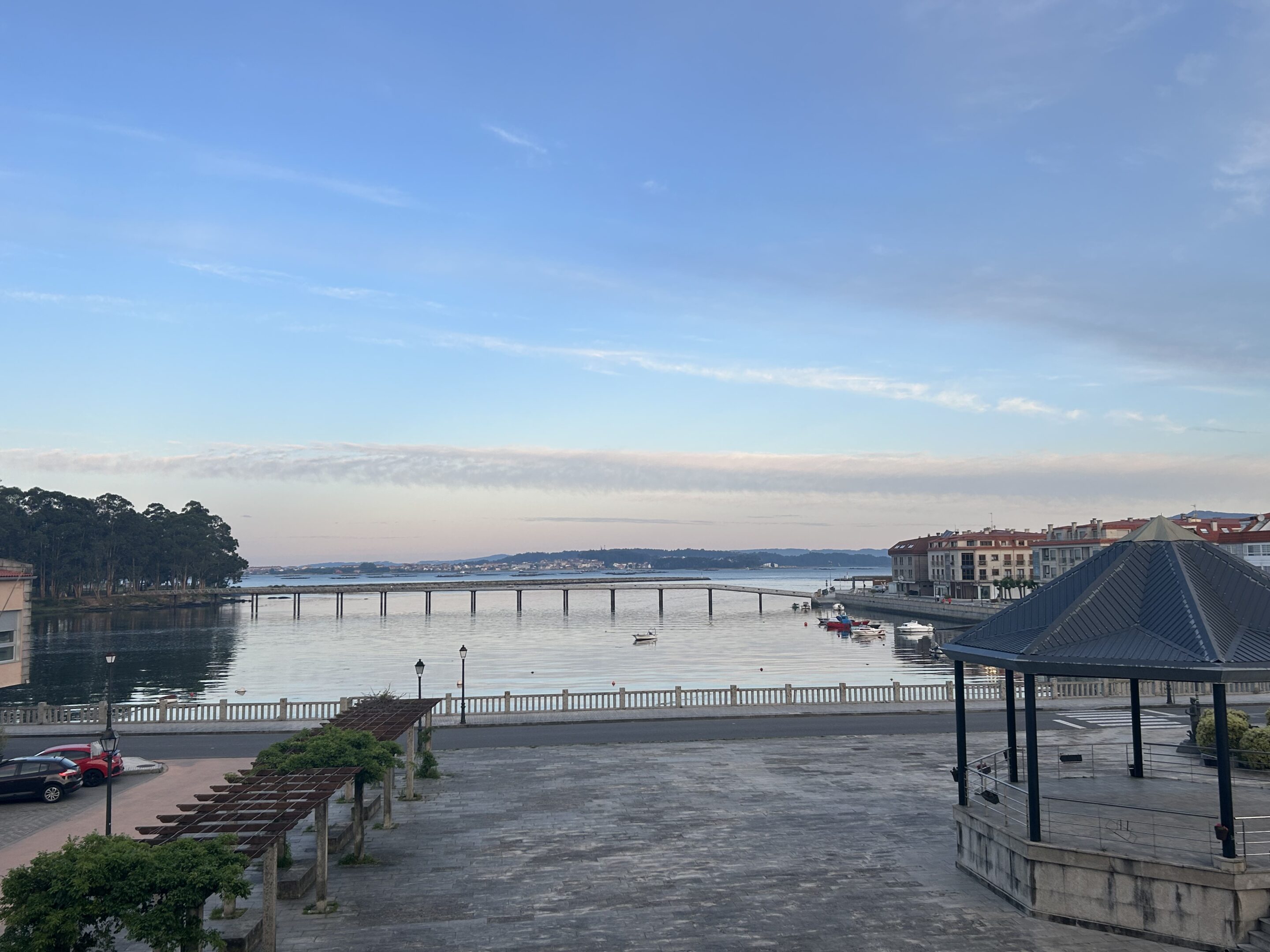
Vilanova de Arousa
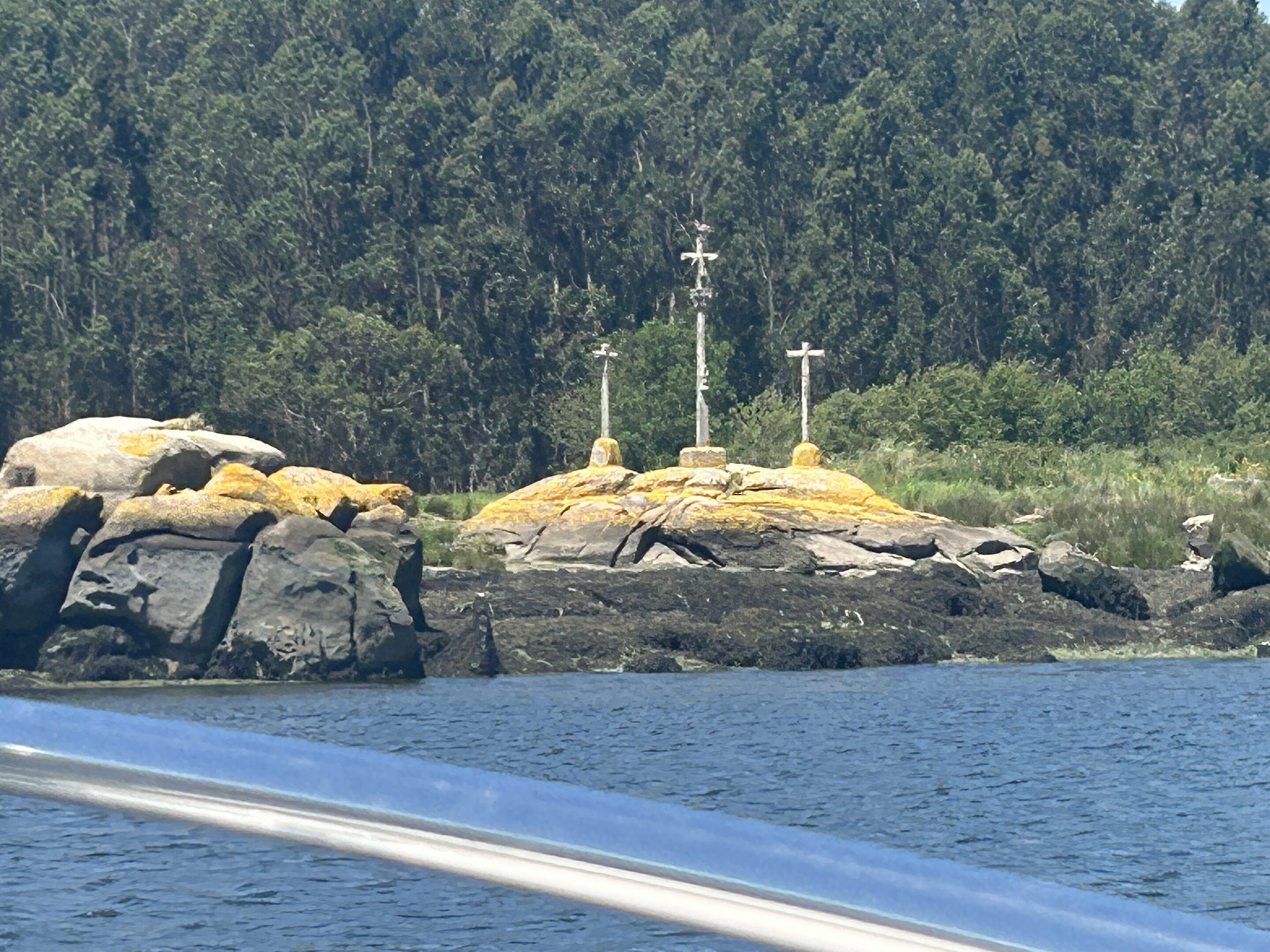
Some of the crosses you’ll see from the boat
Today’s Spanish words
Variante espiritual
Poio
Combarro
Armenteira
Ruta da pedra e da auga
Vilanova
Pontecesures
Ría
Arousa
Agua
Monasterio
Updated January 2026
If you want to know more about hórreos, check Walking through Galicia.
Want more?
Make sure you don’t miss any posts or announcements by subscribing for free here. You’ll receive a free Spanish vocabulary guide with your first Spanish words + cultural tips. And… you’ll get access to exclusive content too.

