
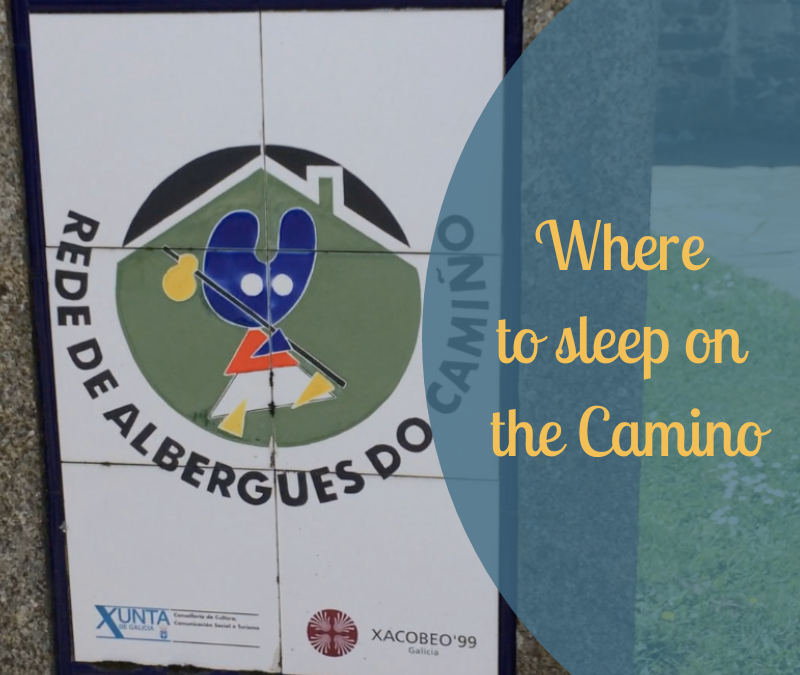
Where to sleep on The Camino
El albergue |
Updated: January 2026
Accommodation options
One of the most common questions future pilgrims ask is: Where do you sleep on the Camino de Santiago?
The good news is that the Camino offers a wide range of accommodation options. The best choice depends on your budget, your comfort level, and the type of Camino experience you’re looking for. You also don’t have to stick to just one type of accommodation for the entire route; mixing it up is completely normal.
Let’s look at the main types of accommodation you’ll find on the Camino, starting with the most iconic one: el albergue.
What is an albergue?
In short, it’s a hostel, one of the types of accommodations you’ll find along the Camino de Santiago. Some albergues are designed specifically for pilgrims walking the Camino de Santiago. Some others are open to anyone, pilgrim or not.
There are public (municipal) and private albergues, and although they’re similar in style, there are a few important differences.
Public municipal albergues are the most traditional and popular accommodation and, for many people, the heart of the Camino experience.They are especially designed for pilgrims, which means you need proof that you are a pilgrim if you are planning to stay in one of them. How do you do that?
You must have a credencial with stamps.
Other things you should know about albergues:
- They do not take reservations. They operate on a first-come first-served basis, and this can be a problem during the busiest times of the year if you want to avoid the bed race.
- Generally you can only stay for one night.
- Pilgrims a pie have preference over those a caballo or en bici.
Private albergues are very similar but with one advantage: you can book in advance.
What to expect when staying in an albergue
Albergues are a basic type of accommodation.
The prices per night range from €10 to €15 for the public, with the private albergues being a bit more expensive.
There is also a small number of donativo albergues: you pay a voluntary donation. This doesn’t mean they’re free. They still need to cover their costs and they wouldn’t be able to exist without the donations.
Like any hostel, albergues have:
- Big dormitories with bunk beds.
- Shared bathrooms, including a much welcome shower after a long day’s walk.
Other important things to know:
-
You normally need a sleeping bag or liner.
-
Pillowcases are not always provided.
That said, staying in albergues is one of the easiest ways to meet other pilgrims, share meals and stories and feel part of the Camino community.
Services you might find in an albergue
Facilities vary a lot, so it’s always worth checking a guide or app beforehand. Many albergues offer:
-
A washing machine or hand-washing area.
-
A kitchen for cooking your own meals. Just be aware that not all kitchens are fully equipped.
-
Common areas for relaxing and socialising
And let’s not forget the hospitaleros, the volunteers who run many albergues.
They have walked the Camino de Santiago themselves. They take care of the place and will help you with information you may need about the route or the local area.
Other accommodation options on the Camino
Not everyone wants to stay in albergues every night, and that’s completely fine. So what are your options?
Hostales and pensiones
Hostales and pensiones are small, often family-run guesthouses. They usually offer private rooms, often private bathrooms too.
They do have fewer services than a hotel, though. They’re cheaper too.
Hotels
In larger towns and cities along the Camino, you’ll also find hotels ranging from budget to high-end options.
These are ideal if you need privacy, want to rest properly after several tough stages or simply feel like treating yourself for a night.
Casas rurales
Casas rurales are privately owned properties, usually old farmhouses or manors that have been refurbished. As the name suggests, they are located in rural settings. This means that they won’t always be available, especially if you are around bigger towns. You can just book one room, but if you are travelling with a group, you should know that many casas rurales give you the option of renting the whole house.
Paradores
Chain of luxury hotels, managed by a state-run company. They are usually located in historic buildings such as castles or convents. In Santiago, for instance, you have the Hostal dos Reis Católicos, right beside the cathedral. It was built in the 16th century as a hospital that cared for the pilgrims arriving in Santiago de Compostela.
The choice is all yours and, as I said before, you don’t have to stay in the same type of accommodation every night. Just be aware of all the possibilities available and decide which one is the best fit for you, based on your personal circumstances.
Learn more a bout the word albergue with Beginners Spanish for the Camino Podcast:
Today’s Spanish for the Camino
Albergue
Hospitalero
Hostal
Pensión
Hotel
Casa rural
Parador
For the pronunciation of credencial, a pie, a caballo and en bici check this other post.
Read about Gary’s experience as an hospitalero.
Want more?
Make sure you don’t miss any posts or announcements by subscribing for free here. You’ll receive a free Spanish vocabulary guide with your first Spanish words + cultural tips. And… you’ll get access to exclusive content too.

