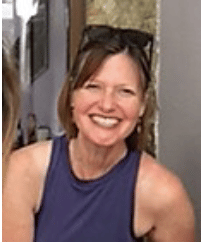
A conversation with Julia

A conversation with Julia

This week I’ve been chatting to Julia, a German pilgrim who walked the Camino Francés after she finished college. Read the whole conversation to find out how the Camino changed her life.

Please tell us a bit about yourself.

My name is Julia, I am 35 years old and I am from Northern Germany. I’ve been living in Spain now for four years in a small town called Oliva, which is on the eastern coast, with my husband and our two children. I am a German teacher and I run an online language agency: www.milengua.com

When did you first hear about the Camino and why did you decide to do it?

I’ve always been up to traveling and especially to hiking and trekking. After finishing my university degree in German Philology I decided to go on a trip on my own and among all the different long distance trekking roads I chose the Camino de Santiago as it seemed to me physically not too difficult but very interesting. Besides, I wanted to get to know Spain, where I hadn’t been before. Also, I had a friend who did a part of the Camino and he highly recommended it.


Did you prepare either physically or mentally? How?

Basically, I got prepared by hiking on every possible occasion. Moreover, I was into running and biking at this time so I found myself in physically good condition. Mentally?  I don’t know. I had a book with the single legs of the way. But to be honest, I just started the journey without thinking too much about it. I was just excited about being outside everyday and walking as far as I could.


Tell us about your Camino. How was your experience?

It was certainly one of my best experiences ever. I met a lot of wonderful people and even though you only shared a couple of days together until each one went on at her or his speed, it felt always like a lifetime. You get to know people that deeply in an incredible short time and I remember almost all of them now 5 years later.

Another deep impression that I will bear forever is the feeling of freedom and peace of mind. You only have to walk. That’s your only mission for several weeks. Enjoying the simplicity of life and the beauty of nature made me feel really “light”.


How did it change your life? Is there any particular anecdote you would like to share?

My anecdote is a romantic one: I met my future husband here, to be precise, in Molinaseca near Ponferrada. From there we went the remaining way together to Santiago and later to Fisterra, where we separated. More than 2 weeks together on the Camino, that’s like 2 years in real time. We stayed in contact ever since but it took us 18 month until we met again. Soon after that I decided to move to Spain  – and I stayed.


Did you learn any Spanish prior to the Camino? Did that have any impact on your Camino?

Actually I didn’t know any Spanish before. I learned quickly how to order breakfast, to ask for free beds and to wish a “buen camino”. But it was actually a pity not to be able to talk to the locals. One time I met an older man walking with his dog and as we went the same way for quite a while, we started a conversation. He didn’t speak English so we communicated with gestures, by pointing at things; he showed me photos he had in his wallet and we drew in the sand with sticks we found.  I wished we really could talk as he seemed to be a very interesting person.

Without any Spanish you stay mainly with other pilgrims but you will miss the option to talk with the locals which is basically an important aspect if you want to get to know a country for real.  Another point is the medical assistance, if needed. Whether it’s at a doctors or just in the pharmacy: Some basic vocabulary to explain what’s your problem is more than helpful.


Julia’s words

I usually ask my guests to pick 5-10 Spanish words or phrases: the ones they think every pilgrim should know before their Camino, the ones they knew, the ones they learnt… Julia chose what she learnt on the Camino,  mainly food orders and one phrase that the Spanish pilgrims liked to say when they had wine for dinner: El vino te pone fino, peregrino.
 
I must confess I’d never heard this phrase before and it can be interpreted in several ways, as it plays on the meanings of the word fino, as well as a couple of expressions that contain it. It could simply mean that wine makes you drunk. But it could also mean that wines makes you wittier!
 
 
If you would like to know more about either the menú del día or menú peregrino, check this post.
 
 
The word cigüeña means stork and Julia learnt it because she was surprised at how many of these birds she saw while on the Camino. According to her, there are not many storks left in Germany.

Want more?

Make sure you don’t miss any posts or announcements by subscribing for free here. You’ll receive a free Spanish vocabulary guide with your first Spanish words + cultural tips. And… you’ll get access to exclusive content too.


¡Buen Camino!

A conversation with David

A conversation with David

A conversation with David |

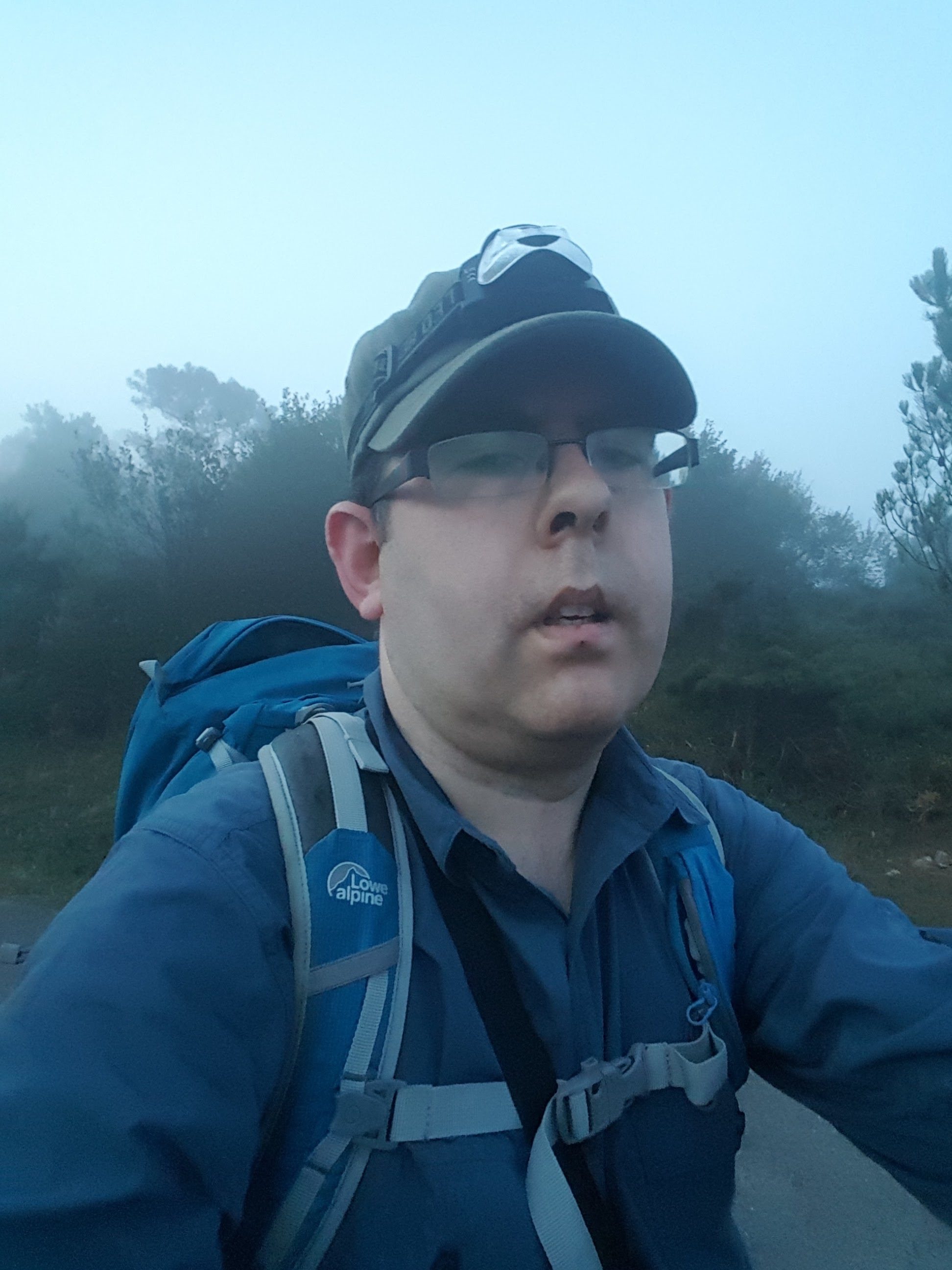
Less than ten years ago David had not heard about the Camino. Now he’s planning for his 5th. And that’s not his only connection to the Camino. If you’re curious about David’s story, read our conversation!


Please tell us a bit about yourself

My name is David and I’m from Dublin, Ireland. I love to write, and I have been keeping my own blog ClearskiesCamino.com for over 6 years. I also love the outdoors and have recently taken up photography. I love trying new things, and new gadgets!


When did you first hear about the Camino? When or why did you decide to do it?

I heard about the Camino de Santiago by pure accident! I hope your readers believe in fate. In late 2010, I was handed a leaflet with the words “Walk the Camino” framed across the top. I thought to myself, “this will be a great challenge” and I instantly registered. I raised €3000 for a mental health charity in Ireland and on the 6th of June 2011, we would start our Camino from Sarria to Santiago de Compostela on the  – the final stretch!

At the time, walking 10 kilometres was a struggle for me so walking 15 kilometres, 4 or 5 days in a row would really test me. But it was achievable. I also wanted to see another part of the world, to see the culture, to hear the language and see how people tick. All in all, it was an enjoyable week, despite the blisters.

We had a guide, a great guy from Australia who got us around. He had the Spanish even though I had a few simple phrases to get me by like Gracias, ¿Qué tal?Buenos días and of course ¿Dónde está?

I loved Santiago and was blown away when I arrived under the archway into the Praza do Obradoiro– it’s not something you see every day. I have my Compostela framed in my apartment in Dublin and I will treasure it.


You’ve done several Caminos after that. What is it about the Camino that makes you want to come back?

On return to Dublin, I felt that this was my one and only Camino experience and it was time to experience something else. I would return to work the following Monday and life would go on. It wasn’t until later in the year, however, when I received an email from the Australian guide checking up on me, just to see how I was.

At this stage, the Camino was just a memory but over the course of a week, a simple hello had changed my mind. I suppose if it wasn’t for his email I wouldn’t be where I am today, who knows?

Over the last 6 years, I have walked various parts of the Camino Francés and more recently I have walked from A Guarda to Santiago with my brother on the Portuguese Coastal Route.

I find the Camino is a great way to get away from strains of modern daylife. You can experience simplicity in all its forms – get up in the morning, carry all your belongings, just walk, and rest when you are tired. It’s as simple as that.

But the people you meet make it for me, and it is so easy to meet lifelong friends here. I also like the idea that I walk in the footsteps of thousands of people before me. I am walking from A Coruña in May – a route taken by pilgrims from Ireland in medieval times (for more info on this route: Camino Inglés).


How have your experiences been so far?

I have had very positive experiences so far, but with all things in life you learn as you go on. On my first Camino, I was badly prepared and suffered with blisters but over the years, you learn how to treat them and buy the suitable equipment. My Camino from León to Sarria in 2012 was much more enjoyable I found.


Is there any particular anecdote you would like to share?

On my Camino from Logroño to León in 2013, I met a large Camino family and we still keep in touch. There is one story that strikes a chord to this day and it is from May 2015. I was walking from Belorado in La Rioja to Molinaseca, just short of Ponferrada and had met a good bunch of pilgrims, from Ireland, Belgium, Holland and England.

We had reached Sahagún and I had run out of money before checking in at the albergue. I went to the ATM to get some more. An error message appeared. My heart sank. I asked the bank teller inside: “¿Hablas inglés?” “Yes”. OK. So there was a problem with the card. Now what…?

Hmm! I walked back to the albergue where the rest of the gang were. I explained my predicament and they said not to worry. The offer was there to pay for any expenses until I got fixed up. Three evenings later in León, I had money wired to me via Western Union. The Camino provides! I have always been grateful for my peregrino friends.


Walking the Camino is not your only connection to the pilgrimage to Santiago. Tell us about Camino Society Ireland and Shamrocks and Shells.

That’s correct. As I mentioned above, I have been writing since 2012 at ClearskiesCamino.com about my experiences on the Camino. I love writing and giving people hints and tips about how to prepare for their Caminos. In 2015, I became a member of Camino Society Ireland as a way of giving back and more recently, I started to volunteer. I just thought it was the next step after walking my 4thCamino and planning for my 5th.

Camino Society Ireland offers an opportunity to all those interested in the Camino to meet and share practical information and experiences. We meet for monthly walks throughout Ireland as preparation for a Camino and in the past, there have been talks, films nights and Information days for those who are preparing.

Shamrocks and Shells is Camino Society Ireland’s quarterly newsletter. Its first issue was published in Spring 2018. It was designed with the intention of publishing stories from pilgrims, news from Santiago and the Camino and practical advice on equipment. The great thing is when I normally come home from a Camino, I am always talking about life on the Camino, much to the bemusement of my family. So, if it is easy to talk about it, then it should be easy to write about. We are also looking to introduce more articles en español.

Our newsletter can be found at shamrocksandshells.wordpress.com.

Did you learn any Spanish prior to the Camino? Do you think knowing (or not) Spanish had any impact on your Camino?

Yes, I tried Duolingo and several podcasts. I had some vocabulary, but it was difficult to use these in conversation. That said, I still use Duolingo today and find it useful.

My knowledge of Spanish prior to my first Camino was limited, however I found myself more switched on while in Spain. I remember routinely asking the guide what various items meant in English. I suppose I would have enjoyed it more if I was able to talk to the local Spanish people. By just saying Hola and Gracias, I felt a disconnect.

However, now that my level of vocabulary has improved through the years, I feel a lot more confident being on the Camino.

David’s words

Conversation with David

I asked David to pick a few Spanish words that she thought you should all know before you start your Camino and this is his list:

Sello: stamp (the ones on letters and on your credencial).

Credencial: Pilgrim Passport

Compostela: the certificate you can get if you walk the last 100km of any Camino

Shops and useful questions

¿Dónde está…?: where is…?

…el albergue: hostel

…la tienda: store

…el supermercado: supermarket

…la panadería: bakery

…la pastelería: cake shop

…el cajero automático: cash machine (ATM)

…la farmacia: chemist

 Lo siento, no sé: I’m sorry, I don’t know

Si, hablo un poquito de español: Yes, I speak a little bit of Spanish.

Perdón: Pardon / Excuse me

¿De dónde eres?: Where are you from? – Great way to meet people

¿Cuánto cuesta?: How much does it cost?

Comida: food

Patatas bravas:  Fried potatoes with a spicy sauce

Jamón: ham

Pescado: fish

Pulpo a la Gallega: boiled octopus (with salt, paprika and olive oil; and served with boiled potatoes)

Chorizo: cured smoked sausage

Paella: rice with seafood and/or chicken

Tortilla española: Spanish omelette (with eggs, potatoes and, in most cases, onion)

La cuenta, por favor: asking for the bill.


Today’s Spanish words & phrases

About David

David Smith

My name is David, I live in Dublin and I am a pilgrim. I started to blog way back in 2008 writing about many different things, but in 2011, I discovered the Camino de Santiago. Since then, I return to the north of Spain to walk a part of this amazing trail, to take in its culture, to meet people and of course, give my spirit some food for thought.

The Camino de Santiago is a pilgrimage but, in my eyes, it is also a challenge, a way of meeting people and a great way of getting away from the hustle and bustle of modern day life.

I love writing and talking about the various Caminos to Santiago and if you are one of the many people who has walked these routes, you may well feel the same. I also write and edit the Camino Society Ireland’s newsletter Shamrocks and Shells.

You can find me on Instagram @clearskiescamino also and I use this account the most while on Camino.


Want more?

Make sure you don’t miss any posts or announcements by subscribing for free here. You’ll receive a free Spanish vocabulary guide with your first Spanish words + cultural tips. And… you’ll get access to exclusive content too.
 

¡Buen Camino!

Yes. You do know some Spanish already

Yes. You do know some Spanish already

You know some Spanish already |

You are planning your Camino de Santiago. If it’s the first one, you probably have tons of questions:

How much should I train?

What mochila should I get? How much stuff should I pack?

What are the perfect shoes?

Should I get a guidebook? Or maybe an app?

Should I learn some Spanish?

Most of these questions don’t have just one right answer. What works for me might not work for you and what works for you might not work for me. So read and listen to as much advice as you want, but then do what’s best for you. Make the Camino your own.


However, the last question, should I learn some Spanish?, is a different story. Of course you can survive without any knowledge of Spanish. Well, the truth is that you know some Spanish already, even if you don’t know it yet. But, anyway, when you go through the pros and cons of learning the language… there are no cons, really! It’s all benefits:


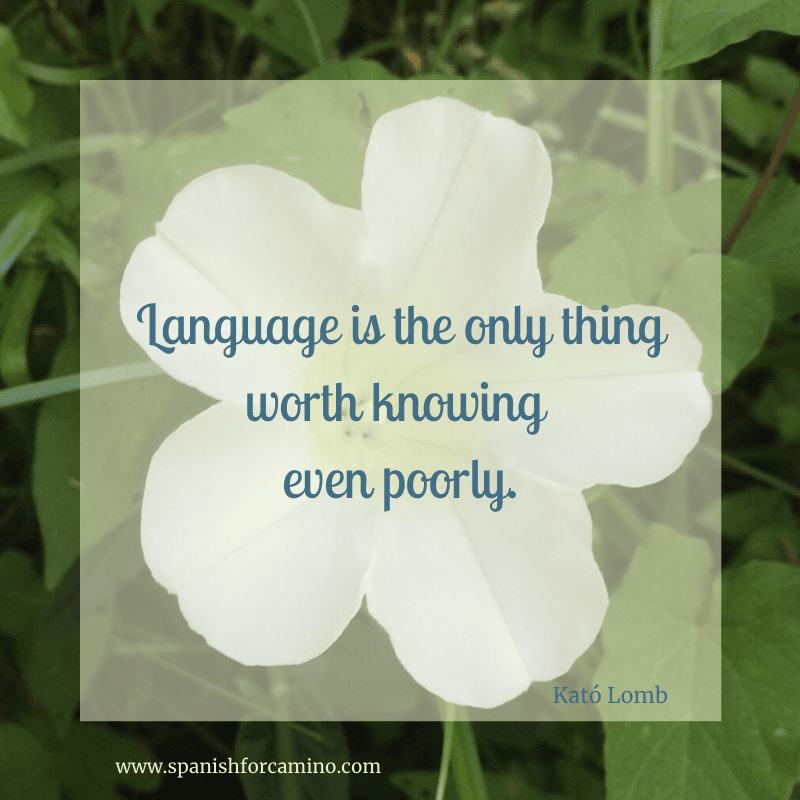
language is the only thing worth knowing
  • First of all, learning another language is good for your brain: it slows down aging, it improves your memory and your decision-making skills, it boosts your self confidence… and the list goes on.

Those alone should be enough to convince you to start learning a new language now!

But let’s concentrate on the benefits of learning Spanish for the Camino 

Not everybody in Spain speaks English. English speakers are easier to find in the bigger cities, but you’ll be going through a lot of rural areas and small villages populated by older people who do not know a word of English.


  • The locals will be more receptive to you if you try to speak Spanish (and they might even invite you to whatever they are doing) just because you made the effort. 
  • Learning at least some basic Spanish means you don’t need to rely on other people to communicate your needs.
  • It also means you are not dependent on technology either (my phone’s battery tends to die just when I need it most!) 
  • The fact that you don’t need to rely on other people or technology will make you feel more confident and independent; it will reduce the stress and anxiety you will feel if you need to get an important message across (maybe you have a health issue, you need to book accommodation…).


OK. So, you are convinced now and have decided to learn a bit of Spanish.

For some reason, when we start learning a language we focus on all the stuff we don’t know: vocabulary, grammar, pronunciation… And it can be overwhelming.


What if I told you that you know a lot of Spanish already?

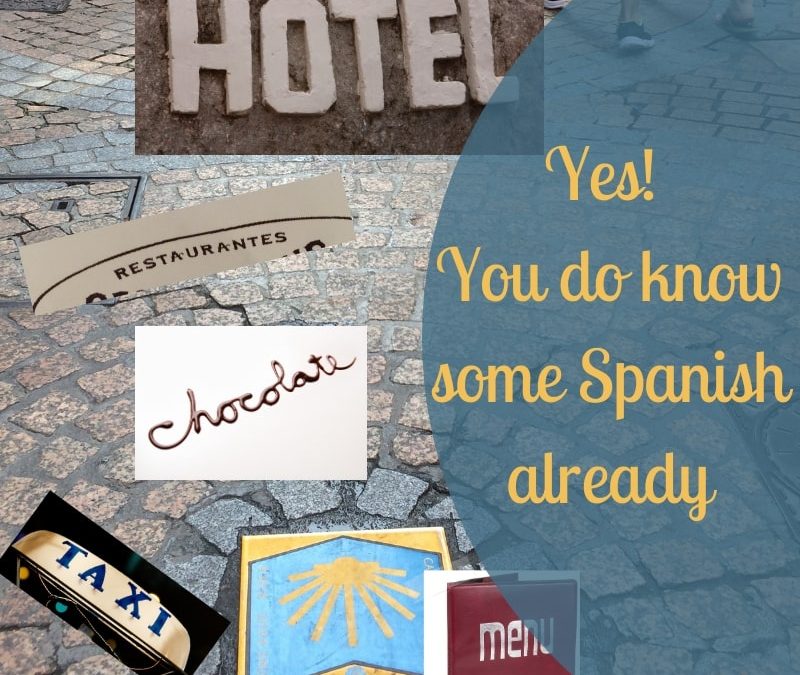
Yes, there are many words that are the same, or almost, in English and Spanish. Maybe a tiny spelling change. Most likely a different pronunciation. But still very similar. Let me give you a few examples:

Hotel, teléfono, restaurante, menú, taxi, chocolate, delicioso, animal, doctor, kilo, local, municipal, región, religión. 

Did you need the translation? I didn’t think so.


A few weeks ago I interviewed Kelli, an American pilgrim, about her experience on the Camino. In the second part of my conversation with Kelli, she gives you a tip to automatically increase your Spanish vocabulary:


Words in English that end in -ity will be the same in Spanish but replace the -ity with -idad.


So electricity becomes electricidad; spirituality > espiritualidad; tranquility > tranquilidad and security > seguridad, just to mention a few.


The good news is that this is not the only tip to increase your Spanish vocabulary:


  • Many English words ending in -al are the same in Spanish. Again, the pronunciation will be different and there might be minor spelling changes but nothing that will prevent you from recognising the word. You don’t believe me? Check these examples: 

hospital, normal, dental, total, inicial, oficial, profesional 


  • Some of the English words ending in -ist will end in -ista in Spanish:

dentista, ciclista, especialista, realista, turista, racista


Warning! You will find exceptions but they’ll be mostly words you won’t need for the Camino. So, what are you waiting for to start increasing your Spanish vocabulary?


Can you think of any other tips? Please share them in a comment.


Today’s Spanish words


Want more?

Make sure you don’t miss any posts or announcements by subscribing for free here. You’ll receive a free Spanish vocabulary guide with your first Spanish words + cultural tips. And… you’ll get access to exclusive content too.
 

¡Buen Camino!

Your words

Your words

A couple of weeks ago I asked the following question on Facebook:

If you could only learn 5 Spanish words or phrases for the Camino, what would they be?

I got many answers. The 2 most popular words were por favor (please) and gracias (thank you), closely followed by ¿Cuánto cuesta? (How much is it?) and vino tinto (red wine). Vino blanco (white wine) was a bit less popular.

After those, there were many different suggestions that I’ll try to organise. These are your words:

  • Greetings

Buen Camino. This doesn’t need a translation, right?

Hola (hello) can be used any time of the day.

Buenos días (good morning). This one is specifically for the morning, which technically ends at midday, but in Spain we stretch it till lunchtime; Spanish lunchtime, that is. After 13.30-14.00 (1.30-2.00pm) you can start saying buenas tardes (good afternoon/evening) until around 21.00 (9.00pm). Then you can say buenas noches (good evening/night). For pronunciation and to learn more about different customs regarding greetings, check the second part of my interview with Kelli.

  • Food and drink

Next in popularity after vino tinto and vino blanco were café con leche and café americano. Cerveza (beer) came in third position.

Tortilla (potato omelette) was the only food mentioned. For the pronunciation and the recipe, check this post.

  • Accommodation

¿Tiene una cama para esta noche? (Do you have a bed for tonight?)

Habitación privada (private room)

You can also combine both and say ¿Tiene una habitación privada (para esta noche)? (Do you have a private room (for tonight)?).

  • Miscellaneous

¿Habla inglés? (Do you speak English?).

Más despacio, por favor (more slowly, please). Very handy when someone is talking to you and you need them to slow down in order to understand what they are saying.

¿Dónde está…? (Where is…?). Check my interview with Susan Jagannath for more on this.

¿Cuándo es la próxima misa? (When is the next mass?).

¿A qué hora es la cena? (At what time is dinner?). You can use this in albergues that serve communal dinners as well as in restaurants.

Necesito una bolsa de hielo (I need a bag of ice). Or just necesito (I need) + whatever it is you need.


  • The toilet

¿Dónde está el baño? (Where is the toilet?). This particular phrase proved to be quite controversial, with people arguing what the right word for “toilet” is. The truth is that there are 4 words I can think of you can use for toilet:

First of all, we have cuarto de baño, which is a bathroom with toilet, sink and bath/shower, so we would NOT use this for the toilets in a café, for instance.

However, the short version baño means bathroom too but it has some extra meanings: it can also be a bath (as in taking a bath or even a swim), bathtub or toilets. All of these definitions are included in the dictionary; don’t let anyone correct you!

Servicio, aseo and lavabo are 3 more words that can be used to refer to toilets in public places. I’m not sure if there is a regional preference, but I can guarantee that they are all valid and all in use.

Aseo means cleanliness or cleaning in general; or a “bathroom” with just a toilet and sink, but no bath/shower.

Servicio means service, in general. It can be used in other contexts, not just when talking about toilets.

Finally, a lavabo is the type of sink you can find in bathrooms/toilets. By extension, we use this word to refer to toilets in public places.

Would you like to add anything to this list? You can leave your suggestions in a comment!


Your words

Want more?

Make sure you don’t miss any posts or announcements by subscribing for free here. You’ll receive a free Camino food guide. And… you’ll get access to exclusive content too.


¡Buen Camino!

A conversation with Susan

A conversation with Susan

Conversation with Susan |

Susan had been longing to walk the Camino Francés for a long time but she had to put it off a couple of times due to different problems. She finally planned it for September 2016… only to find out that it was not possible again! She was very disappointed, but… she came across the Camino Inglés and decided that was the Camino for her. Read our conversation to know the whole story.


Please tell us a bit about yourself

I’m Susan, I love adventures and learning things. What I don’t like is exercise and gyms, because it can quickly get very boring. I love to be healthy and fit, and I found that walking and hiking is just right for me. One hour in the gym vs four hours walking, there’s no contest there. I’ve been in IT all my life, and my job was to make computers easy for users, so that they could get the solution when they needed it, and where they required it. I am also a bestselling author of two books, a hiker, and now an obsessed grandmother. I am thinking of taking my four-year old granddaughter on my next camino!


When did you first hear about the Camino? When did you decide to do it?

I was going to India to visit friends, we were going to hike in the Nilgiris, a mountain range in South India. In the flight out, I saw “The Way” – and thought nothing of it. I had never heard of the Camino, and now suddenly it was everywhere. I became more and fascinated and decided to do it in 2014.


Did you prepare either physically or mentally? How?

Oh yes, I walked every day, in different types of terrain, and gradually built up stamina and endurance. By the end of 3 months, I could walk 10 kms in 3 hours carrying a 6 kg backpack. I also ate for energy, too supplements to protect my joints and build up my immunity. Mentally, I began attending pilgrim events and meetups and met others who had done long distance walks.


You were not planning to walk the Camino Inglés initially. How was your experience? Is there any particular anecdote you would like to share?

The Camino Inglés turned out to be an exquisite experience, with just enough challenge to push you. It is not an easy stroll. Parts can be challenging, and some of the stages are long. It can be long way between bars and cafés con leche! It was quiet too, and we saw only a few pilgrims. I loved Betanzos, the walled city and the medieval centre is authentic, and while it is ancient, the life within the square in the evening is pumping with music, cafés and families enjoying themselves.


You then wrote a guide for the English Way. When/why did you decide to write it and how was the process?

I decided to write it because I couldn’t find accurate documentation on the way. The distances were incorrect, and often, so were the directions. I had kept a brief journal on the way, with notes on distances and landmarks. I was also doing live streams everyday from the way. When I got back, when I was sorting the photos and videos, I kept hearing myself say – I didn’t know this – I should write a book about it…So I did.

(Read my review of Susan’s The Camino Inglés: 6 days (or less) to Santiago).


Did you learn Spanish prior to the Camino?

Yes, I tried with DuoLingo. It gave me some words. But when we reached Spain, we could understand nothing. I did print out a list of sentences and words, and I used this to communicate in a few words.


Do you think your knowledge of Spanish had any impact on your Camino?

Yes, I think I would have enjoyed it much more, and had a chance to really talk to the people – who were such friendly and helpful people – but we couldn’t talk much! Learning more than Gracias and Por Favor will make a huge difference to your experience.

But don’t let a lack of Spanish stop you!


I asked Susan to pick a few Spanish words that she thought you should all know before you start your Camino and this is her list:

  • Common words: el Camino, credencial (Pilgrim’s passport), sello (stamp), Compostela (certificate of having walked at least the last 100km of any Camino).


  • Greetings: Hola (hello), buenos días (good morning), buenas tardes (good afternoon/evening), gracias (thank you), disculpe (excuse me), lo siento (I’m sorry).


  • ¿Dónde está…?: it means “where is…? and you can combine it with other words to ask about the location of anything. Susan has chosen albergue, el Camino and cathedral.


And now you can actually hear Susan say all these words in Spanish! She does a fantastic job too! What about you? Have you been practicing?


Today’s Spanish words for the Camino


About Susan Jagannath

Conversation with Susan Jagannath

Susan Jagannath successfully combined a passion for reading, a love of writing and a fascination for technology, to create a career in technical writing. With over 50 technical manuals (not) to her name, she finally decided it was time to write the books she wanted to write under her own name.

As an army brat, her childhood included seven different schools, three universities and a couple of emergency evacuations from conflict zones. Travel and adventure were a normal part of life. She now believes in seizing every opportunity to have a new adventure. Whether it’s camping on the beach in Australia, trekking in the Himalayas, kayaking in Queensland, whitewater rafting down the Ganges, or walking the Camino in Spain, her philosophy is to pack it into one or two weeks to create memories for a lifetime, and inspire others to see that the right time for adventure is right now.

Her first bestseller came from her walk in Spain, The Camino Ingles: 6 days to Santiago. What also happened is that Susan fell in love with Spain, and all things Spanish, and is busy making plans to return for a longer time, and maybe, another Camino.

Susan is now on the next adventure of her life, writing books that are not technical manuals, training to be an awesome grandmother, and helping others write and publish their own bestsellers.

To learn more about Susan Jagannath (and to download the map set), you can go to https://www.susanjagannath.com

Want more?

Make sure you don’t miss any posts or announcements by subscribing for free here. You’ll receive a free Spanish vocabulary guide with your first Spanish words + cultural tips. And… you’ll get access to exclusive content too.
 

¡Buen Camino!

A conversation with Kelli (II)

A conversation with Kelli (II)

This is the second part of my conversation with Kelli, an American woman who moved to Spain a few months ago, after walking the Camino Francés last year.

Last week, you could read all about Kelli’s experience on the Camino with her teenage daughter (if you missed the first part, you can check it here).

But I also asked Kelli for a short list of essential Spanish words for the Camino: either the ones she most frequently used or the ones she wished she had learned prior to walking the Camino.  She gave me so much more… and that’s why I thought all that info deserved a whole new post.


What Kelli had to say

K: Here are the things I wish I knew:

First, before the Spanish language bits, the cultural norms of interaction.

  • In the US we almost never say ‘good day’ before starting a conversation or asking a question. In Spain, people say buenos días (good morning) or buenas tardes (good afternoon/evening) before launching into asking a question even in a shop. It’s a more formal way of interacting. And more respectful.
  • People meeting acknowledge each other with hola or the greeting of the time of day.  Even relative strangers. And they will say hasta luego (see you later) or a clipped version of this at parting. In the US, there would never be a goodbye to strangers in an elevator.
  • In the US and the UK, we are overly effusive. We ‘thank you very much’ too much. So it doesn’t really mean anything. And we thank wait staff for every little thing they bring us. Here, one gracias is fine and saying hasta luego when you leave the café is just courtesy, even though you may never see them again.

M: I’ll add that the same rule applies to por favor (please). There’s no need to add por favor at the end of every sentence when you’re in a shop or café for instance. One por favor is enough.


Kelli’s vocabulary list

Disculpe (sorry). I wish I had known that word when I accidentally broke a cup at a cafe.

M: Disculpe also means Excuse me! So you can use it if you need to ask a stranger a question, to get their attention.

Lo siento (really sorry).

¿Dónde está… ? (Where is…?) + almost anything: albergue, tienda, mercado, Catedral, el camino… My daughter had a bad allergic reaction in Melide on an early Sunday morning. No one but little old ladies on the street and I struggled to get across that I needed an emergency room or urgent care.

No entiendo (I don’t understand).

Pequeño (small).

Mediano (medium). I knew grande was large.

Media (half).

Otro (another), as in ‘other vino rosado’.

Antes (before).

  • Regarding food, reading a menú del día on a chalk board in cursive writing is a challenge. Google translate can’t help. So learning:

Pollo (chicken).

Carne (meat).

Pescado (fish).

  • Knowing my numbers 1-10 in Spanish helped but if I had to do it again I’d study 1-100 and understand how to say my own birthday, passport number and phone number in Spanish.


And one final tip

  • Words in English that end in -ity will be the same in Spanish but replace the -ity with -idad. I’ve tried to find a word in English that this doesn’t work for and I can’t so far.  And suddenly, Voilà! Your vocabulary just quadrupled.
Kelli arriving in Santiago de Compostela

Kelli and her husband Jeff moved to Spain in Spring of 2018, after she had walked the Camino Francés from St. Jean Pied-de-Port to Santiago de Compostela. In her blog Viva España you’ll find everything they went through to get their visas, make the move and set up house as well as their new life in Spain. It’s very informative, especially if you are thinking of making a similar move; and… it’s so much fun too!

Today’s Spanish words

Want more?

Make sure you don’t miss any posts or announcements by subscribing for free here. You’ll receive a free Spanish vocabulary guide with your first Spanish words + cultural tips. And… you’ll get access to exclusive content too.


¡Buen Camino!