La Luz del Camino

La Luz del Camino

A month ago I had the opportunity to take part in La Luz del Camino initiative.


But what is La Luz del Camino?

After the confinamiento (lockdown), some peregrinos (pilgrims) decided to start a Camino from Roncesvalles, on the Camino Francés, carrying a special mochila (backpack) with a light on. The purpose of this pilgrimage was to remember all those people who have died of covid-19. The idea was for the backpack to be carried in relays, by different pilgrims, all the way to Santiago.


Once that backpack was on its way to Santiago, the question was “why not do the same on a different Camino? And that’s how La Luz del Camino Portugués originated. Plans were made to start a pilgrimage from Porto, in Portugal, along the central route of the   Camino Portugués. Also, both pilgrimages were coordinated so that the 2 mochilas would enter Santiago on the same day, July 24, the day before the festivity of st. James.

Oihana, someone I’ve met online and hope to meet in person soon, was one of the people involved in the organisation of La Luz del Camino Portugués. She invited me to participate and I immediately said yes!

First, because it was a very thoughtful project in general. But also because it gave me the chance to do something meaningful for my friend and fellow Spanish teacher Inés, who lost both her parents to coronavirus.

Inés is from Madrid but lives in the US with her American husband. Her parents died in April and, 5 months later, she still hasn’t been able to travel to Spain, which is making her grieving process harder. Her parents, Vicente and Carmen, were deeply religious and also had a strong interest in art and history. They never walked the Camino, but they did visit the cathedral in Santiago, as well as many other places along the Caminos.

So, going back to the light of the Camino, our special mochila left Porto on July 11, after a blessing at the cathedral. It made its way to Spain on the central route and reached Tui a few days later. You can follow the journey on this Facebook group, which has plenty of photos and an account of each day’s walk.


From Pontevedra to Caldas

On Tuesday July 21 the backpack travelled from Pontevedra, my home town, to Caldas de Reis. And that’s where I came in. I didn’t know who I was going to walk with or how many people I was going to meet.

Arrangements were made to leave very early, at 6.00am, because the weather had been particularly hot that week; the maximum expected temperature for that day  was around 40ºC (104ºF). ¡Mucho calor!

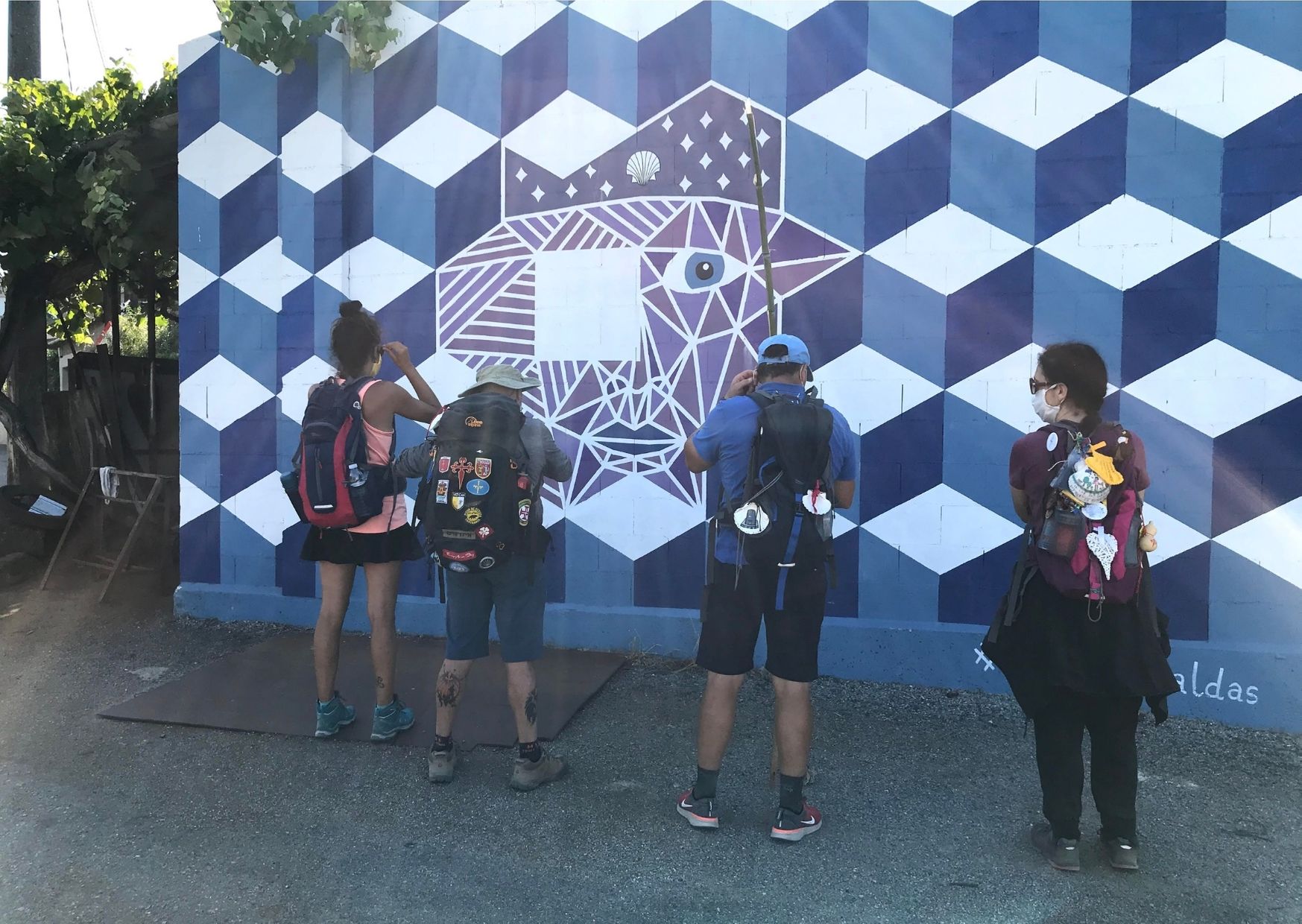
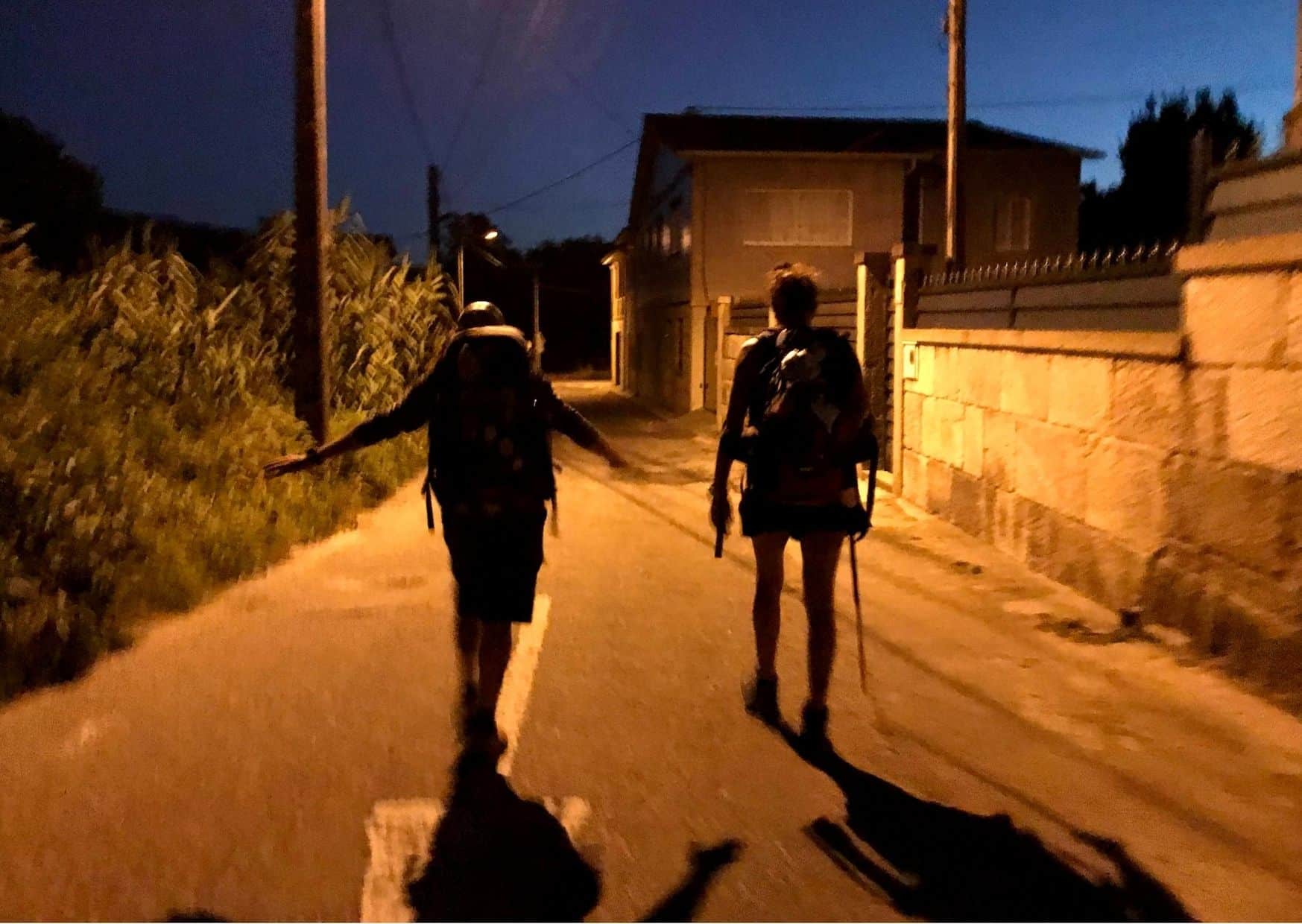
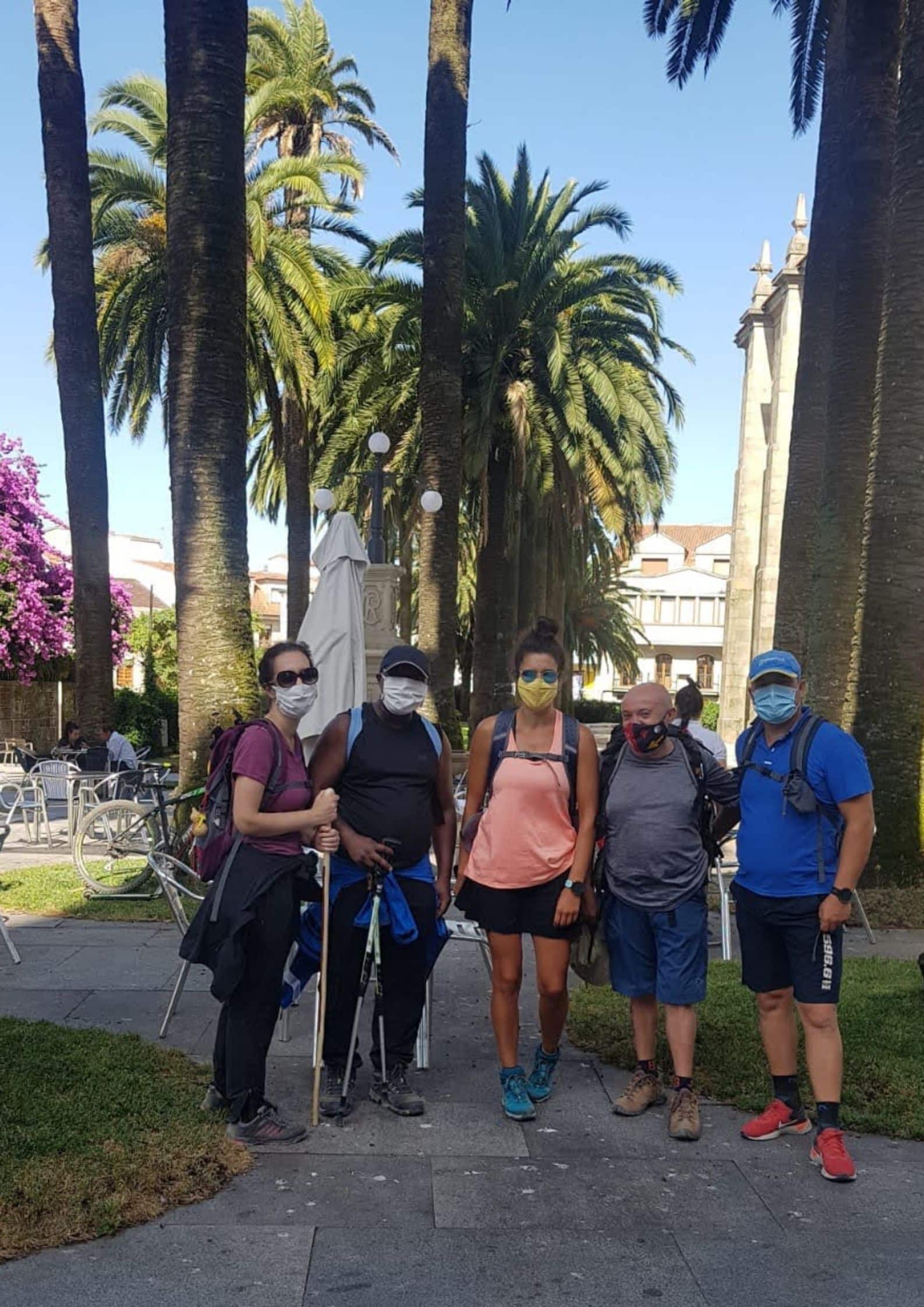
We met outside the Peregrina church, with our mascarillas (facemasks), as the “new normal” requires, and we started walking. It turned out there were 5 of us in total. It was still oscuro (dark) but at least the temperature was nice and fresh.

 

La Luz del Camino en la Peregrina
La Luz del Camino
Leaving Pontevedra

 We left Pontevedra in the dark, making good speed to try and beat the heat, and continued on to Alba, San Amaro and A Portela.  After a while, we started distancing from each other so we could remove our masks. We saw one or 2 pilgrims along the way and a couple of locals too as we passed through villages. But, in general, we were on our own.


The bares and cafeterías we passed were closed. Maybe it was too early, or maybe it was one of the side effects of covid-19. I’d say it was the latter, because we didn’t find anything open until we got to Caldas, which means… we were not able to have café con leche or tortilla! 

Luz del Camino

La mochila

As I mentioned before, the backpack was carrying a light, but that was not the only thing:

There was also una concha de vieira (scallop shell) hand-painted by Julia, the same girl who later carried the backpack into the cathedral in Santiago, as well as different items added by different people at different stages.

I added a yellow knitted shell, for all of those who had plans to walk this year and had to cancel (myself included). 

La mochila de la luz del Camino

There was also un bordón (a staff), that was especially made for the occasion and that you can see in the video.

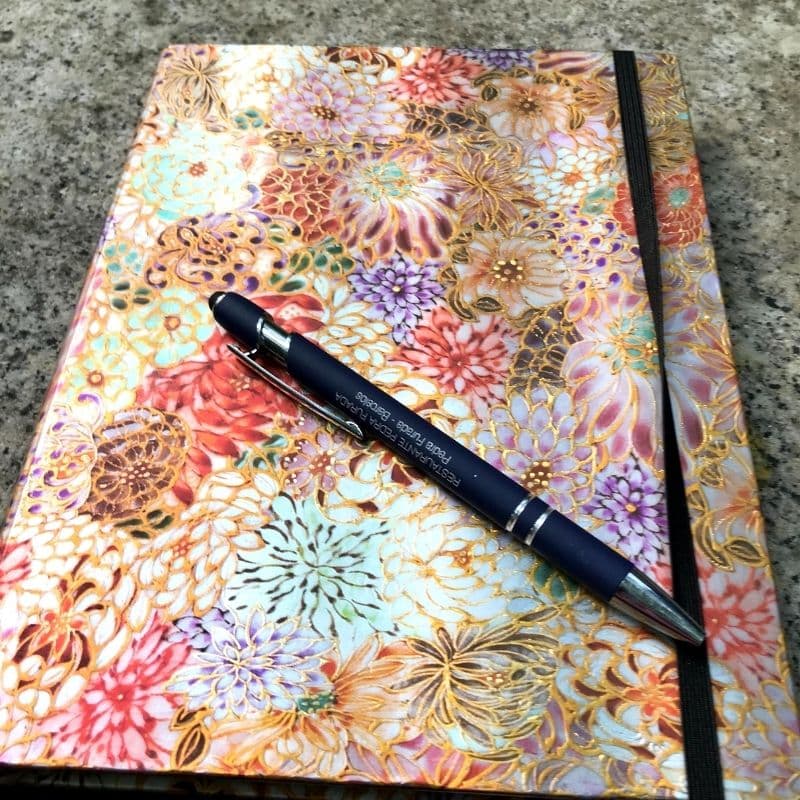
Inside the bag, there was a notebook where anyone could write about their experience accompanying the light of the Camino, a special message for a loved one, etc. So I asked my friend Inés if she would like me to write something on her behalf.


After walking through forests and villages for a while, the Camino joins the busy N-550 road. At this point, if you look across the road, you’ll see a sign saying “Parque Natural Río Barosa”. It’s a beautiful place with waterfalls and old watermills. It’s about 500m off the Camino, but it’s well worth the detour. Whenever you find yourself walking the Camino Portugués, if you have the time, please stop by. You won’t regret it.

We chose this place for a break (sadly, café con leche was not an option, as I mentioned, because everything was closed); we were all carrying snacks, but a colleague of one of the people walking met us there with donuts, cereal bars, nuts and drinks! The Camino provides, right?

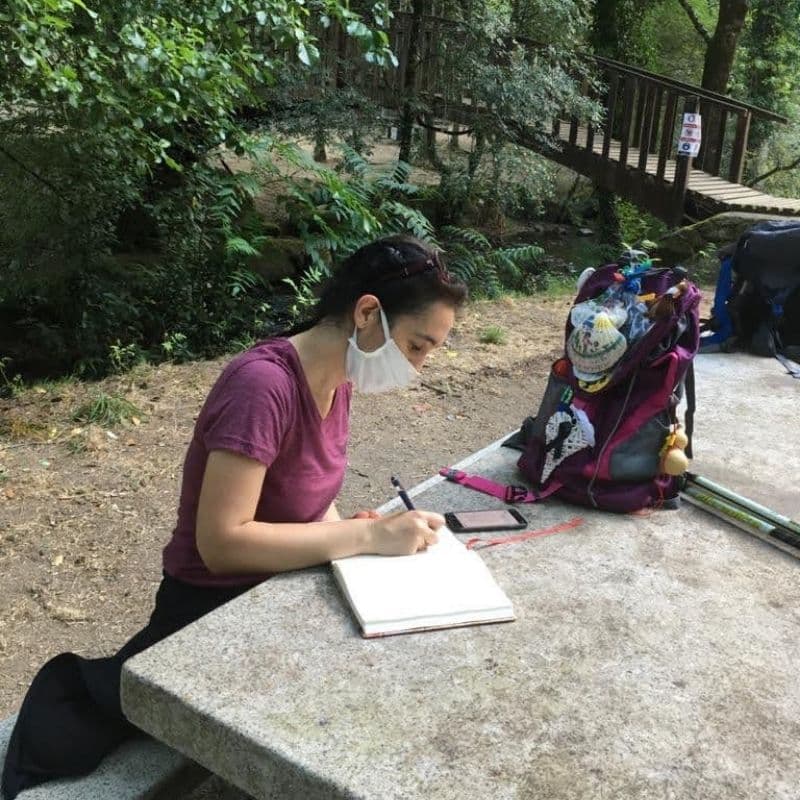
I also chose this place to write Inés’ message on the notebook. It’s beautiful, it’s peaceful… I couldn’t think of a better spot to complete my mission.
El cuaderno

The notebook

Mensaje de la luz del Camino

Writing on behalf of my friend

So we had a break, I wrote on the special notebook and we continued our way to Caldas de Reis, which was not too far away.

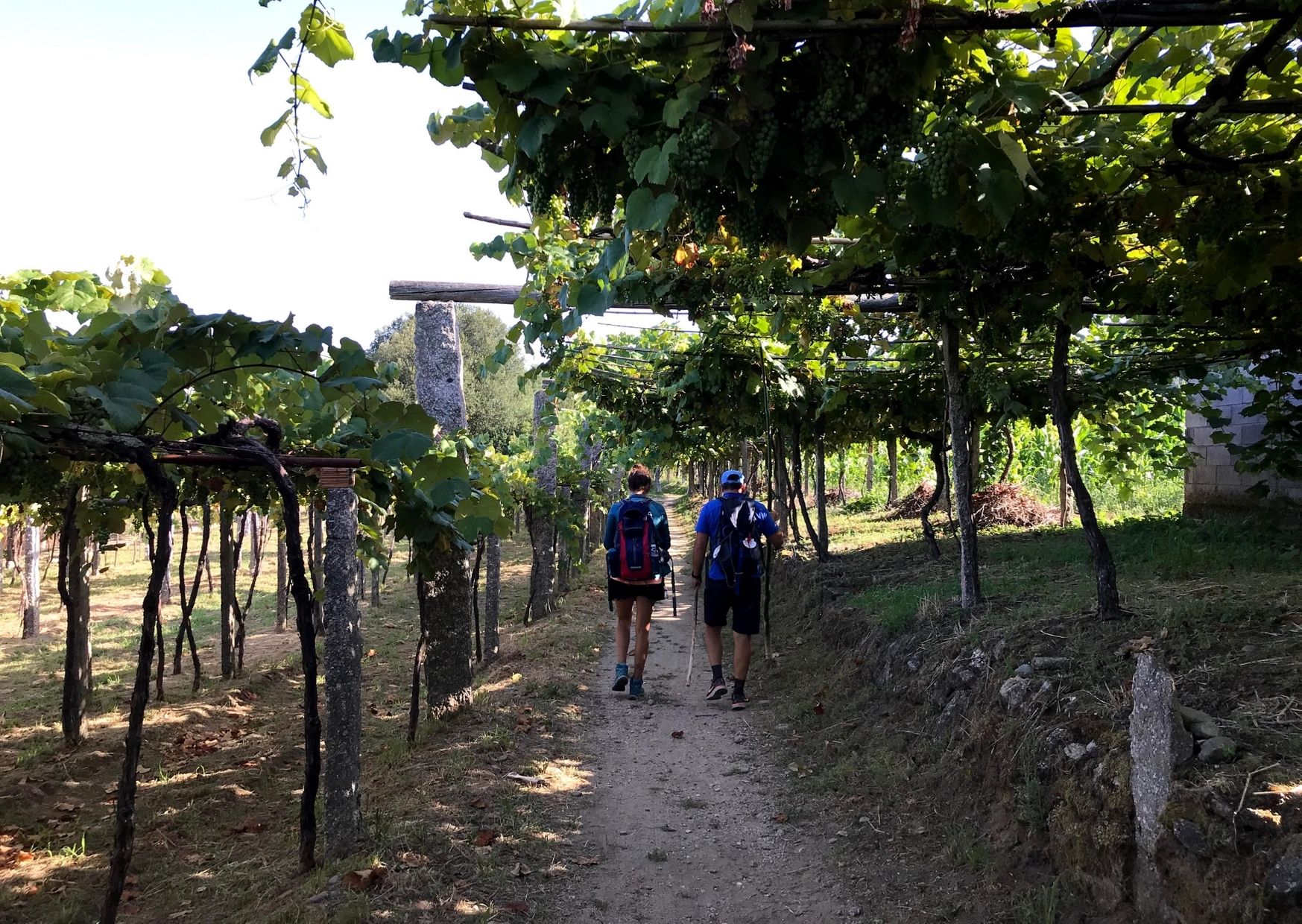
That meant back to busy N-550. I’ve travelled that stretch of the road on numerous occasions (by car) and I often see pilgrims walking on the side of the road. I wasn’t looking forward to this part of the walk. But I was pleasantly surprised to find out that there’s actually no need to do this. The Camino runs more or less parallel to the road, but you don’t actually have to walk on the hard shoulder.
 

After Barosa

Not walking on a busy road

Getting close to Caldas

Getting close to Caldas de Reis

There’s around 5-6km between Barosa and Caldas, so most of our walking was done by the time we took our break. We entered Caldas before 11.30am… and before the worst of the heat!

Caldas de Reis is nice little town well known for its hot springs and spa. We had no time to enjoy any of it on this occasion, because we were going back home. But if you’re ever staying in Caldas, make sure you don’t miss it. Your feet will thank you for it.

En Caldas de Reis

Work commitments meant we couldn’t keep on walking to Santiago. It would have been great to see that mochila enter Santiago and the cathedral; but I’m happy and grateful I was able to be a part of this initiative (even if it was a small one).


Today’s Spanish words

The weather on the Camino

The weather on the Camino

The weather on the Camino |

This is a question I see quite frequently in Camino-related groups: “I’m doing (add a Camino of your choice here) in (add any month or season). What will the weather be like?” The only true answer to this is: Who knows?!

There are too many factors at play here.

First of all, different parts of Spain have different types of weather. In el norte (north), for instance, la lluvia (rain) is never too far away. El sur (south), however, is drier and it can be much hotter, especially en verano (in summer). Depending on which Camino you choose, and where you start, you could be walking for just a week … or crossing Spain from este (east) to oeste (west) or from sur to norte!

And then, el tiempo (the weather) can be quite unpredictable. The same month, in different years, can be very wet or dry; cool or hot. It’s a bit of a lottery.


Weather on Camino Francés
Weather on the Camino

I didn’t make these up… and there are many more variations of the same question:

What will the weather be like on the Camino?

I know we want to know what to pack. And, of course, we want to pack as little as possible. But you need to be prepared to carry a few layers and also have some rain gear ready, especially on certain routes.

Just to give you an example: as I’m writing this, the past week has been quite hot in most of Galicia, with maximum temperatures of up to 35ºC (95ºF), even higher in Ourense. While we are roasting here, it has been cloudy and rainy in Asturias. So, you could be walking the Camino del Norte, experiencing rain and not-so-hot temperatures today and, a few days later, you’d be looking for shade and trying not to melt in the sun.

Once you’re closer to your departure time, you can check the weather forecast for the following two weeks in El Tiempo. The home page will give you a general overview, but you can check specific towns by typing the name in the search box on the top left corner.


Talking about the weather

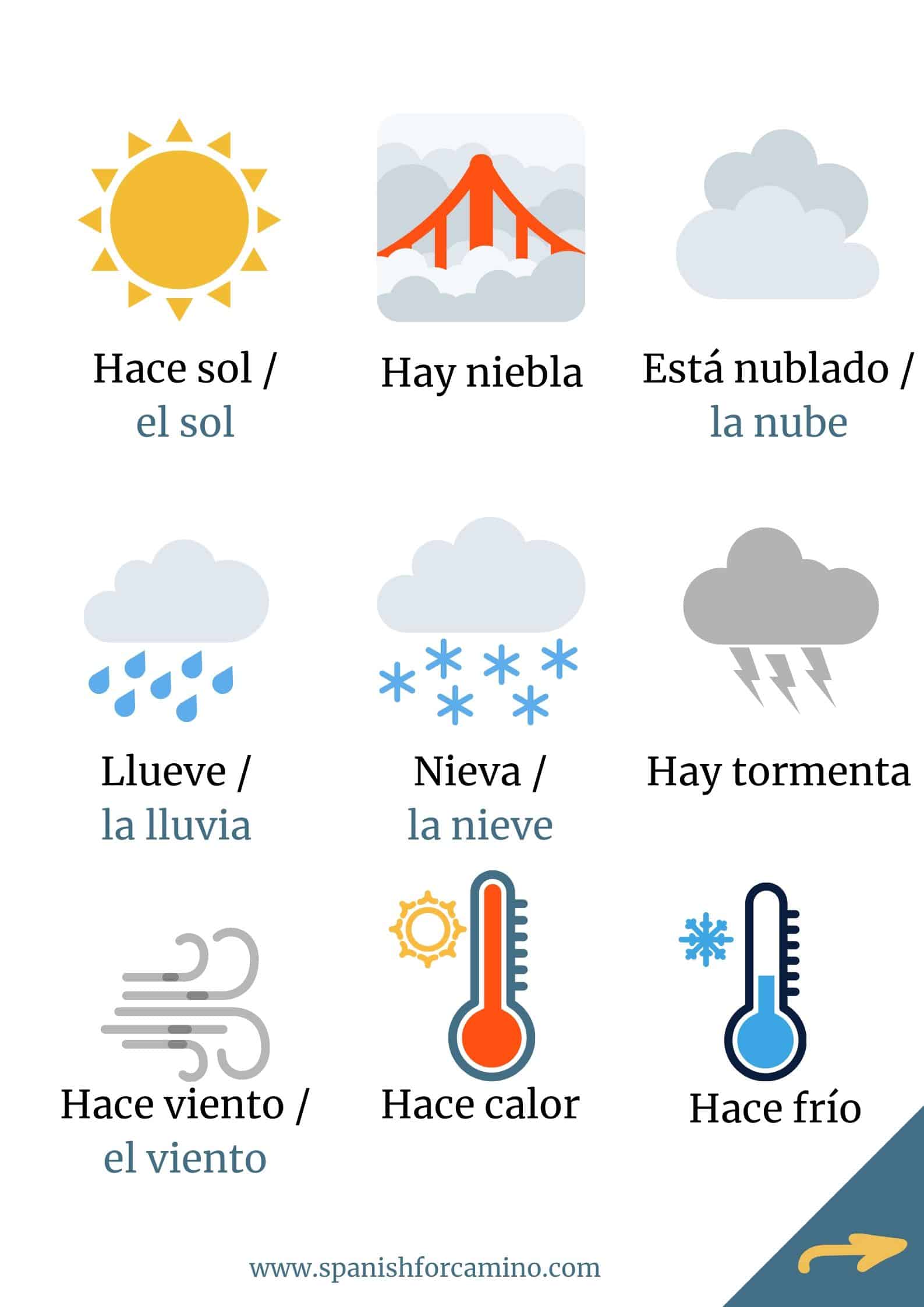
OK. So, we can’t predict next year’s weather on the Camino. But we can still learn a few useful Spanish expressions to talk about it.

In the image below you have the most common phrases. Have a look at them.

Weather on the Camino

You have all the main vocabulary there, but let me give you an extra tip before I go.

If you are hot, please say tengo calor and not what many English-speakers say: estoy caliente. While it is a perfectly correct sentence in Spanish, it doesn’t mean what you think. What you are actually saying is that you are sexually aroused. So, if you’re trying to talk about the temperature… tengo calor is the right phrase!

You could use caliente to talk about the temperature of other things, like a hot shower or a hot drink. But, if you’re talking about yourself (or any other person, for that matter), be aware that caliente has that added extra meaning…

For advice on walking in hot weather, check It’s hot on the Camino.

*one final note: tiempo means weather, but it also means time.


Today’s Spanish words & phrases

Want more?

Make sure you don’t miss any posts or announcements by subscribing for free here. You’ll receive a free Spanish vocabulary guide with your first Spanish words + cultural tips. And… you’ll get access to exclusive content too.
 

¡Buen Camino!

A conversation with Oihana

A conversation with Oihana

A conversation with Oihana |

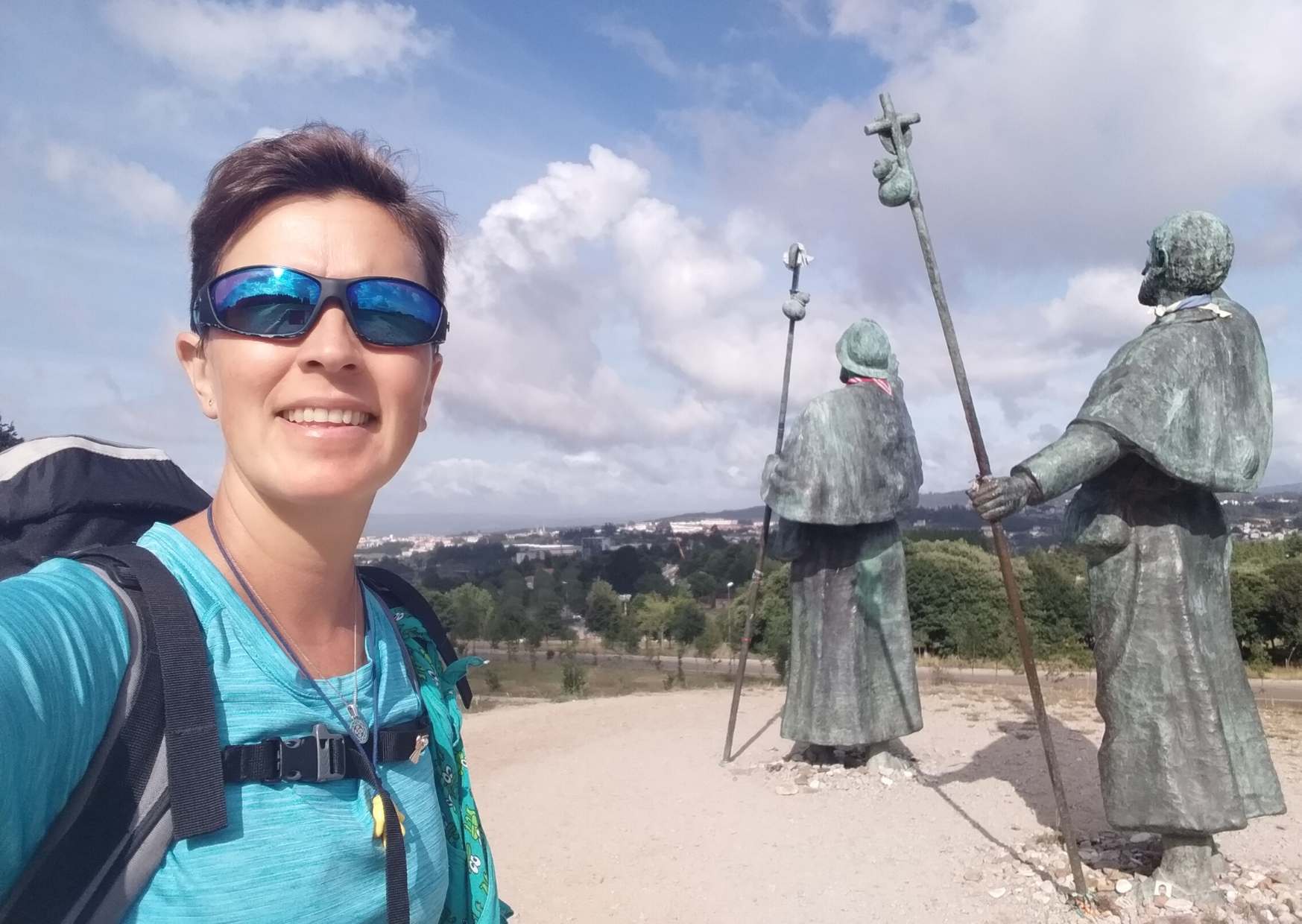
I met Oihana online. When or how exactly I can’t remember. We both belong to some of the same Camino-related FB groups and we have a couple of things in common: we were both born in towns along one of the Caminos and we have both lived in Ireland (in fact, she still does). So this conversation has been due for a while now.


I wasn’t sure whether to do it in English or Spanish. Finally, I thought that Spanish made more sense, since we’re both from Spain. And… it’s an excellent opportunity for you to practice. But don’t worry if your level of Spanish is not enough to follow our conversation yet! You can find a translation here.


A conversation with Oihana

Conversation with Oihana

Nací en Bilbao, Euskadi, en el Camino Norte a finales del año 75.

Viví y crecí en Venezuela por 27 años, donde realicé mi licenciatura en Administración de Empresas Turísticas y donde trabajé principalmente en el área de eventos, así como en campamentos vacacionales para niños y jóvenes entre 5 y 17 años principalmente en la zona de los Andes venezolanos. 


Actualmente vivo en Irlanda desde hace casi catorce años y trabajo en un colegio de primaria como asistente de educación especial. 


Es tradición de vascos caminar por el monte y recuerdo bien los domingos familiares con el bocadillo de lomo o la tortilla de patatas, así como las excursiones que hacía mi aitite (abuelo en vasco) paterno con los nietos en verano. Asistí a muchos campamentos vacacionales en Euskadi, mi primero con ocho años, una mochila al hombro con ropa y utensilios para dos semanas que recuerdo me pesaba muchísimo mientras caminamos hasta llegar al área final de acampada. Son experiencias que marcan.


En Caracas (Venezuela) existe el maravilloso Parque Nacional “El Ávila” y subir de excursión era algo habitual los fines de semana, unos días rutas cortas y otras durmiendo literalmente sobre las nubes a 2765m de altura en el pico Naiguatá.


En Irlanda las montañas son diferentes, más rocosas de lo que era habitual para mí y de menor altura pero algunas más difíciles de recorrer; son estas junto a las de la zona vasca del Camino Norte, las que me han hecho las piernas más fuertes para el Camino.


¿Cuándo oíste hablar del Camino por primera vez? ¿Cuándo decidiste hacerlo?
 

Santiago es el Patrón de Bilbao y tenemos también Catedral de Santiago, así que el Camino del Norte lo he conocido desde pequeña y caminaba por él sin saberlo porque en ese entonces no había flechas amarillas y no recuerdo ver peregrinos.


En el año Jacobeo de 1993, una de mis guías del movimiento juvenil concepcionista, Magdalena Hung, contaba su experiencia del Camino. No recuerdo detalles pero fue la chispa que encendió la llama del Camino y busqué más información, aunque no fue hasta que dejé Venezuela en 2003 que me decidí a investigar. Fue en el 2005 que tomé la decisión de hacerlo con otra amiga vasco-venezolana de la infancia que vivía en Pamplona en aquel entonces. 


¿Cómo fue tu primer Camino?

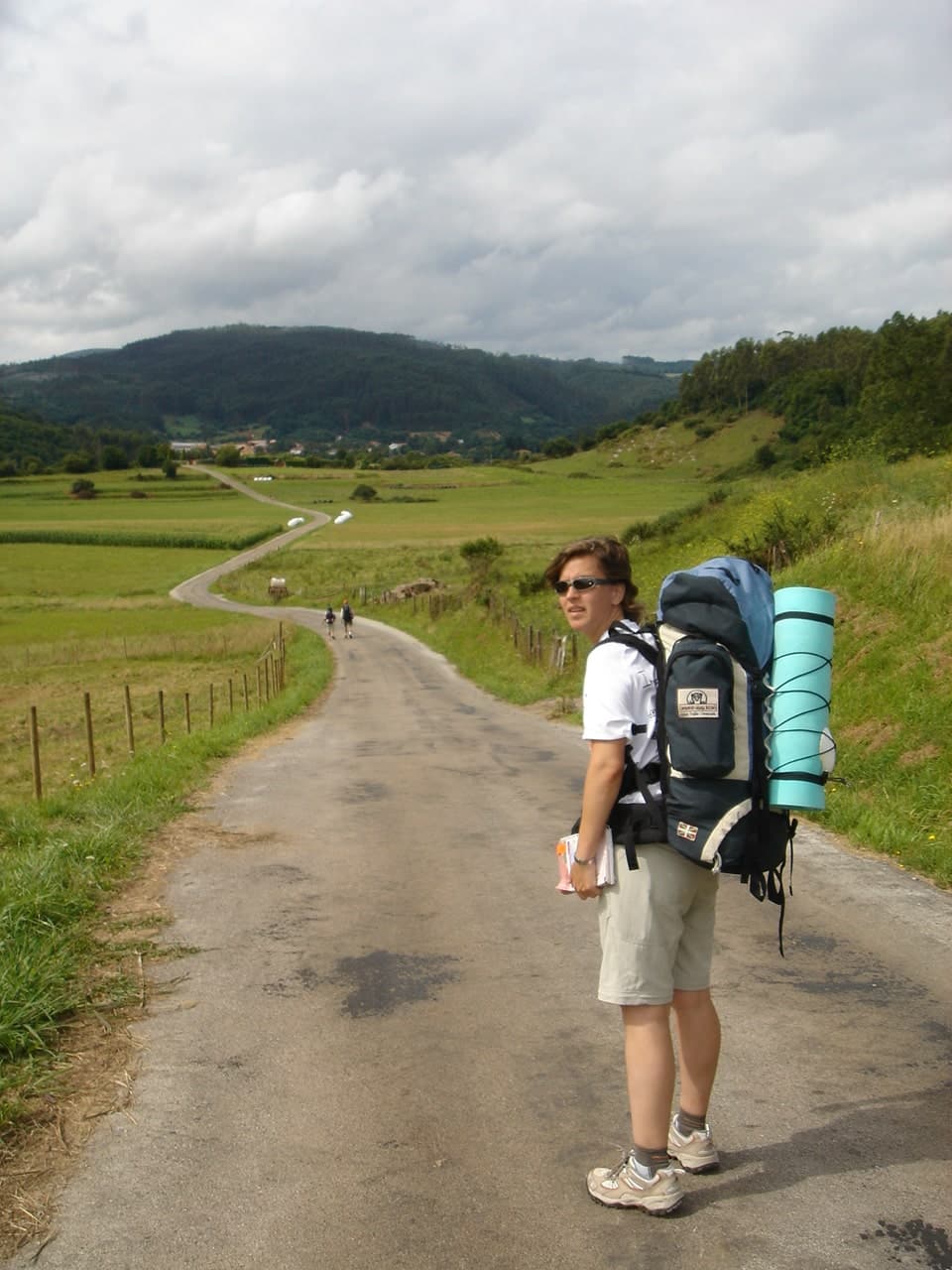
Mi amiga Leire y yo queríamos celebrar nuestro 30 cumpleaños de una manera especial y no encontramos mejor manera que pasar tiempo juntas peregrinando a Santiago por el Camino del Norte. Por temas laborales y de logística empezamos en junio de 2006 con unas mochilas de 60 litros y durmiendo en la tienda de campaña que llevábamos por si no encontrábamos albergues disponibles ya que en un principio hacíamos Camino los sábados y domingos. De Vilalba hasta Santiago no llevamos la tienda y dormimos entre albergues y algún hotel.


El Camino del Norte fue duro pero muy bonito, el ver el mar desde la montaña es algo que nos encantaba disfrutar. En agosto de 2006 me trasladé a Irlanda, así que el continuar Camino se complicó un poco más ya que debíamos coordinar nuestras vacaciones y llegamos a Santiago tres años después el 7 de Agosto de 2009. Allí dentro de la Catedral, en el Pórtico de la Gloria, mirando a Santiago y con nuestras Compostelas en mano, nos prometimos celebrar los 40 haciendo el Camino Portugués por la Costa desde Baiona.


Oihana and her friend Leire
On the Camino del Norte

Después has hecho otros Caminos…

He hecho varios Caminos con familia, amigas del colegio y sola. Recorro etapas del Camino Norte muy a menudo sola o con amistades cuando estoy de vacaciones por Bilbao, principalmente la zona vasca, cantabria y asturias porque puedo acceder fácilmente.

El año pasado volví a recorrer sola el Camino del Norte (mi madre, un par de tíos y una prima se unieron en algunas etapas) para celebrar el décimo aniversario de mi primer Camino y en memoria de mi amiga Leire con quien hice mi primer Camino y falleció en Navidad de 2013. 

Cuando tengo una semana de vacaciones, si puedo me gusta hacer Camino pero para terminar en Santiago, es por ello que también he recorrido el Camino inglés desde Ferrol, el Camino Portugués por la Costa desde Baiona y el Portugués desde Tui en varias ocasiones.

Al vivir en Irlanda, también he recorrido varias rutas de peregrinación irlandesas vinculadas al Camino Inglés por las cuales los irlandeses medievales recorrían antes de navegar hasta Coruña para continuar hasta Santiago.


Camino del Norte

Además, eres voluntaria en varias organizaciones relacionadas con el Camino.

En 2017, David Smith (clearskiescamino) me anima a formar parte del equipo de voluntarios de Camino Society Ireland y me introduce a Bernard Lynch quien me acoge, me entrena y me guía como voluntaria de la asociación para ayudar a los peregrinos con mi experiencia. 

En 2018, Bernard me indica que en la Oficina del Peregrino en Santiago había una plaza para hacer voluntariado con ACC (Acogida Cristiana en los Caminos de Santiago) y que buscaban preferiblemente a una persona con conocimientos y fluidez del español ya que por lo menos un 50% de los peregrinos en verano dominan esta lengua.

Este año también estaba en mis planes pero con las restricciones actuales de viaje por la pandemia, no creo que sea posible. Ser voluntaria para la Oficina del Peregrino es toda una experiencia que hay que vivirla para entenderla. La empatía peregrina para dar acogida es muy importante, es por ello que es requisito para ser voluntario el haber realizado el Camino. La mayoría de las vivencias son muy gratificantes y emotivas aunque algunas veces, el trato recibido por parte de una minoría de peregrinos deja mucho que desear.

Como voluntario te comprometes a dos semanas, trabajando seis horas diarias (muchas veces más por el tema de ayudar lo más que puedes) por seis días a la semana librando uno. Recibes alojamiento, que compartes con más voluntarios que se convierten en tu familia por catorce días. El resto va por cuenta del voluntario (traslado y manutención). 


Conversation with Oihana pilgrims office

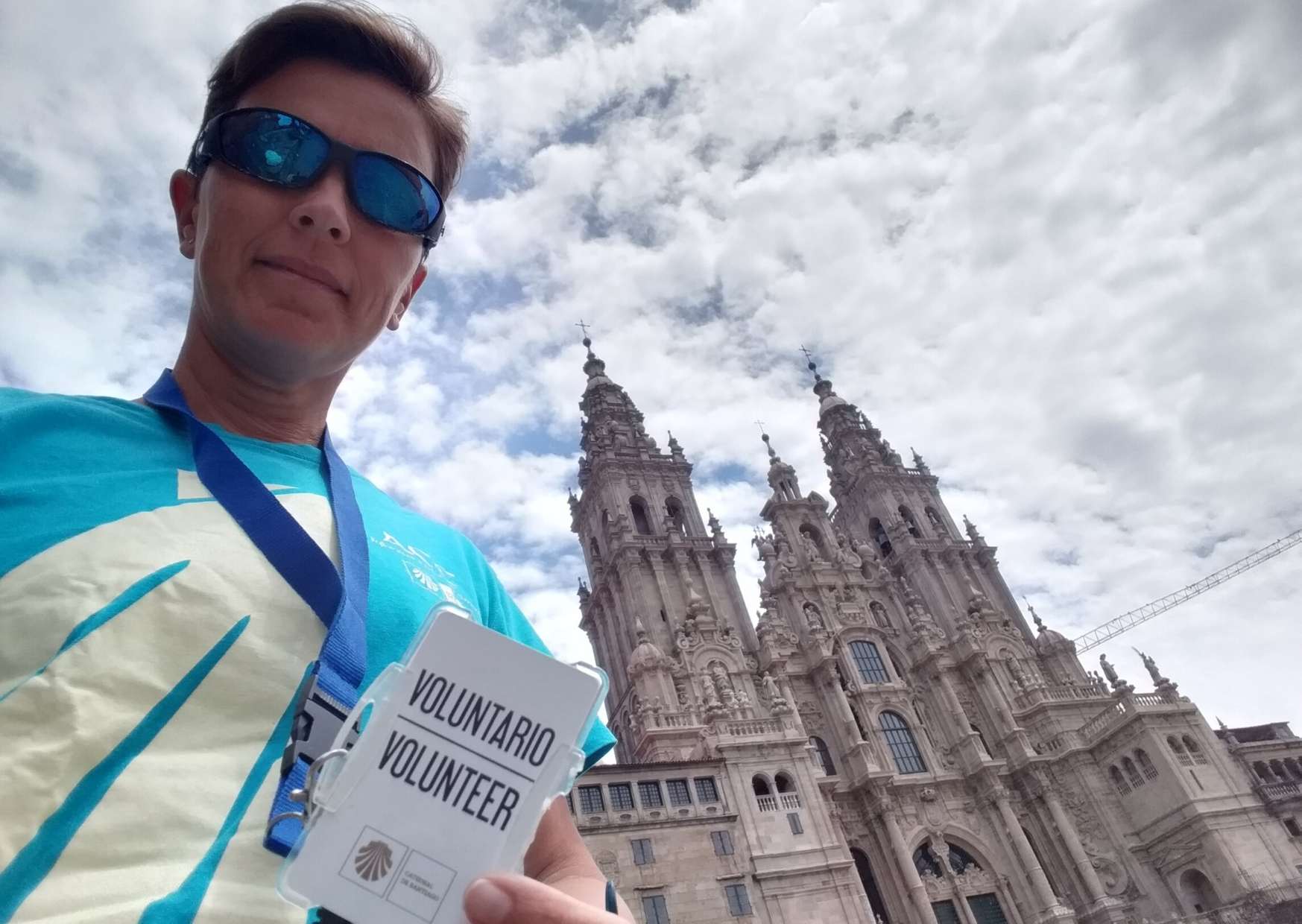
Los voluntarios son fáciles de identificar: siempre o casi siempre llevan la camiseta azul del uniforme de ACC que tiene media concha blanca. 


Puedes…

  • ayudar en los mostradores dando acogida y escribiendo Compostelas,
  • dar la bienvenida y acoger en la fila,
  • ayudar en Monte de Gozo ofreciendo información de la oficina del peregrino o de Santiago y revisando las credenciales al poner el sello para recordar de completar la información personal. Este detalle agiliza el proceso y el tiempo de espera para solicitar la Compostela cuando el peregrino llega cansado y el cuerpo no aguanta más,

… entre muchas otras cosas que según las habilidades de cada voluntario. 


¿Crees que tus Caminos habrían sido diferentes si no supieses hablar nada de español?

Por supuesto, el dominar el idioma mayoritario del país es una gran ventaja, sobre todo cuando pasas por poblaciones o caseríos donde no saben otro. 


En las grandes ciudades quizás es más fácil conseguir entenderse en inglés, francés o italiano pero por experiencia propia, muchas veces las traducciones no son correctas o hablando se mal interpretan y provocan confusión y enfados. Por ejemplo no es lo mismo decir “estoy cansada” que “casada”; son un par de palabras típicas que escucho a menudo y según el contexto puedo sacar la conclusión pero a veces vuelve loco a quien recibe para dar alojamiento y te ofrece un tipo de habitación o de cama disponible. 


Yo he ayudado a muchos peregrinos o gente local haciendo de intérprete si me doy cuenta que no se están entendiendo o me piden ayuda . El domino del idioma facilita a aprender más de la cultura a lo largo del Camino y a crear nuevas amistades. 


You can follow Oihana’s Caminos on Instagram and she has a blog too.


Today’s words and phrases

As you’re probably already aware of, Spanish is not the only language that is spoken in Spain. It is the common language, but several regions have their own language too. In Galicia, where Santiago is located, we have galego. You can read more about it (and learn a few phrases) in this previous post.


Oihana is from Bilbao, in the Basque Country, where they have their own language too, euskera. So, I thought it was the perfect occasion to learn some of the Basque language. She has kindly selected the following words for us and recorded the audio too.

Camino Portugués: de Redondela a Pontevedra

Camino Portugués: de Redondela a Pontevedra

Camino Portugués: de Redondela a Pontevedra |

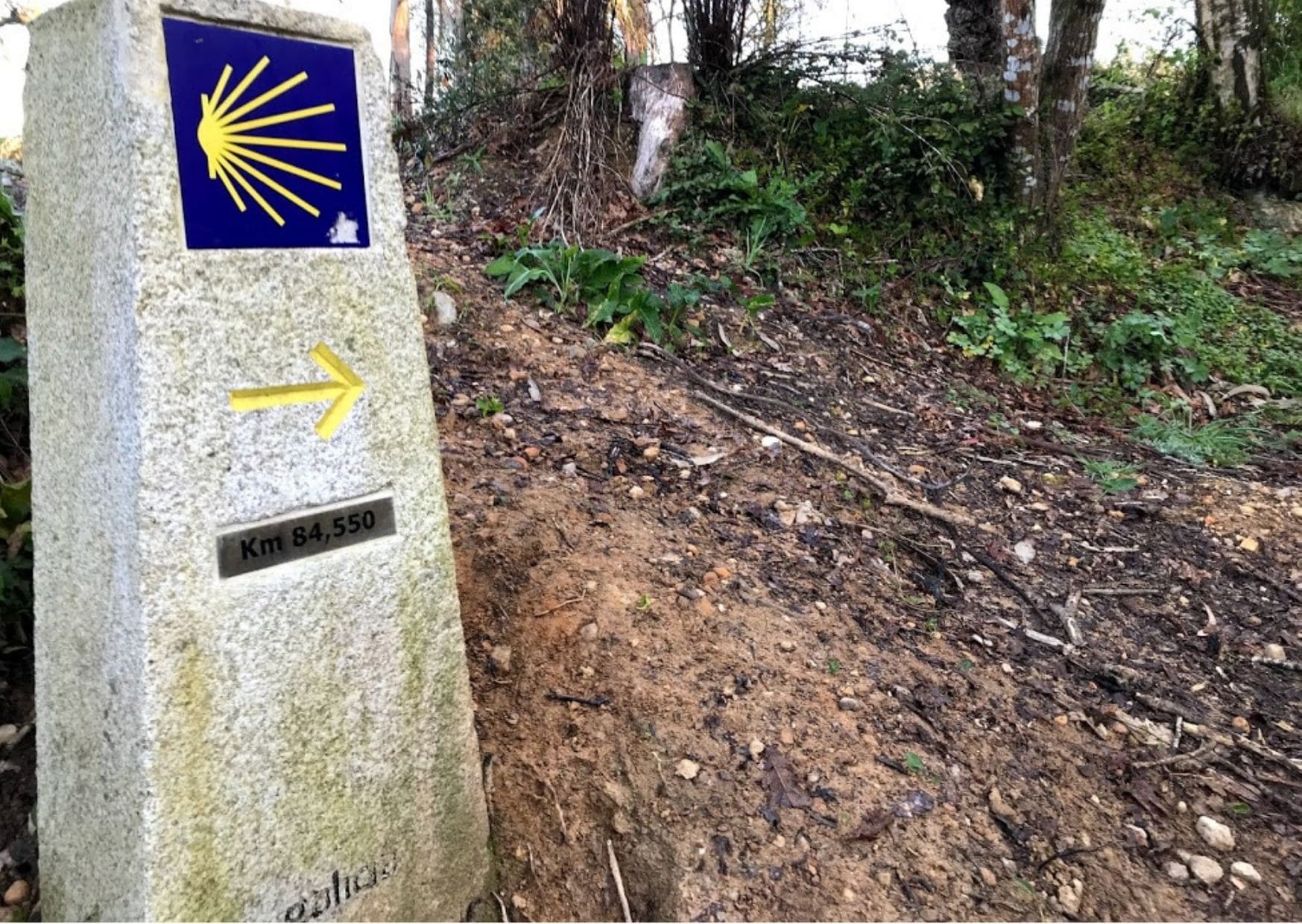
One of the advantages of living on the Camino is that you can walk the Camino every day. OK, it’s kind of a Groundhog Day situation: you walk the same stretch over and over and you never make it to Santiago de Compostela. But I must confess that I sometimes change my route so I can follow the flechas amarillas (yellow arrows) for a bit.


There’s something about following those arrows… If only every decision in life was so easy! You think “Should I do this or that?” And boom! A yellow arrow or concha de vieira (scallop shell) magically appears and shows you the way.


Another advantage of living on the Camino is that you can train for your next Camino… on the Camino. The Ruta da Pedra e da Auga, on the Variante Espiritual of the Camino Portugués, for instance, is a favourite route of ours.


The plan for the recent Carnival break was to walk 2 or 3 stages of the Camino Portugués. Life had other plans, however. That meant we could walk one stage only. We picked Redondela-Pontevedra because we could easily get to Redondela to start walking and we would finish at home. Not much planning required.


So el lunes (Monday) we took an early tren (train) to Redondela, had some café con leche and started walking. 


Redondela

One of the most characteristic features of Redondela are the two viaductos (viaduct) that cross town. They both date back to the 19th century.


Recently, I accidentally found out that there are two pieces of the Berlin Wall in Redondela. For more info check this article


I would have liked to walk around Redondela a bit, but by the time we got there and had breakfast it was already 9:00am. Great excuse to go back.


So, we set of from Praza da Constitución 1812, up rúa Cruceiro and past hórreo da Esfarrapada.


Hórreo. De Redondela a Pontevedra


Hórreos are a constant feature in Galician rural landscape. They are used to store grain. The pillars that raise them from the ground are ended in flat stones that prevent access by rodents. They are usually made of stone or a combination of stone and wood.

Soon we were out of town, walking on paved roads with little traffic. And after crossing a busy road we got to a pleasant picnic area with a fuente (fountain).


After that you walk mostly away from traffic, through forests. There’s an area where you get a nice view of the Ría de Vigo on your left. Right before that, there’s a display of shells, on your left too. I must say I was surprised by the number of these kinds of displays on this stage only. I don’t think I saw any on the whole Camino Inglés last year.


Another difference I noticed was that we never saw another pilgrim on the Inglés around the same time a year ago. On this one stage of the Camino Portugués from Redondela to Pontevedra we saw between 10 and 15 other people walking.


De Redondela a Pontevedra

Into Arcade

The worst part of the stage, for me, came right before Arcade. This stretch probably feels longer than it actually is, because you’re walking on a busy national road with cars, trucks and buses flying past you. But you are soon in Arcade, a nice little town famous for its ostras (oysters). In fact, every year, in the month of April, they celebrate an oyster festival.


Arcade has bars, restaurants, banks, shops… any service you may need.


Right after Arcade you pass Pontesampaio… and one of the most photographed bridges on this route. A plaque on one of the sides reminds us of the historical relevance of Pontesampaio: in June 1809, during the Independence War, the Spanish troops defeated the Napoleon’s army and thus ended the French occupation in Galicia.


Historical events aside, this is a beautiful spot.


After that, you continue through rural areas and forests for most of the way until Pontevedra.


The weather was nice, dry and sunny but not too warm and I found most of the stage quite a pleasant walk. There are some uphills, although they are not very demanding.


The most difficult part of the stage came after Pontesampaio, with a section on stone paths. Although it wasn’t raining that day, it has rained a lot this winter, so there was a lot of water and mud in between the stones, making the walk a bit trickier. Our bastones (hiking poles) came in quite handy here.

Entering Pontevedra

There is an alternative route or camino complementario into Pontevedra. After a small chapel (Capilla de Santa Marta in Tomeza). I was really looking forward to this section, after seeing photos and comments from other pilgrims. This camino complementario is longer than the official one but you get to walk in nature, surrounded by trees and with a river flowing by your side. Quite idyllic, as opposed to walking on the side of a road.


Well, the beginning of this alternative route is clearly marked but we had to skip it because there was also a sign saying that it was closed. A couple of months ago we had a few storms with heavy rain and strong winds. As a result, the small bridge over the river disappeared. I remember reading about this at the time but I had forgotten about it. So, we had to stick to the road. Not as scenic.


And we were finally home. One of the first things you see when you enter Pontevedra is the albergue. It’s right beside the train station and quite close to the bus station too. But you still have to walk a bit more to get to the city centre and see the famous church in the shape of a scallop shell: iglesia de la Virgen Peregrina, patron saint of the Camino Portugués.


I think Pontevedra well deserves a post. And you can find it here.


For a collection of legends and historical tidbits about this route, check my book Historias tras cada Paso. Leyendas y curiosidades del Camino Portugues. All the stories are about places along the Camino Portugués; many of them are directly related to the Camino or St. James. The book is in Spanish, for intermediate learners, and includes a vocabulary guide with English translation.


If you’d like to read about the previous stage, Porriño-Redondela, you can do so here.


Today’s Spanish words for the Camino


For the pronunciation of Redondela, Arcade, Pontevedra and Variante Espiritual, you can check this post about the Camino Portugués.

Want more?

Make sure you don’t miss any posts or announcements by subscribing for free here. You’ll receive a free Spanish vocabulary guide with your first Spanish words + cultural tips. And… you’ll get access to exclusive content too.


¡Buen Camino!

Topics you should avoid

Topics you should avoid

Topics you should avoid |

You’ve been dreaming for ages about walking the Camino. You’ve planned,  packed, trained… and you’re finally in Spain. Of course, you want to make the most of this amazing experience and hope that the time spent in Spain will go as smoothly as possible.


That can include a wide range of things, such as your flights not being delayed, not suffering any injuries or ampollas (blisters) and making meaningful connections with both fellow peregrinos and locals.


Some of these things are beyond your control, so we’ll not discuss them now. Others, however, you have power over.


It’s surprising how different things can be in another country, even one that is in theory close to ours: you say or do something that is perfectly OK in your homeland, and all of a sudden you can sense the mood changing. For the worse.


So, what should you do?

In order to minimise potential problems or awkward situations with Spaniards, there are certain behaviours and topics you’d better avoid.


Don’t criticise

As mentioned in this previous post, avoid criticising our customs; whether it’s mealtimes, siesta, bullfighting or something else. We may privately agree with you. But the fact that you, a foreigner, just came into our country and “have the nerve” to tell us how we should be doing things will not be welcome.


I mean, you wouldn’t like it if we went to your country and told you how to run it, would you?


Topics you should avoid

You should tread carefully if discussing política (politics) and religión (religion). In fact, my advice would be to stay away from those 2 as much as possible.


Politics is maybe an obvious subject to avoid. People can be very passionate about their political ideas and things can easily get heated when we don’t agree.


And I’m not just talking about current affair issues like the latest election results or the independence of Cataluña (Catalonia). Other “older” topics like the Spanish Civil War can also be very touchy and nobody will appreciate you, a foreigner, sharing your thoughts about it and “coming to teach us lessons”. That’s how most Spaniards would see it and that’s also one of the most polite replies you will get. So, stay away from it.


Oh! And please don’t even suggest that the Catalan, Basque and Galician languages are dialects, especially if you are talking to someone from one of those regions! They ARE languages and, in fact, they are co-official with Spanish in their respective territories. It really upsets many of us when you call them dialects.


Religion, on the other hand, is considered a private matter in Spain. You don’t ask someone you just met about their religious beliefs or practices. Of course, some walk the Camino for religious reasons, but some others don’t. So, unless they bring it up, I would also stay away from it. You’re just going to make people uncomfortable if you ask.


Bursting stereotypes

While I’m on this topic, I’d like to clarify some common misconceptions people tend to have about Spain and religion.

  • First of all, Spain has no official religion. After Franco’s dictatorship, Catholicism was abolished as the country’s official religion. Our current Constitution, adopted in 1978, establishes the right to religious freedom.


  • Secondly, Spain is not a deeply Catholic country, at least not in the way many foreigners think it is. According to the latest surveys, 2 thirds of Spaniards consider themselves Catholic, but only 22% of them attend church on a regular basis. Almost 30% of Spaniards identify as atheist, agnostic or non-believers.


You should avoid this, too

Before we finish for today, let me give you one final tip:


Please, don’t tell us we have a lisp because of some king or another a few centuries ago!


It’s not true; actually, it’s quite a ludicrous theory and all it shows is that you don’t know what a lisp is.


A lisp is a speech disorder characterised by  the inability to correctly pronounce the S sounds. People with a lisp typically pronounce S sounds as TH.


In Spain, there is a difference in pronunciation (and meaning) between the words seta (mushroom) and zeta (the letter z), or cocer (to boil) and coser (to sew), just to mention a couple of examples. Just the same way that an English speaker pronounces sink & think differently. So, if we have a lisp, I guess you do, too!

You’ve been warned. Now you know what topics you should avoid, so it’s up to you to stay out of trouble.


Today’s Spanish words

Want more?

Make sure you don’t miss any posts or announcements by subscribing for free here. You’ll receive a free Spanish vocabulary guide with your first Spanish words + cultural tips. And… you’ll get access to exclusive content too.
 

¡Buen Camino!