
The Camino Inglés: 6 days (or less) to Santiago

The Camino Inglés: 6 days (or less) to Santiago

When I felt I had to walk the Camino, one of my first questions was:

Which Camino should I do?

I didn’t feel ready to tackle a long one, and it wasn’t feasible either, given my personal circumstances. So I started looking into doing the last 100 km of a Camino. And then I came across Susan Jagannath‘s book The Camino Inglés: 6 days (or less) to Santiago. I read it and my decision was made!

It’s a fantastic little book full of practical information. It takes you from the planning stages all the way to the start of the Camino in Ferrol and from there to Santiago de Compostela.


The Camino Ingles: 6 days (or less) to Santiago

  • Chapters 1-4 are all about planning and preparing:

Chapter 1: we learn about the author’s motivation to walk and why she chose this route. There is also a lot of encouragement for anyone who is thinking of doing a Camino: don’t let things like age or level of fitness stop you.

Chapter 2 is all about preparation: mindset, fitness, nutrition, preparing your feet… and even a bit of Spanish! Yes, you can get a list of basic Spanish words and phrases to use on your Camino such as gracias (thank you), por favor (please), buenos días (good morning) or vino tinto (red wine).

There are a few more words in the chapters devoted to the actual walking, but the main ones can be found in this chapter. Some of these words have already been covered by me in previous posts, some others haven’t. You can scroll down for the audio files of the new ones (and some links to the old ones).

Chapter 3 is about planning: maps, transport, bag transfer services, safety issues (list of emergency numbers included) and mochila packing, with lists of essential and optional items.

Chapter 4 is about getting there: booking flights, train and bus services, types of accommodations.

  • Chapters 5-11.

These describe the author’s walk from Ferrol to Santiago. Each stage includes distances, elevation maps, list of available accommodations and extra insightful tips.

  • Finally, chapter 12.

It includes extra resources, such as websites, books she read before the walk and a Pilgrim’s Prayer.

And… this guide also includes a downloadable free set of maps of the towns and villages mentioned in the book.

I loved the way this is a very informative yet entertaining book. It gives you very easy to understand advice and it offers options and alternatives for people with different levels of fitness or health issues. It gives lots of encouragement too, all in an easy-to-read style (and humorous at times!).


The Camino Inglés: 6 days (or less) to Santiago is available on paperback and Kindle. I have the Kindle version (I have the Kindle app on my phone: no extra weight!), so I can’t comment on the size/weight of the paperback, but I’m guessing it’s not too heavy to carry in your mochila since it seems to be around 115 pages long.


Disclosure: this is an affiliate link. This means that if you click on it and happen to buy the book, I will get a small commission at no extra cost to you.


About Susan

Susan Jagannath

Susan Jagannath successfully combined a passion for reading, a love of writing and a fascination for technology, to create a career in technical writing. With over 50 technical manuals (not) to her name, she finally decided it was time to write the books she wanted to write under her own name.


As an army brat, her childhood included seven different schools, three universities and a couple of emergency evacuations from conflict zones. Travel and adventure were a normal part of life. She now believes in seizing every opportunity to have a new adventure.

Whether it’s camping on the beach in Australia, trekking in the Himalayas, kayaking in Queensland, whitewater rafting down the Ganges, or walking the Camino in Spain, her philosophy is to pack it into one or two weeks to create memories for a lifetime, and inspire others to see that the right time for adventure is right now.

Her first bestseller came from her walk in Spain, The Camino Ingles: 6 days to Santiago. What also happened is that Susan fell in love with Spain, and all things Spanish, and is busy making plans to return for a longer time, and maybe, another Camino.

Susan is now on the next adventure of her life, writing books that are not technical manuals, training to be an awesome grandmother, and helping others write and publish their own bestsellers.

To learn more about Susan Jagannath (and to download the map set), you can go to https://www.susanjagannath.com

Today’s Spanish words

For the pronunciation of Compostela, credencial and sello check ¿Cómo vas a hacer el Camino?

If you don’t know how to pronounce albergue, hostal and hotel check ¿Dónde vas a dormir?

For the pronunciation of Ración and tapa check ¿Dónde vas a comer?

Check Shopping on the Camino for the pronunciation of supermercado, farmacia and empanada.

For the pronunciation of lavadero and hospitalero check El albergue.

Want more?

Make sure you don’t miss any posts or announcements by subscribing for free here. You’ll receive a free Spanish vocabulary guide with your first Spanish words + cultural tips. And… you’ll get access to exclusive content too.

 

¡Buen Camino!

Money matters

Money matters

Money matters |

There’s a phrase that is repeated a lot in Camino forums and groups:

Cash is king.

And it’s true. Although many albergues, cafeterías & bares take cards, there are some places that only take efectivo (cash).

Money matters |


That means you always need to carry some dinero (money); euros, to be precise. And céntimos (cent). Billetes (notes) bigger than €50 will be difficult to change, so I would avoid them. Smaller billetes (€5, €10, €20) and a few monedas (coins) are your best choice for your daily expenses.


Taking money in your own currency and planning to exchange it at banks along the Camino is not a good plan. It will be hard to find a bank willing to do that for you if you’re not a client. 


But it’s OK; you don’t need to exchange large amounts of dinero before you travel and carry all that money on you. You can withdraw from cajeros automáticos or simply cajeros (ATM) along the Camino, maybe once a week. On average, people budget around 30-50 euros per day to pay for accommodation, food and snacks. This will give you an idea of how much to withdraw.

Most of us have at least one tarjeta (card), either de débito or de crédito. Or both. You will be able to use them to withdraw dinero from cajeros and to pay for hotels, restaurants and purchases in bigger shops in bigger towns.

Different countries and banks have different types of cards with different conditions, so it’s hard to give very specific advice, but if you are planning to use your tarjetas during your Camino, there are some things you should take into consideration.


Money tips

  • Before you travel, check your card’s conditions (fees and exchange rates) to avoid unpleasant surprises. For instance, tarjetas de crédito generally attract more fees than tarjetas de débito when withdrawing dinero from cajeros. 

If your card’s charges are too high, you might want to consider a prepaid card. Correos, the Spanish post office, has one. All info here: https://correosprepago.es

  • Let your bank know you are travelling. Otherwise, they might think the activity on your tarjeta looks suspicious and block it.


  • Visa and Mastercard are the most widely accepted cards. It might be hard to find places that accept others such as American Express.


  • Make sure your card has a 4-digit PIN number.


  • If you are asked whether you want to be charged in euros or your own currency, always choose euros. The exchange rate will be better.


  • As much as possible, try to use cajeros when the banks are open. If there’s any issue, such as your card being swallowed, you can go in and try to resolve it at once (opening hours are usually 8:30-14:30).

So, do you think you could ask these in Spanish? You can leave your answers in the comments below.

Can I pay with a card?

or

Where is there an ATM? 

Today’s Spanish words

Want more?

Make sure you don’t miss any posts or announcements by subscribing for free here. You’ll receive the transcripts + vocabulary guides + interactive exercises of episodes 1-5 of the Spanish for the Camino podcast. And… you’ll get access to exclusive content too.


¡Buen Camino!

El Camino Primitivo

El Camino Primitivo

After a stop for a tapa de pulpo á feira, we’re back to our series about the different Caminos. This week, I’m writing about the Camino Primitivo.


The Camino Primitivo (Primitive Way) is so called because it’s the first Camino pilgrimage of which there is a written record. It follows the route taken by king Alfonso II of Asturias in the 9th century when he visited the sepulchre of St. James, which had just been discovered.

The Camino Primitivo is one of the shortest Caminos, as it covers around 320km from Oviedo (in Asturias) to Santiago de Compostela. It is a route of amazing natural beauty, but it is also the hardest of the Caminos. That’s probably why only 4.5% of pilgrims chose this route in 2017, according to the Pilgrims office statistics).*


It is well signposted and there are albergues and other services all along the way, but there is a lot of going up and down through mountains on dirt paths, loose rocks and mostly difficult terrain. Sometimes, the albergue is the only available service in town, so make sure you check ahead of time and plan accordingly.


The weather in Asturias and Galicia is quite rainy so there will also be mud much of the time. As well as lluvia (rain), you can also expect viento (wind) and niebla (fog) in some areas. It’s not advisable to take this Camino in winter, due to nieve (snow) in the mountains.


The Camino Primitivo route


  • There is a variation called Ruta de los Hospitales, starting at Borres and so called because of the remains of several old mediaeval hospitals. This is allegedly one of the most beautiful sections of the Camino. It covers around 24km but if you are planning to do it you should be aware that it has no services at all. The weather can also be treacherous. So make sure you are well equipped and stay safe!


The Camino Primitivo in Galicia

  • The Camino Primitivo enters Galicia through O Acebo pass (1300m altitude) and from there it descends to Fonsagrada (700m).


  • The second biggest town on the Camino Primitivo is Lugo. It was founded in the year 25 b.C and it was one of the most important Roman settlements in the Iberian Peninsula. Its Roman walls are mostly intact and they surround the historic centre. They were added to UNESCO’S World Heritage List in 2000 (see https://whc.unesco.org/en/list/987). Definitely worth a visit!


  • From Lugo, this Camino continues towards Melide, where it joins the Camino Francés for the last stages.


Do you think this could the be the Camino for you? If you’ve done it, please share your experience!

*Source: https://oficinadelperegrino.com/estadisticas/

Today’s Spanish words


¡Buen Camino!

Want more?

Make sure you don’t miss any posts or announcements by subscribing for free here. You’ll receive a free Spanish vocabulary guide with your first Spanish words + cultural tips. And… you’ll get access to exclusive content too.

Pulpo á feira

Pulpo á feira

Galicia has a coastline of close to 1,500 km. So it’s only natural that pescado (fish) and marisco (shellfish) are the stars of Galician cuisine.

From mejillones (mussels) and merluza (hake) to chipirones (baby squid) or the expensive percebes (goose barnacles), there is a wide variety of sea produce to choose from.

But if I had to pick one only, it would have to be pulpo (octopus). Pulpo can be prepared in different ways. But the most popular and best known octopus recipe in Galicia is pulpo á feira, a very simple yet delicious dish. Á feira literally means fair-style.

Nowadays, you can find pulpo in many bares and restaurantes. But in the past, it was something you ate on fair days. There still are people who specialize in cooking pulpo. They go from one fair to another, set up their stall and serve pulpo.


Here’s how to prepare pulpo á feira

  • If you buy a fresh pulpo, the first thing you need to do is to clean it very well and freeze it for at least a couple of days, in order to tenderize it. Otherwise, it will be too hard.
  • When you are ready to prepare it, take it out of the freezer and let it thaw.
  • Bring a big pot of water to the boil.
  • Hold the pulpo by the head and dip it in and out of the boiling water three times. This will prevent the skin peeling off.
  • After you’ve dipped it three times, put it back in the pan and bring it back to the boil. Cooking time depends a bit on the size of the pulpo, but it will take around 30 minutes. You can check with a fork if it’s tender enough (it should be kind of “al dente”, not too hard, not too tender).
  • Once it’s cooked, take the pan away from the heat but leave the pulpo in the water for another 20 minutes.
  • Then, cut it into pieces and arrange them on a serving plate (traditionally, it is served on a wooden plate).
  • Sprinkle with sal (salt) and pimentón (paprika), picante (hot, spicy) if you like. And drizzle with aceite de oliva (olive oil).
  • Finally, serve with plenty of pan and enjoy!

Pulpo can also be served with patatas. If you prefer it this way, here’s the secret to the perfect patatas. Take some of the water you used to cook the pulpo and use it to boil them. So much nicer than just boiling them in plain water!

Have you had pulpo á feira already? Did you like it? Share your experience!


Today’s Spanish words

For more recipes and food info, download my free Camino Food Guide.

Want more?

Make sure you don’t miss any posts or announcements by subscribing for free here. You’ll receive a free Camino food guide. And… you’ll get access to exclusive content too.
 

¡Buen Camino!

Tengo alergia a…

Tengo alergia a…

The Camino de Santiago is for many a life-changing experience that takes you out of your comfort zone: you are in a foreign land where they speak a different language… and they eat differently too!


It can be a wonderful opportunity to try new foods and discover new flavours that you may later try to recreate at home. But if you have any food allergies, it can be very stressful not knowing whether you can get the right food, or not being sure whether something is safe for you to eat.


A few weeks ago, I wrote a post with tips and Spanish for veganos and vegetarianos who wish to do the Camino de Santiago. I know it’s not the same; if you suffer from food allergies, accidentally eating the wrong food can be life-threatening or it can make you very sick. But still, most of the tips and vocabulary I shared in that post can be used in case of alergia or intolerancia.


Shopping for food 

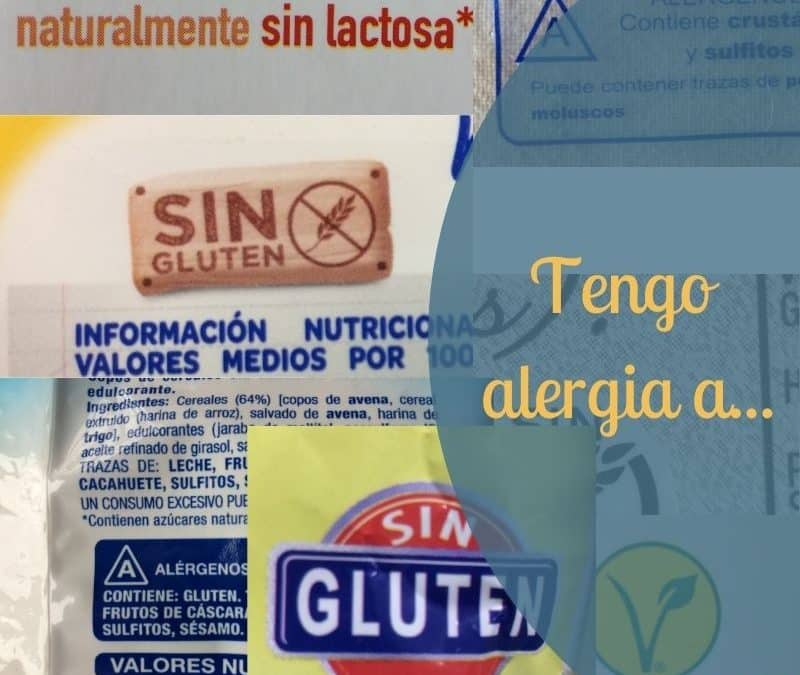
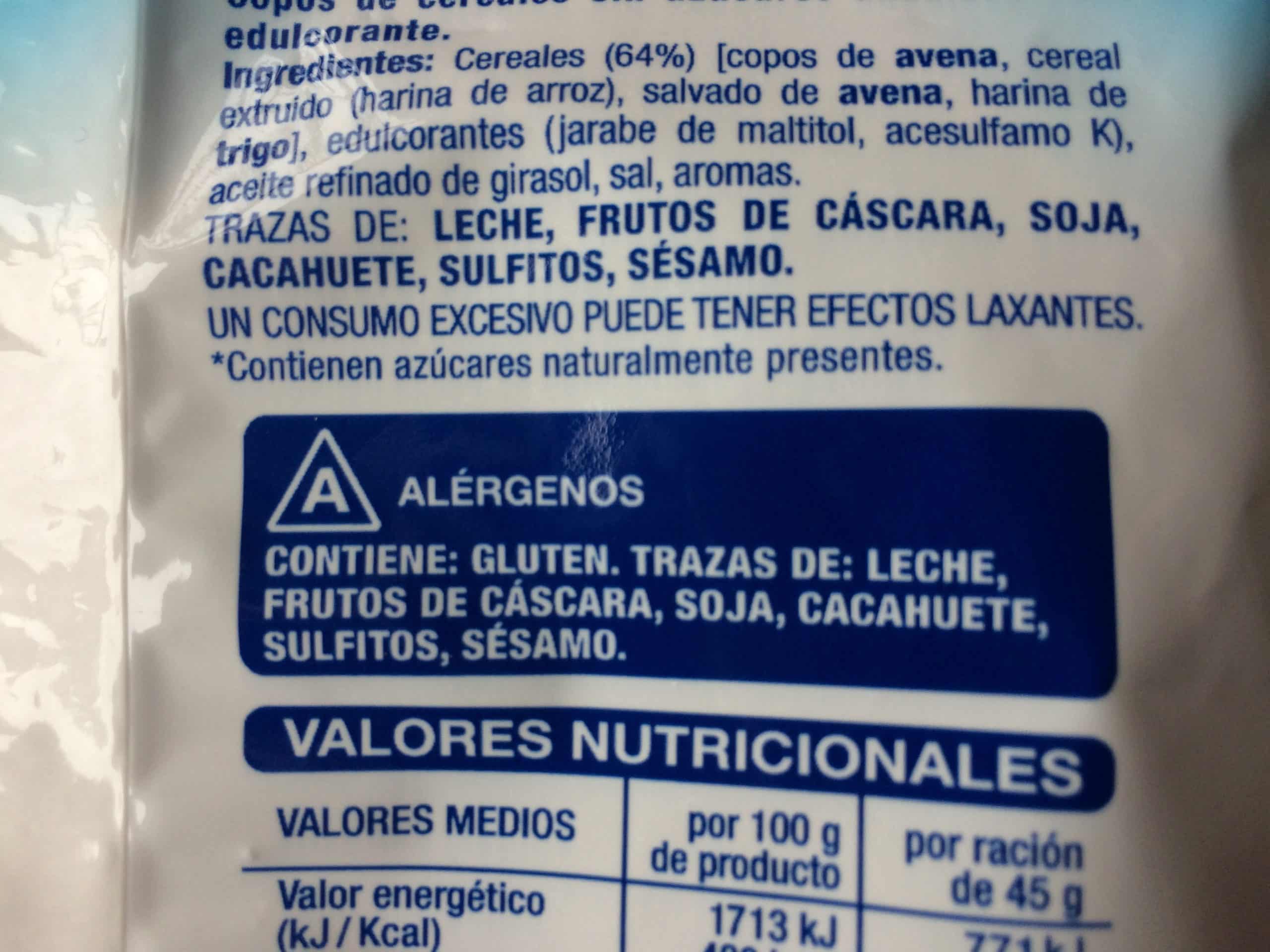
If you decide to buy your food, you should know that labels must clearly indicate any allergens present in the product:


  • On the ingredient list, you can see allergens in bold or capitals.
  • After the ingredient list, there is usually a list of possible traces of other foods, as well as a full list of allergens (this is not always present, so make sure you check the ingredient list).

When a particular product is safe to eat for a specific group, the label clearly indicates so. You can see different examples in the pictures.

These show a variety of food products that are suitable for celíacos (celiacs), because they are sin gluten (literally, without gluten).

The first picture shows a product that is suitable for veganos (sin huevo y sin lácteos – no egg, no dairy), which would also make it suitable for people with egg or dairy allergies. The second one shows a product sin lactosa (lactose free).


Most supermarkets these days have a good selection of products sin gluten and sin lactosa. Smaller towns and villages might not have so many options, so it’s a good idea to buy a few extra things when you get the chance.


Eating out when you have food allergies

Eating outside is also possible, as long as you take some precautions such as informing the waiter/waitress about your alergia or intolerancia.


  • You can say No puedo comer… (+ food you are allergic to), which means “I cannot eat…
  • Alternatively, you could also say Tengo alergia a…(again, complete with food you are allergic to).


Let’s say you are allergic to peanuts. You could say:


No puedo comer cacahuetes or Tengo alergia a los cacahuetes…

or a combination of both, just to make sure the message gets a cross:


No puedo comer cacahuetes. Tengo alergia. 


Some menus will have allergen information. You will see little symbols like these:

tengo alergia a

If this information is not there or if you are not sure, remember you can always ask about the ingredients in any dish (check Soy vegano/a for that info). And you can also ask for an ingredient to be left out. For instance, if you don’t want cream you could ask sin nata, por favor.


Do you suffer from food allergies and you have done the Camino?  Please share your experience!


* For celíacos, here’s a link, where you can find gluten-free bars, restaurants, etc.: https://www.viajarsingluten.com/en/restaurantes-sin-gluten/


This other link is specific to Galicia and includes establishments that have an agreement with the Celiacs Association to  provide a menú sin gluten: https://celiacosgalicia.es/es/restauracion-sin-gluten/


Today’s Spanish words

Want more?

Make sure you don’t miss any posts or announcements by subscribing for free here. You’ll receive a free Camino food guide. And… you’ll get access to exclusive content too.
  

¡Buen Camino!