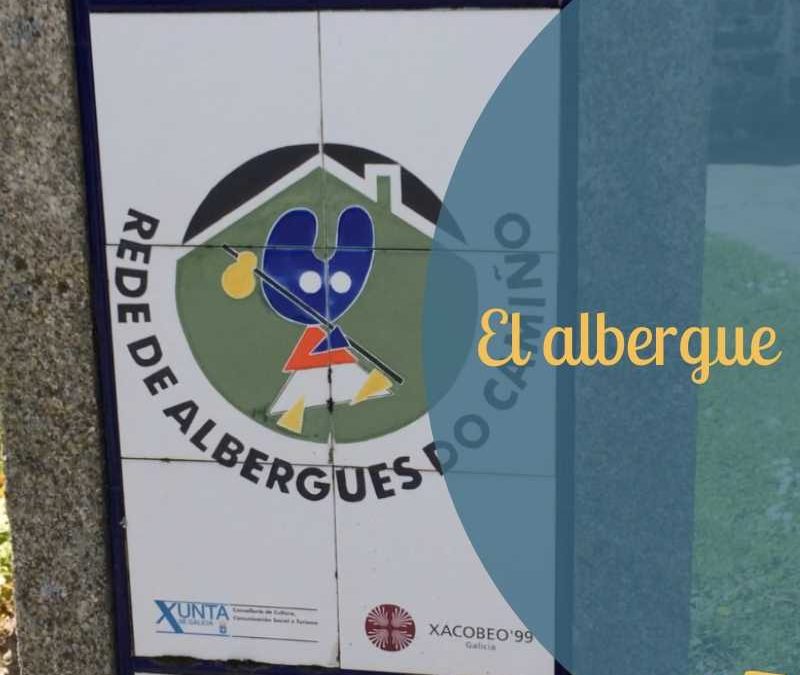
El albergue

El albergue

El albergue |

What’s an albergue and what can you expect from it?

In short, it’s one of the types of accommodations you’ll find along the Camino de Santiago. In my previous post, I listed the main types: el albergue (both public and private), el hostal, la pensión and el hotel (you can read the whole post here -and check the pronunciation of these words too!). I briefly commented on each one and promised to elaborate on el albergue.

So, that’s what I’m going to do this week.


El albergue

Public municipal albergues are the most popular accommodation  for the Camino. They are especially designed for pilgrims, which means you need proof that you are a pilgrim if you are planning to stay in one of them. And how do you prove that you are truly a pilgrim on your way to Santiago? Your stamped credencial! 

  • A very important thing to know about municipal albergues is that they do not take reservations. They operate on a first-come first-served basis, and this can be a problem during the busiest times of the year if you want to avoid the bed race. Also, generally you can only stay for one night. Pilgrims a pie have preference over those a caballo or en bici. 


  • El albergue is a basic type of accommodation. The prices per night range from €6 to €12, with the private albergues being a bit more expensive. Some of them ask for a voluntary donation only. They usually have big dormitories with literas (bunk beds), which might not suit everybody. And you need to take a pillowcase and a saco de dormir (sleeping bag) or something similar with you. Of course, this means no private baños (bathrooms), but you can still have a much needed ducha (shower) after a long day’s walk. On the other hand, staying in albergues is a great way to feel part of the community, to meet other pilgrims and share your experience with them.


  • Albergues offer a variety of services with pilgrims in mind. Many have a lavadora (washing machine) or at least a lavadero (facilities for hand washing). Some also have a cocina (kitchen), where you can cook yourself a meal. Since the services can differ a lot between albergues you should check beforehand in any of the available guides.


  • Last but not least, we should mention the hospitaleros, those people in charge of the albergues. They are all volunteers who have at least once done the Camino de Santiago themselves. They take care of the place and will help you with information you may need about the route or the local area.

¿Qué hay en tu albergue?

What is there in your albergue?


* For changes in albergues due to the Covid-19 pandemic, please check this post.

Albergue de Pontedeume
Albergue de Neda
sleeping in an albergue


For the pronunciation of albergue and litera, you can go to last week’s post.

For the pronunciation of credencial, a pie, a caballo and en bici check this other post.


Read about Gary’s experience as an hospitalero.


Want more?

Make sure you don’t miss any posts or announcements by subscribing for free here. You’ll receive a free Spanish vocabulary guide with your first Spanish words + cultural tips. And… you’ll get access to exclusive content too.

 

¡Buen Camino!

¿Dónde vas a dormir?

¿Dónde vas a dormir?

Where to sleep on the Camino

or ¿Dónde vas a dormir?


When choosing accommodation, you have a few options, depending on your circumstances and the type of experience you want to have.

  • For some, you can only have a true pilgrim experience if you stay in public albergues (hostels). I will write another post just on albergues, but you should know, at least, that you need your stamped credencial to stay in them and that they operate on a first-come first-served basis, which means you cannot book them in advance. An albergue is a basic type of accommodation. They usually have big, shared rooms, with literas (bunk beds). The number of people per room varies from one albergue to another. The prices per night range from €6 to €12. Some of them ask for a voluntary donation only.


  • Private albergues are a bit more expensive but they have the advantage that you can book a space in advance. Apart from that they don’t differ much from the public albergues: mostly shared dorms with several literas, although some of them also have private rooms.


  • Hostales and pensiones (guesthouses). They are usually small family-run businesses, with less services than hotels. You’re more likely to find  rooms with private bathrooms in this kind of accommodation.


  • Hoteles (hotels). In bigger towns you will find a wide range of hotels for all budgets and offering different services.

You don’t have to stay in the same type of accommodation every night. You could go for albergues most nights, but then one day you feel like pampering yourself, or you need more privacy, or… whatever and you give the albergue a miss for a night or two. No problem! Also, if you are travelling as a part of a group, it might be difficult to get literas for everybody in the albergue. So, have you decided where you are going to stay during your Camino?


Why don’t you leave a comment saying: Voy a dormir en… and complete with un albergue/una pensión/un hostal/un hotel. But before you answer, you might want to check the rest of available accommodations in this other post: ¿Dónde vas a dormir? (II)

If you prefer to listen, check this podcast episode:

Looking for the podcast transcripts? Click here to find them.


In previous weeks I wrote about decisions you have to make before you embark on this adventure that is the Camino de Santiago. If you missed these posts and you would like to read them as well as learn some more Spanish, just click on the questions ¿Cómo vas a hacer el Camino? and ¿Qué vas a llevar en la mochila?


Today’s Spanish words


For the pronunciation of credencial, check this other post.


Want more?

Make sure you don’t miss any posts or announcements by subscribing for free here. You’ll receive the transcripts + vocabulary guides + interactive exercises of episodes 1-5 of the Spanish for the Camino podcast. And… you’ll get access to exclusive content too.


¡Buen Camino!

La mochila

La mochila

La mochila |

Last week I asked you…  ¿cómo vas a hacer el Camino? (how are you going to do the Camino?)

But that’s not the only decision you need to make before you start your pilgrimage.

A very important one is:


 ¿Qué vas a llevar en la mochila? 

or

What are you going to take in your backpack?


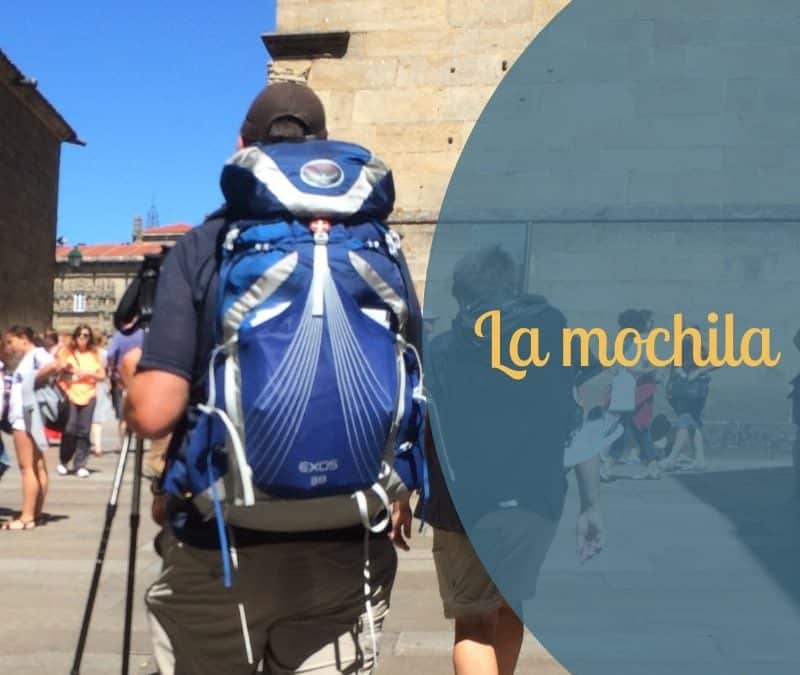
Unless you decide to get your mochila transferred from place to place by a courier company,  you will have to carry it with you every day. So you don’t want to pack unnecessary items that will only add weight. The general recommendation is that you should not carry more than 10% of your own weight, up to a maximum of 8 or 9kg. Let’s say you weigh 70kg; then your mochila should not be heavier than 7kg.


So what should you pack? The contents of your mochila will differ slightly depending on the route you have chosen and the time of the year when you are doing it, but there are things you can’t leave behind!


  • Ropa (clothes): it will be a bit different depending on the time of the year you are travelling (and I will elaborate on clothes and toiletries in the coming weeks), but as a general rule, you should bring trousers, two or three T-shirts, as well as underwear and socks.


  • Calzado (shoes): again, your choice will depend on your route and the time of the year, but whether you choose trekking boots or shoes, make sure they are not new! If you need to buy a new pair of shoes, you should start wearing them at least three months before you start your Camino.


  • Toalla (towel): a lightweight quick dry towel is your best choice.


  • Tiritas (plasters): to take care of your feet, so you can rub vaseline in every day. If you still get blisters, tiritas might come in handy!


  • Toiletries such as toothbrush, toothpaste and deodorant.


Are you ready to answer the question now? And what would you add to this list?

mochila


Why don’t you write a comment with your answer?

Try:


Voy a llevar… or llevo(If you are already doing the Camino).

Want more?

Make sure you don’t miss any posts or announcements by subscribing for free here. You’ll receive the transcripts + vocabulary guides + interactive exercises of episodes 1-5 of the Spanish for the Camino podcast. And… you’ll get access to exclusive content too.


¡Buen Camino!

Do you need Spanish on the Camino?

Do you need Spanish on the Camino?

Do I need to learn Spanish for the Camino de Santiago in Spain?

Short answer, no. You can walk the Camino without speaking Spanish.

BUT…

learning at least some basic Spanish is a very good idea.

Why should you learn some basic Spanish before your Camino?


First of all, it shows respect for the local people and culture (and you’ll get better treatment).

It also helps you connect with the people you meet, pilgrims or not.

And last but not least, it’s useful: whether you’re ordering food, asking for directions, or dealing with a blister, a few words of Spanish can make a big difference.

Learn the Spanish you need for the Camino

That’s where I come in.

On this blog (and through other resources I offer) I want to help you learn the kind of Spanish you’ll actually use on the Camino. Not just random lists of “useful phrases,” but real, practical language that helps you feel more confident and connected on your journey.

If you have ever travelled abroad (to a country where they don’t speak your language), I’m sure you have seen these lists of “useful phrases”, where you get a few words and phrases in the language of that country with the translation into your own language.


I have. And I don’t find them so “useful”. Why?


Two reasons, mainly:

  • Most of them give you the words but don’t tell you how to pronounce them. So chances are that if you try to say anything, people won’t understand you. Embarrassing and frustrating!


  • They only tell you what YOU can say. Imagine you get the pronunciation right but… what happens when people talk back to you? Blank face… you are lost!


Where I live, I see many pilgrims passing by every day. Sometimes, I see them struggling to communicate, looking for directions or information about something they need. I like to help when I get the chance (I’ve been abroad too and I know that feeling!). But I can only help a very small number.


So I had this idea that will allow me to reach and help more people.


What to expect from Spanish for the Camino

  • A blog with useful Spanish Camino vocabulary in every post, and audio so you know how to pronounce it.
  • A podcast, in Spanish, if you’re past the beginner stages.
  • Books, courses and other resources, free and paid. Here’s a list of everything.

Start learning Spanish for the Camino


35 Spanish words for the Camino

What you’ll find inside:

  • 15 pages of the very basics: greetings and other essential words, how to ask questions…
  • Simple explanations.
  • Vocabulary that is relevant to the Camino.
  • Spanish-English vocabulary list
  • Cultural tips.
  • PLUS, an extra gift after you sign up.

Happy learning and buen Camino!