It’s your Camino

It’s your Camino

It’s your Camino

Does that sound familiar? If you’ve been planning and/or thinking about your Camino de Santiago for a while I’m sure you’ve heard it or read it before.

To me, it means that it’s OK to ask for advice and read about other pilgrims’ experiences, but you should make your own decisions. You know yourself best and you are, therefore, the most qualified person to decide what the best choices for you are.

Your Camino, your rules. After all, a pilgrimage is “a journey to a shrine or other sacred place”. There is nothing in the definition to indicate how far you have to walk (it doesn’t even say you have to walk), where you must sleep or how much weight you should carry.

Everyone’s experience is different and the fact that someone has already done a Camino (or dos or diez) does not mean that what worked for them is going to work for you. OK, some things are plain common sense but many of them are really just a personal choice.

And if you don’t believe me, read on.

Someone recently asked in a Camino forum the following question:


What’s one item you packed and never used?

It was funny to read how items that some people packed and never used were essential for some other people.

  • Saco de dormir (sleeping bag). Whether you need one or not will depend a lot on the time of the year you are doing your Camino and where you are sleeping. Generally speaking, you will need one if you are staying in the municipal albergues and you won’t if you stay in private accommodation. But there are exceptions too.


  • Ropa de lluvia (rain gear). Again, whether you will need it or not will depend on a number of factors such as the time of the year or the Camino you’ve chosen. However, the weather can be a bit of a lottery, so it’s hard to know what’s going to happen.

Last year, for instance, was exceptionally dry and so it didn’t rain during months that are generally wet. This year, on the other hand, has been quite wet (more than usual) so you might need some ropa de lluvia even now, in verano (summer).


  • Bañador (swimming suit). Time of the year is again a deciding factor, as well as the chosen route: you are more likely to need a bañador in the summer months and/or if you do one of the Caminos along the coast (Camino del Norte or Portugués por la Costa, for instance). But that doesn’t mean you won’t need it elsewhere: some albergues have piscinas (swimming pools) and you could also decide to take a rest day and stay in a nice hotel with a spa!


  • Almohada (pillow). Some people take an inflatable almohada and use it; others take it and don’t use it; some others manage with whatever almohadas are available in their albergue and some make one out of their spare clothes. It’s up to you!
 

What else?

  • Tendedero (clothesline). Some people took one and used it daily; some others never used it. Alternatively, you can pack a spare pair of shoe laces and use them as your tendedero if you ever need one. Albergues generally have space for you to hang your clothes to dry.


  • Spork. I have to admit I didn’t have a clue if there was a word in Spanish for a spork. After some searching, I found cuchador, a combination of cuchara (spoon) and tenedor (fork). However, I’m not sure how widely used this word is (I’ve never heard it).

Anyway, whether the word cuchador is used in Spanish or not, the fact is that it’s one of those items that some people used all the time and some others packed but never used.

Can you add anything to this list? I’d love to hear your experiences.


Today’s Spanish words


Want more?

Make sure you don’t miss any posts or announcements by subscribing for free here. You’ll receive a free Spanish vocabulary guide with your first Spanish words + cultural tips. And… you’ll get access to exclusive content too.

 

¡Buen Camino!

El botiquín

El botiquín

El botiquín |

When you are packing your mochila you should leave some space for a small botiquín (first-aid kit). But what should it include? Of course, if you normally take any medications, make sure you pack enough of it, or find out if you can get it in Spain.

As I mentioned in previous posts, it’s important to keep your mochila as light as possible. As one experienced pilgrim advised us last week:

No “just in case” stuff. You can buy what you need in Spain.

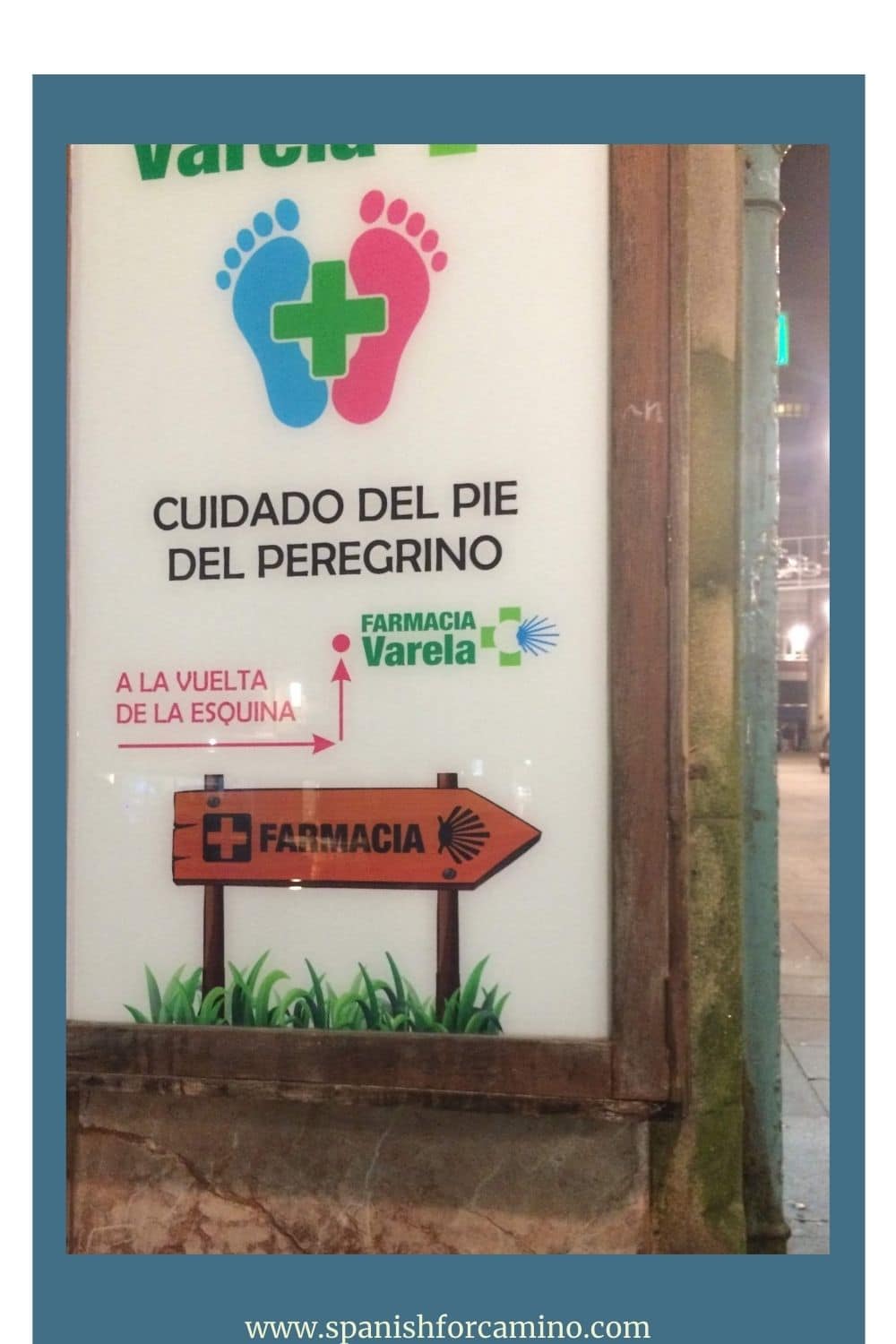
And where can you buy health related items? The most obvious answer is a farmacia. Here you can get medicines, with or without prescription, as well as a long list of other items for your personal care.

The pharmacy sector is very regulated in Spain, which means you can’t just open a new farmacia anywhere you like. As a result, a few years ago a new type of business was created: the parafarmacia.

Basically, in a parafarmacia you can find the same stuff as in a farmacia, except for medicines: they sell tiritas and Compeed, creams (sun protection and others), personal hygiene products: from jabón (soap), to shampoo, to pasta de dientes (toothpaste)…

At times when shops are usually closed, such as late evenings and Sundays, there is always a farmacia de guardia (pharmacy on-call). All farmacias have to display a list of the farmacias de guardia in the area. The problem is that if you are in a small town, the nearest farmacia de guardia will probably be in the next town. Not very convenient!

That’s why it is a good idea to always carry a few basic items with you.

So, what should you carry in el botiquín?


Pilgrim foot care


Your pies (feet) are the most important part of your body when you are doing the Camino de Santiago and not looking after them properly can put an early end to your walk.

Ampollas (blisters) are the most common problem that pilgrims face. We should do whatever we can to prevent them, but sometimes they are inevitable. In previous posts I discussed calzado (shoes) and calcetines (socks), as well as vaselina and tennis balls. I have also read an article recently saying that paper tape could be an effective and cheap way to prevent blisters.


  • If all of the above fails and you get ampollas, you will need aguja (needle) to drain the fluid (but don’t remove the skin!). Make sure your aguja is disinfected before you use it and that you also disinfect the area afterwards. Then you can cover it with tiritas or something similar.


  • Depending on the time of the year when you do your Camino de Santiago, you might also need protector solar or crema solar (sun protection cream).


  • Ibuprofeno is a Camino favourite is everyone’s botiquín. It works as an anti-inflammatory if you have any swelling, and as pain relief, too. And you can get it in different formats (gel, tablets and even powder to mix with water). As with any other drug, just make sure you check what the right dose is as well as the possible side effects and contraindications.


So, what are you planning to include in el botiquín? Or, if you already have Camino experience, what did you take? Did you have to buy anything?


Today’s words

Your packing advice

Your packing advice

Updated: January 2026


What to pack in your backpack for the Camino de Santiago


If you’re planning your Camino de Santiago, one of the most important decisions after choosing your route is what to take in your mochila (backpack).

Unless you hire a luggage transfer service, you’ll be carrying your backpack for hours every day. That’s why it’s essential to pack only what you need. A general rule of thumb is to carry no more than 10% of your body weight.

But what should you pack? Partily, it depends on your route, the season, and your personal needs, but there are some essentials every pilgrim should bring. I’ve asked other experienced pilgrims for advice and this is what they came up with:

Clothing

  • Pantalones (trousers), camisetas (T-shirts), underwear, and calcetines (socks ), as well as a jacket and rain gear.

  • Quick-dry, lightweight clothing is best.

  • For spring or summer, a long-sleeve light shirt can protect against sun and chilly mornings.

  • Merino wool clothing is very popular among pilgrims: it dries quickly and doesn’t get smelly.

Pilgrim advice: Don’t overpack clothes. Two changes of clothes are usually enough, plus one extra outfit for going out in towns or while doing laundry.

Footwear

Whether you choose hiking boots, shoes or sandals, don’t start your Camino with brand-new footwear. Break them in before your walk.

Many pilgrims also bring sandals to let their feet rest in the evenings.

Good socks are essential. Some prefer merino, other toe socks, or 2 pairs or socks… find out what works best for you.

Other items

  • Toalla (towel): lightweight and quick-dry

  • Plasters/bandages: to prevent blisters and treat small injuries

  • Toiletries: toothbrush, toothpaste, deodorant

  • Mobile phone: for communication, GPS, and photos

Highly recommended by pilgrims

The most popular item, by far, among the ladies is a pareo (sarong), as it serves multiple purposes: it can be used as a sheet or towel or worn as a skirt or dress while washing other clothes; it provides privacy around your bed, acts as a pillowcase or extra layer for warmth and protects against sun.

Safety pins and earplugs are both small but essential.


What should you not pack

What people regretted the most was packing too much stuff. I love Beth’s piece of advice:

Don’t take anything on the Camino you aren’t willing to leave behind to lighten your load. I left toiletries and clothing at every albergue for the first 10 nights. I walked with people who carried way too much weight but were unwilling to ditch their items. Not being attached allowed me the freedom to let go, lighten my burden, and walk free!


Most pilgrims I asked said they packed too many clothes. A Swiss Army knife was another item that many pilgrims packed and didn’t use.

Some took a guía (guidebook) and didn’t use it, but some others did use their guidebooks, so just think about it: do you think you will use it? Or can you manage without it?


When in doubt, follow this pilgrim’s advice:

No “just in case” stuff. You can buy what you need in Spain.

In summary


Pack light, prioritize essentials, protect your feet, and choose multipurpose clothing and items. A well-packed backpack will make your Camino more comfortable and enjoyable.

Minimal, multipurpose items are better than heavy, single-use items.

Buy or replace items as needed along the Camino instead of carrying extra weight from the start.

Today’s Spanish words

¡Buen Camino!

Want more?

Make sure you don’t miss any posts or announcements by subscribing for free here. You’ll receive a free Spanish vocabulary guide with your first Spanish words + cultural tips. And… you’ll get access to exclusive content too.

¿Qué llevas en la mochila?

¿Qué llevas en la mochila?

¿Qué llevas en la mochila? |

A few weeks ago I asked you this question:

¿Qué llevas en la mochila?

or

What are you going to take in your backpack?


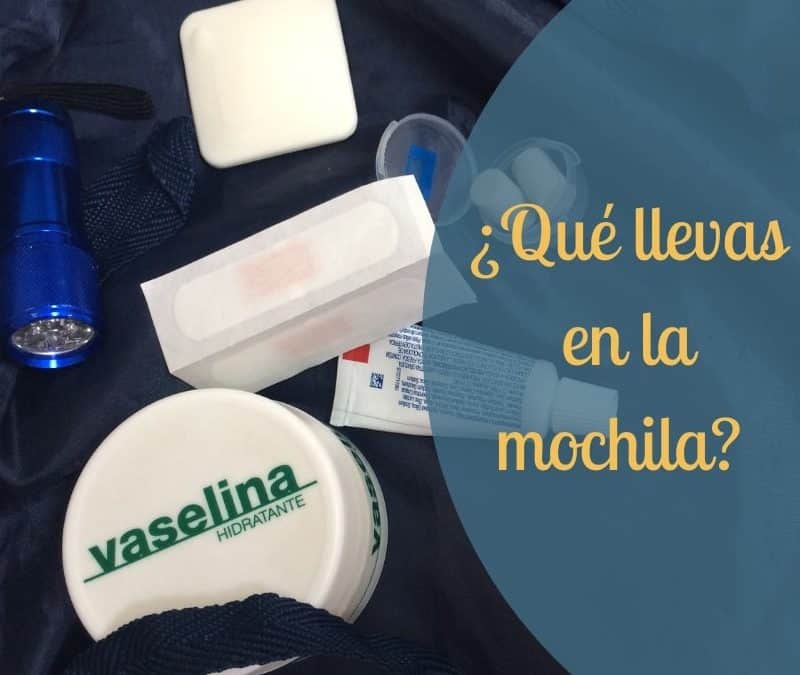
In that post  I wrote about general items that you will need during your Camino de Santiago. Then, last week I concentrated on la ropa (clothes). But you need some other things as well. I will write a post soon about healthcare stuff you may need. So, today I’m going to tell you about other items you should bring in your mochila.


  • Some people use them, some others don’t but they can be useful going up and down hills. They provide extra support and stability and they also reduce the effort, therefore helping you keep your joints and ligaments in good shape. I’m talking about bastones (trekking poles). Look for something light and foldable.


que llevas en la mochila
  • Tapones (para los oídos) or earplugs. Don’t leave them behind if you are planning to stay in albergues. You never know if the person in the next litera is a snorer… or how early some fellow pilgrims will get out of bed and start making noise!


  • Linterna (torchlight). It will be useful if you are planning to start walking before sunrise. If you are using it inside your albergue dorm, please be thoughtful of the people who are still sleeping. Nobody likes light flashing in their eyes at 5 am! A headlamp is probably the most convenient type to use, as your hands will be free to do whatever you need to do.


  • Imperdibles (safety pins). They can have several uses, one of them being to “hang” your wet clothes from your mochila and let them dry while you walk.


  • Móvil y cargador (mobile phone and charger). A mobile phone is great to have in case you need to call for help in an emergency. You can use it as a GPS. And you can also use it to take pictures (it saves you the weight of the camera). But make sure it doesn’t distract you too much from the scenery and your surroundings. You could be missing great things


And that’s it for today! For next week I’m hoping to get some help from experienced pilgrims. I’d love to get their recommendations. So, if you are reading this and you have already done the Camino, I’d love to hear from you.


What’s the best item you packed? And the worst?

Today’s Spanish words

Want more?

Make sure you don’t miss any posts or announcements by subscribing for free here. You’ll receive a free Spanish vocabulary guide with your first Spanish words + cultural tips. And… you’ll get access to exclusive content too.
 

¡Buen Camino!

La ropa

La ropa

In a previous post I discussed the things that you should pack in your mochila or backpack (you can read it here). On that occasion I only mentioned a few general items like ropa (clothes), calzado (shoes) or toiletries and promised to elaborate on the topic. So, this week it’s the turn of la ropa (clothes).

So, what ropa should you take? As I said before, you shouldn’t pack too many items, unless you are planning to have your bag transported from one place to the next one: you will have to carry the weight, remember? And you can always do a bit of washing at the end of your walking day.

Again, what ropa you take will differ slightly depending on the route you have chosen and the time of the year when you are doing the Camino de Santiago, but there are still some general recommendations you should follow!

Two outfits are enough: The one you are wearing and another one for when you wash the first one. It might be a good idea to get technical clothing, made of improved fabrics that stay warmer, dry quicker, block the sun…


La ropa

  • Camisetas (T-shirts). Dos (2) or tres (3) camisetas is enough, both short and long sleeve (this will also depend on what time of the year you are doing your Camino).


  • Pantalones (trousers). A couple of them. It might be a good idea to get one of those with a zip, that will convert into shorts when needed. Make sure they are comfortable and not itchy.


  • Calcetines (socks). Probably one of the most important clothes decision you will take: just think that you are going to walk for many hours every day, so you need to take good care of your feet.  Some people like to wear two pairs, some others wear one pair and change it half way through their daily walk… you should do what works for you. Just remember how important your feet are and make sure they stay dry.


  • Ropa interior (underwear). Again, two or three pairs is OK.


  • Chubasquero (rain jacket). Some people prefer to take a poncho that will cover themselves and their bag, some others prefer a waterproof jacket… there are many options, but some sort of raingear is advisable, especially if you are not doing the Camino in the summer (and even in the summer you can get wet days in the north of Spain).


  • Calzado (shoes): again, your choice will depend your route and the time of the year, but whether you choose trekking boots or shoes, make sure they are not new! If you need to buy a new pair of shoes, you should start wearing them at least three months before you start your Camino.


  • Apart from your walking shoes, you should also pack a pair of sandalias or chanclas (sandals, flip flops) to give your feet a rest after the walk. Chanclas are also very important to get into la ducha in albergues.


If you already have experience doing the Camino de Santiago, I would love to hear your advice on things to pack, clothes and otherwise. What were the most useful things you took along? Did you get rid of anything along the way because it was not necessary and it only added weight to your backpack? I’d love to hear your stories! You can comment here or go to our Facebook group and leave a comment there.


Today’s Spanish words

washing your clothes on the Camino


For the pronunciation of ducha, check albergues.


Want more?

Make sure you don’t miss any posts or announcements by subscribing for free here. You’ll receive a free Spanish vocabulary guide with your first Spanish words + cultural tips. And… you’ll get access to exclusive content too.

¡Buen Camino!