Walking with strangers

Walking with strangers

I spent last week walking with strangers. As an introvert, this is something I wouldn’t have done of my own accord, as it is way out of my comfort zone. Meeting strangers along the way is one thing. But committing to spending 6 full days with a group of total strangers is a completely different story. However, when the opportunity arose, I said yes!


So, why did I walk the Camino with strangers?

A fellow teacher, María Ortega, organises Spanish retreats in Spain every year: a few days in a Spanish city, practicing your Spanish language and learning about the culture in a natural way. We met online, maybe just over a year ago, at an online event for language teachers and we started following each other.


One day, she asked me: “Why don’t we organise a retreat together, on the Camino?”. It was a scary idea (I’d never done such a thing), but at the same time I had the feeling it could be an interesting experience, so I said yes. We picked a route (Camino Inglés), set the dates and the rest is history, as they say.


As the starting day approached, fear kicked in and a voice in my head kept saying: “What were you thinking when you agreed to take part in this crazy idea?”


But it was too late to change my mind then. I was stuck walking with these strangers.


Who were these strangers?

The only person I knew (and that was only online), was the other María. We soon became “las Marías”.


And then we had 5 men and 2 women, from several places: four from Reino Unido (UK), Inglaterra to be precise; one from Canadá (Canada), one born in China (China) but living in Estados Unidos (USA) and another one born in Polonia (Poland) but living in Suecia (Sweden).


The age range went from the 30’s well into the 60’s. So, all in all, we had quite a diverse group. I didn’t know any of these people at all before and I was not just going to teach them a lesson or two. I was going to spend a week with them! All day. Walking together for hours every day, sharing conversations, meals and even rooms.

Walking with strangers

On the last day, somewhere between Sigüeiro and Santiago. I’m the shadow taking the picture.

(Get this episodes’s transcript for free here)


As I said earlier, I’m an introvert, and I enjoy spending time in my own company. So, as the starting day approached, I was feeling a bit anxious.


I know people meet other peregrinos on the Camino and sometimes they remain friends for years or even get married (read Julia’s story). But you normally have the choice to walk with someone or not. I did not have that choice and that thought worried me a bit. But I applied the Galician philosophy of Maloserá* and hoped for the best.


The truth is that I soon found out I needn’t worry. Despite being a mixed group of different ages and backgrounds, these people were all lovely in their own different ways. By the end of the week this group of strangers had almost become family and it was hard to part.


I’ll detail our journey in future posts, as I’m still trying to process the experience and I’m not back to my normal self (maybe I’ll never be?). So, for today, I’ll leave you with some thoughts.


I was wrong

I’ll be honest: I didn’t anticipate the effect this Camino has had on me. I know most people talk about the life-changing nature of the Camino and the emotion they feel when they reach Santiago. But somehow I didn’t think I would be so touched, for several reasons:


  • First, I was on the Camino for una semana (a week) “only” and I didn’t think it would be long enough. I thought I would have to walk for weeks to experience all of that, but I was obviously wrong.


  • I’m from Galicia. So, even if I hadn’t been to all the places the Camino goes through, I’m home. I’m not walking on exotic lands. I’m familiar with el paisaje (landscape), la comida (food) and the languages (both Galician and Spanish). Well, it was still somehow different, maybe because I was showing it to others.


  • I’ve been to Santiago many times. In fact, I lived in Santiago for a couple of years when I was in college. I’ve been on Praza do Obradoiro countless times, I’ve crossed it in all possible directions, I’ve heard la gaita (bagpipe) millions of times too… Why would this time be different? Yes, your guess is right: I was wrong!


  • I was walking with a group of strangers and this was supposed to be more of a “work thing” than a spiritual pilgrimage. Of course, I was wrong again! There was no teacher and student division; we were all together in a journey full of lessons to be learned by all of us.


Maloserá


*Maloserá. This Galician word does not have a literal translation. Google Translate will tell you it means “it will be bad”, but in fact it means quite the opposite. It’s an expression of our optimism and you can use it in any potentially negative situation. It means that you shouldn’t worry, that things will be OK, that it’s probably not as bad as it looks, that you are going to be alright…


Basic Spanish vocabulary


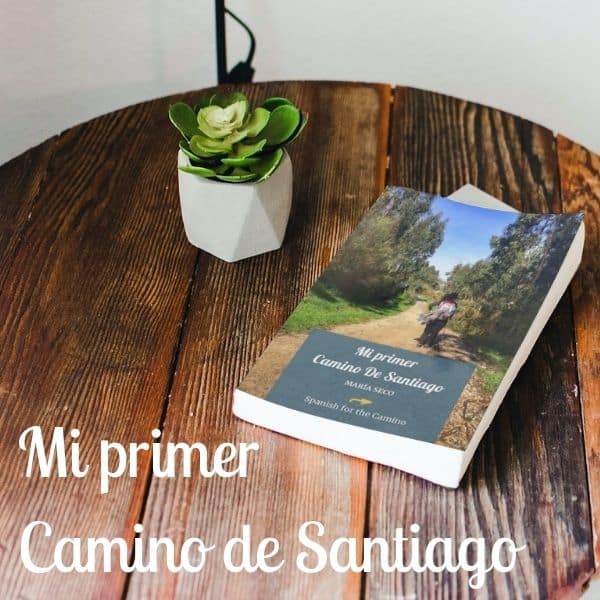
Mi primer Camino short novel for beginners

Mi primer Camino de Santiago is a short novel written in easy Spanish (A1-A2), perfect for those who have walked or are planning to walk the Camino de Santiago in Spain and want to improve their Spanish skills. But it’s also suitable for anyone looking for a fun and effective way to improve their Spanish through stories.

And it’s set on the Camino Inglés, so you can also learn about this route while you read.

Would you like to know how the experience went for the others? You can read my conversations with James and Richard.


Want more?

Make sure you don’t miss any posts or announcements by subscribing for free here. You’ll receive a free Spanish vocabulary guide with your first Spanish words + cultural tips. And… you’ll get access to exclusive content too.

¡Buen Camino!

Yes. You do know some Spanish already

Yes. You do know some Spanish already

You know some Spanish already |

You are planning your Camino de Santiago. If it’s the first one, you probably have tons of questions:

How much should I train?

What mochila should I get? How much stuff should I pack?

What are the perfect shoes?

Should I get a guidebook? Or maybe an app?

Should I learn some Spanish?

Most of these questions don’t have just one right answer. What works for me might not work for you and what works for you might not work for me. So read and listen to as much advice as you want, but then do what’s best for you. Make the Camino your own.


However, the last question, should I learn some Spanish?, is a different story. Of course you can survive without any knowledge of Spanish. Well, the truth is that you know some Spanish already, even if you don’t know it yet. But, anyway, when you go through the pros and cons of learning the language… there are no cons, really! It’s all benefits:


language is the only thing worth knowing
  • First of all, learning another language is good for your brain: it slows down aging, it improves your memory and your decision-making skills, it boosts your self confidence… and the list goes on.

Those alone should be enough to convince you to start learning a new language now!

But let’s concentrate on the benefits of learning Spanish for the Camino 

Not everybody in Spain speaks English. English speakers are easier to find in the bigger cities, but you’ll be going through a lot of rural areas and small villages populated by older people who do not know a word of English.


  • The locals will be more receptive to you if you try to speak Spanish (and they might even invite you to whatever they are doing) just because you made the effort. 
  • Learning at least some basic Spanish means you don’t need to rely on other people to communicate your needs.
  • It also means you are not dependent on technology either (my phone’s battery tends to die just when I need it most!) 
  • The fact that you don’t need to rely on other people or technology will make you feel more confident and independent; it will reduce the stress and anxiety you will feel if you need to get an important message across (maybe you have a health issue, you need to book accommodation…).


OK. So, you are convinced now and have decided to learn a bit of Spanish.

For some reason, when we start learning a language we focus on all the stuff we don’t know: vocabulary, grammar, pronunciation… And it can be overwhelming.


What if I told you that you know a lot of Spanish already?

Yes, there are many words that are the same, or almost, in English and Spanish. Maybe a tiny spelling change. Most likely a different pronunciation. But still very similar. Let me give you a few examples:

Hotel, teléfono, restaurante, menú, taxi, chocolate, delicioso, animal, doctor, kilo, local, municipal, región, religión. 

Did you need the translation? I didn’t think so.


A few weeks ago I interviewed Kelli, an American pilgrim, about her experience on the Camino. In the second part of my conversation with Kelli, she gives you a tip to automatically increase your Spanish vocabulary:


Words in English that end in -ity will be the same in Spanish but replace the -ity with -idad.


So electricity becomes electricidad; spirituality > espiritualidad; tranquility > tranquilidad and security > seguridad, just to mention a few.


The good news is that this is not the only tip to increase your Spanish vocabulary:


  • Many English words ending in -al are the same in Spanish. Again, the pronunciation will be different and there might be minor spelling changes but nothing that will prevent you from recognising the word. You don’t believe me? Check these examples: 

hospital, normal, dental, total, inicial, oficial, profesional 


  • Some of the English words ending in -ist will end in -ista in Spanish:

dentista, ciclista, especialista, realista, turista, racista


Warning! You will find exceptions but they’ll be mostly words you won’t need for the Camino. So, what are you waiting for to start increasing your Spanish vocabulary?


Can you think of any other tips? Please share them in a comment.


Today’s Spanish words


Want more?

Make sure you don’t miss any posts or announcements by subscribing for free here. You’ll receive a free Spanish vocabulary guide with your first Spanish words + cultural tips. And… you’ll get access to exclusive content too.


¡Buen Camino!

Your words

Your words

A couple of weeks ago I asked the following question on Facebook:

If you could only learn 5 Spanish words or phrases for the Camino, what would they be?

I got many answers. The 2 most popular words were por favor (please) and gracias (thank you), closely followed by ¿Cuánto cuesta? (How much is it?) and vino tinto (red wine). Vino blanco (white wine) was a bit less popular.

After those, there were many different suggestions that I’ll try to organise. These are your words:

  • Greetings

Buen Camino. This doesn’t need a translation, right?

Hola (hello) can be used any time of the day.

Buenos días (good morning). This one is specifically for the morning, which technically ends at midday, but in Spain we stretch it till lunchtime; Spanish lunchtime, that is. After 13.30-14.00 (1.30-2.00pm) you can start saying buenas tardes (good afternoon/evening) until around 21.00 (9.00pm). Then you can say buenas noches (good evening/night). For pronunciation and to learn more about different customs regarding greetings, check the second part of my interview with Kelli.

  • Food and drink

Next in popularity after vino tinto and vino blanco were café con leche and café americano. Cerveza (beer) came in third position.

Tortilla (potato omelette) was the only food mentioned. For the pronunciation and the recipe, check this post.

  • Accommodation

¿Tiene una cama para esta noche? (Do you have a bed for tonight?)

Habitación privada (private room)

You can also combine both and say ¿Tiene una habitación privada (para esta noche)? (Do you have a private room (for tonight)?).

  • Miscellaneous

¿Habla inglés? (Do you speak English?).

Más despacio, por favor (more slowly, please). Very handy when someone is talking to you and you need them to slow down in order to understand what they are saying.

¿Dónde está…? (Where is…?). Check my interview with Susan Jagannath for more on this.

¿Cuándo es la próxima misa? (When is the next mass?).

¿A qué hora es la cena? (At what time is dinner?). You can use this in albergues that serve communal dinners as well as in restaurants.

Necesito una bolsa de hielo (I need a bag of ice). Or just necesito (I need) + whatever it is you need.


  • The toilet

¿Dónde está el baño? (Where is the toilet?). This particular phrase proved to be quite controversial, with people arguing what the right word for “toilet” is. The truth is that there are 4 words I can think of you can use for toilet:

First of all, we have cuarto de baño, which is a bathroom with toilet, sink and bath/shower, so we would NOT use this for the toilets in a café, for instance.

However, the short version baño means bathroom too but it has some extra meanings: it can also be a bath (as in taking a bath or even a swim), bathtub or toilets. All of these definitions are included in the dictionary; don’t let anyone correct you!

Servicio, aseo and lavabo are 3 more words that can be used to refer to toilets in public places. I’m not sure if there is a regional preference, but I can guarantee that they are all valid and all in use.

Aseo means cleanliness or cleaning in general; or a “bathroom” with just a toilet and sink, but no bath/shower.

Servicio means service, in general. It can be used in other contexts, not just when talking about toilets.

Finally, a lavabo is the type of sink you can find in bathrooms/toilets. By extension, we use this word to refer to toilets in public places.

Would you like to add anything to this list? You can leave your suggestions in a comment!


Your words

Want more?

Make sure you don’t miss any posts or announcements by subscribing for free here. You’ll receive a free Camino food guide. And… you’ll get access to exclusive content too.


¡Buen Camino!

Do you need Spanish on the Camino?

Do you need Spanish on the Camino?

Do I need to learn Spanish for the Camino de Santiago in Spain?

Short answer, no. You can walk the Camino without speaking Spanish.

BUT…

learning at least some basic Spanish is a very good idea.

Why should you learn some basic Spanish before your Camino?


First of all, it shows respect for the local people and culture (and you’ll get better treatment).

It also helps you connect with the people you meet, pilgrims or not.

And last but not least, it’s useful: whether you’re ordering food, asking for directions, or dealing with a blister, a few words of Spanish can make a big difference.

Learn the Spanish you need for the Camino

That’s where I come in.

On this blog (and through other resources I offer) I want to help you learn the kind of Spanish you’ll actually use on the Camino. Not just random lists of “useful phrases,” but real, practical language that helps you feel more confident and connected on your journey.

If you have ever travelled abroad (to a country where they don’t speak your language), I’m sure you have seen these lists of “useful phrases”, where you get a few words and phrases in the language of that country with the translation into your own language.


I have. And I don’t find them so “useful”. Why?


Two reasons, mainly:

  • Most of them give you the words but don’t tell you how to pronounce them. So chances are that if you try to say anything, people won’t understand you. Embarrassing and frustrating!


  • They only tell you what YOU can say. Imagine you get the pronunciation right but… what happens when people talk back to you? Blank face… you are lost!


Where I live, I see many pilgrims passing by every day. Sometimes, I see them struggling to communicate, looking for directions or information about something they need. I like to help when I get the chance (I’ve been abroad too and I know that feeling!). But I can only help a very small number.


So I had this idea that will allow me to reach and help more people.


What to expect from Spanish for the Camino

  • A blog with useful Spanish Camino vocabulary in every post, and audio so you know how to pronounce it.
  • A podcast, in Spanish, if you’re past the beginner stages.
  • Books, courses and other resources, free and paid. Here’s a list of everything.

Start learning Spanish for the Camino


35 Spanish words for the Camino

What you’ll find inside:

  • 15 pages of the very basics: greetings and other essential words, how to ask questions…
  • Simple explanations.
  • Vocabulary that is relevant to the Camino.
  • Spanish-English vocabulary list
  • Cultural tips.
  • PLUS, an extra gift after you sign up.

Happy learning and buen Camino!