
Spanish for the Camino
Do you need Spanish for the Camino de Santiago in Spain?
Spanish for the Camino helps future pilgrims learn practical Spanish for their journey on the Camino de Santiago.
Whether you want to ask for directions, order food, or connect with locals, in the blog you’ll find easy-to-follow tips, essential vocabulary, and cultural insights to help you walk with confidence.
Start learning here: download the free guides, read the blog, or listen to the podcast.
Download your free guides

Find out what, where and when to eat in Spain.
Everything explained, PLUS lots of useful Spanish vocabulary you can use PLUS two recipes.

Preparing for the Camino de Santiago?
Don’t forget to add Spanish to your packing list.
Get your free PDF with your first Spanish words.
Spanish for the Camino: the blog

Koalas in Galicia
There are koalas in the Galician eucalyptus forests. Yes, you read that right—koalas in Galicia! For quite some time now there were rumors and occasional sightings, but now experts from the University of Santiago have confirmed their presence after months of research....
Finding food on the Camino
How often did you have trouble finding food on the Camino? This is a complaint that comes up on a regular basis in Camino groups. It usually has to do with one of these 2 scenarios: Pilgrims are trying to get cena (dinner), but restaurants are closed and no one is...
Walking through Galicia
Once you start walking through Galicia, you'll start seeing several new architectural elements, some of them quite frequently. They're not exclusive to Galicia. But they are more common here. In this post I'm goign to tell you a little bit about 3 of them. Two of them...

Money matters
Money matters | There's a phrase that is repeated a lot in Camino forums and groups: Cash is king. And it's true. Although many albergues, cafeterías & bares take cards, there are some places that only take efectivo (cash).Money matters | That means you...
El Camino Primitivo
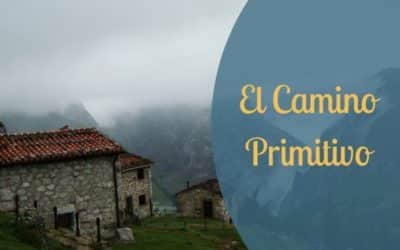
After a stop for a tapa de pulpo á feira, we're back to our series about the different Caminos. This week, I'm writing about the Camino Primitivo. The Camino Primitivo (Primitive Way) is so called because it's the first Camino pilgrimage of which there is a...
Pulpo á feira
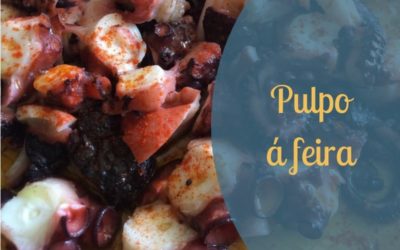
Galicia has a coastline of close to 1,500 km. So it's only natural that pescado (fish) and marisco (shellfish) are the stars of Galician cuisine. From mejillones (mussels) and merluza (hake) to chipirones (baby squid) or the expensive percebes (goose barnacles), there...
Food allergies on the Camino
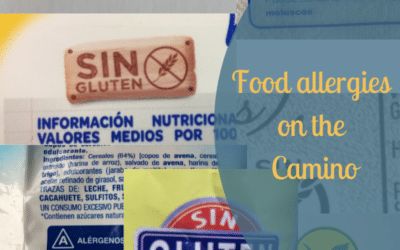
Updated March 2026 Food allergies on the Camino de Santiago The Camino is a life-changing experience for many. It takes you out of your comfort zone: you are in a foreign land surrounded by a different language and culture... and they eat differently...

El Camino del Norte
Next on my series about the different Caminos is the Camino del Norte, the second longest route after Vía de la Plata. It covers a distance of over 800km from Irún in the País Vasco (Basque Country) to Santiago de Compostela.
Variante Espiritual
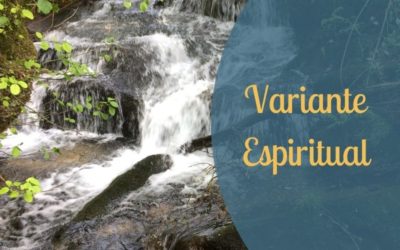
When I wrote about the Camino Portugués a couple of weeks ago, I mentioned the Variante Espiritual. This route variation starts from Pontevedra and takes you to Padrón, where it joins the traditional Portuguese route.
The Variante Espiritual is a very recent route. It was created around 5 or 6 years ago, connecting places that were historically related to the Camino.