Your words

Your words

A couple of weeks ago I asked the following question on Facebook:

If you could only learn 5 Spanish words or phrases for the Camino, what would they be?

I got many answers. The 2 most popular words were por favor (please) and gracias (thank you), closely followed by ¿Cuánto cuesta? (How much is it?) and vino tinto (red wine). Vino blanco (white wine) was a bit less popular.

After those, there were many different suggestions that I’ll try to organise. These are your words:

  • Greetings

Buen Camino. This doesn’t need a translation, right?

Hola (hello) can be used any time of the day.

Buenos días (good morning). This one is specifically for the morning, which technically ends at midday, but in Spain we stretch it till lunchtime; Spanish lunchtime, that is. After 13.30-14.00 (1.30-2.00pm) you can start saying buenas tardes (good afternoon/evening) until around 21.00 (9.00pm). Then you can say buenas noches (good evening/night). For pronunciation and to learn more about different customs regarding greetings, check the second part of my interview with Kelli.

  • Food and drink

Next in popularity after vino tinto and vino blanco were café con leche and café americano. Cerveza (beer) came in third position.

Tortilla (potato omelette) was the only food mentioned. For the pronunciation and the recipe, check this post.

  • Accommodation

¿Tiene una cama para esta noche? (Do you have a bed for tonight?)

Habitación privada (private room)

You can also combine both and say ¿Tiene una habitación privada (para esta noche)? (Do you have a private room (for tonight)?).

  • Miscellaneous

¿Habla inglés? (Do you speak English?).

Más despacio, por favor (more slowly, please). Very handy when someone is talking to you and you need them to slow down in order to understand what they are saying.

¿Dónde está…? (Where is…?). Check my interview with Susan Jagannath for more on this.

¿Cuándo es la próxima misa? (When is the next mass?).

¿A qué hora es la cena? (At what time is dinner?). You can use this in albergues that serve communal dinners as well as in restaurants.

Necesito una bolsa de hielo (I need a bag of ice). Or just necesito (I need) + whatever it is you need.


  • The toilet

¿Dónde está el baño? (Where is the toilet?). This particular phrase proved to be quite controversial, with people arguing what the right word for “toilet” is. The truth is that there are 4 words I can think of you can use for toilet:

First of all, we have cuarto de baño, which is a bathroom with toilet, sink and bath/shower, so we would NOT use this for the toilets in a café, for instance.

However, the short version baño means bathroom too but it has some extra meanings: it can also be a bath (as in taking a bath or even a swim), bathtub or toilets. All of these definitions are included in the dictionary; don’t let anyone correct you!

Servicio, aseo and lavabo are 3 more words that can be used to refer to toilets in public places. I’m not sure if there is a regional preference, but I can guarantee that they are all valid and all in use.

Aseo means cleanliness or cleaning in general; or a “bathroom” with just a toilet and sink, but no bath/shower.

Servicio means service, in general. It can be used in other contexts, not just when talking about toilets.

Finally, a lavabo is the type of sink you can find in bathrooms/toilets. By extension, we use this word to refer to toilets in public places.

Would you like to add anything to this list? You can leave your suggestions in a comment!


Your words

Want more?

Make sure you don’t miss any posts or announcements by subscribing for free here. You’ll receive a free Camino food guide. And… you’ll get access to exclusive content too.


¡Buen Camino!

A conversation with Susan

A conversation with Susan

Conversation with Susan |

Susan had been longing to walk the Camino Francés for a long time but she had to put it off a couple of times due to different problems. She finally planned it for September 2016… only to find out that it was not possible again! She was very disappointed, but… she came across the Camino Inglés and decided that was the Camino for her. Read our conversation to know the whole story.


Please tell us a bit about yourself

I’m Susan, I love adventures and learning things. What I don’t like is exercise and gyms, because it can quickly get very boring. I love to be healthy and fit, and I found that walking and hiking is just right for me. One hour in the gym vs four hours walking, there’s no contest there. I’ve been in IT all my life, and my job was to make computers easy for users, so that they could get the solution when they needed it, and where they required it. I am also a bestselling author of two books, a hiker, and now an obsessed grandmother. I am thinking of taking my four-year old granddaughter on my next camino!


When did you first hear about the Camino? When did you decide to do it?

I was going to India to visit friends, we were going to hike in the Nilgiris, a mountain range in South India. In the flight out, I saw “The Way” – and thought nothing of it. I had never heard of the Camino, and now suddenly it was everywhere. I became more and fascinated and decided to do it in 2014.


Did you prepare either physically or mentally? How?

Oh yes, I walked every day, in different types of terrain, and gradually built up stamina and endurance. By the end of 3 months, I could walk 10 kms in 3 hours carrying a 6 kg backpack. I also ate for energy, too supplements to protect my joints and build up my immunity. Mentally, I began attending pilgrim events and meetups and met others who had done long distance walks.


You were not planning to walk the Camino Inglés initially. How was your experience? Is there any particular anecdote you would like to share?

The Camino Inglés turned out to be an exquisite experience, with just enough challenge to push you. It is not an easy stroll. Parts can be challenging, and some of the stages are long. It can be long way between bars and cafés con leche! It was quiet too, and we saw only a few pilgrims. I loved Betanzos, the walled city and the medieval centre is authentic, and while it is ancient, the life within the square in the evening is pumping with music, cafés and families enjoying themselves.


You then wrote a guide for the English Way. When/why did you decide to write it and how was the process?

I decided to write it because I couldn’t find accurate documentation on the way. The distances were incorrect, and often, so were the directions. I had kept a brief journal on the way, with notes on distances and landmarks. I was also doing live streams everyday from the way. When I got back, when I was sorting the photos and videos, I kept hearing myself say – I didn’t know this – I should write a book about it…So I did.

(Read my review of Susan’s The Camino Inglés: 6 days (or less) to Santiago).


Did you learn Spanish prior to the Camino?

Yes, I tried with DuoLingo. It gave me some words. But when we reached Spain, we could understand nothing. I did print out a list of sentences and words, and I used this to communicate in a few words.


Do you think your knowledge of Spanish had any impact on your Camino?

Yes, I think I would have enjoyed it much more, and had a chance to really talk to the people – who were such friendly and helpful people – but we couldn’t talk much! Learning more than Gracias and Por Favor will make a huge difference to your experience.

But don’t let a lack of Spanish stop you!


I asked Susan to pick a few Spanish words that she thought you should all know before you start your Camino and this is her list:

  • Common words: el Camino, credencial (Pilgrim’s passport), sello (stamp), Compostela (certificate of having walked at least the last 100km of any Camino).


  • Greetings: Hola (hello), buenos días (good morning), buenas tardes (good afternoon/evening), gracias (thank you), disculpe (excuse me), lo siento (I’m sorry).


  • ¿Dónde está…?: it means “where is…? and you can combine it with other words to ask about the location of anything. Susan has chosen albergue, el Camino and cathedral.


And now you can actually hear Susan say all these words in Spanish! She does a fantastic job too! What about you? Have you been practicing?


Today’s Spanish words for the Camino


About Susan Jagannath

Conversation with Susan Jagannath

Susan Jagannath successfully combined a passion for reading, a love of writing and a fascination for technology, to create a career in technical writing. With over 50 technical manuals (not) to her name, she finally decided it was time to write the books she wanted to write under her own name.

As an army brat, her childhood included seven different schools, three universities and a couple of emergency evacuations from conflict zones. Travel and adventure were a normal part of life. She now believes in seizing every opportunity to have a new adventure. Whether it’s camping on the beach in Australia, trekking in the Himalayas, kayaking in Queensland, whitewater rafting down the Ganges, or walking the Camino in Spain, her philosophy is to pack it into one or two weeks to create memories for a lifetime, and inspire others to see that the right time for adventure is right now.

Her first bestseller came from her walk in Spain, The Camino Ingles: 6 days to Santiago. What also happened is that Susan fell in love with Spain, and all things Spanish, and is busy making plans to return for a longer time, and maybe, another Camino.

Susan is now on the next adventure of her life, writing books that are not technical manuals, training to be an awesome grandmother, and helping others write and publish their own bestsellers.

To learn more about Susan Jagannath (and to download the map set), you can go to https://www.susanjagannath.com

Want more?

Make sure you don’t miss any posts or announcements by subscribing for free here. You’ll receive a free Spanish vocabulary guide with your first Spanish words + cultural tips. And… you’ll get access to exclusive content too.


¡Buen Camino!

A conversation with Kelli (II)

A conversation with Kelli (II)

This is the second part of my conversation with Kelli, an American woman who moved to Spain a few months ago, after walking the Camino Francés last year.

Last week, you could read all about Kelli’s experience on the Camino with her teenage daughter (if you missed the first part, you can check it here).

But I also asked Kelli for a short list of essential Spanish words for the Camino: either the ones she most frequently used or the ones she wished she had learned prior to walking the Camino.  She gave me so much more… and that’s why I thought all that info deserved a whole new post.


What Kelli had to say

K: Here are the things I wish I knew:

First, before the Spanish language bits, the cultural norms of interaction.

  • In the US we almost never say ‘good day’ before starting a conversation or asking a question. In Spain, people say buenos días (good morning) or buenas tardes (good afternoon/evening) before launching into asking a question even in a shop. It’s a more formal way of interacting. And more respectful.
  • People meeting acknowledge each other with hola or the greeting of the time of day.  Even relative strangers. And they will say hasta luego (see you later) or a clipped version of this at parting. In the US, there would never be a goodbye to strangers in an elevator.
  • In the US and the UK, we are overly effusive. We ‘thank you very much’ too much. So it doesn’t really mean anything. And we thank wait staff for every little thing they bring us. Here, one gracias is fine and saying hasta luego when you leave the café is just courtesy, even though you may never see them again.

M: I’ll add that the same rule applies to por favor (please). There’s no need to add por favor at the end of every sentence when you’re in a shop or café for instance. One por favor is enough.


Kelli’s vocabulary list

Disculpe (sorry). I wish I had known that word when I accidentally broke a cup at a cafe.

M: Disculpe also means Excuse me! So you can use it if you need to ask a stranger a question, to get their attention.

Lo siento (really sorry).

¿Dónde está… ? (Where is…?) + almost anything: albergue, tienda, mercado, Catedral, el camino… My daughter had a bad allergic reaction in Melide on an early Sunday morning. No one but little old ladies on the street and I struggled to get across that I needed an emergency room or urgent care.

No entiendo (I don’t understand).

Pequeño (small).

Mediano (medium). I knew grande was large.

Media (half).

Otro (another), as in ‘other vino rosado’.

Antes (before).

  • Regarding food, reading a menú del día on a chalk board in cursive writing is a challenge. Google translate can’t help. So learning:

Pollo (chicken).

Carne (meat).

Pescado (fish).

  • Knowing my numbers 1-10 in Spanish helped but if I had to do it again I’d study 1-100 and understand how to say my own birthday, passport number and phone number in Spanish.


And one final tip

  • Words in English that end in -ity will be the same in Spanish but replace the -ity with -idad. I’ve tried to find a word in English that this doesn’t work for and I can’t so far.  And suddenly, Voilà! Your vocabulary just quadrupled.
Kelli arriving in Santiago de Compostela

Kelli and her husband Jeff moved to Spain in Spring of 2018, after she had walked the Camino Francés from St. Jean Pied-de-Port to Santiago de Compostela. In her blog Viva España you’ll find everything they went through to get their visas, make the move and set up house as well as their new life in Spain. It’s very informative, especially if you are thinking of making a similar move; and… it’s so much fun too!

Today’s Spanish words

Want more?

Make sure you don’t miss any posts or announcements by subscribing for free here. You’ll receive a free Spanish vocabulary guide with your first Spanish words + cultural tips. And… you’ll get access to exclusive content too.
 

¡Buen Camino!

A conversation with Kelli

A conversation with Kelli

Conversation with Kelli |

Kelli and her husband Jeff moved to Spain in Spring of 2018, after she had walked the Camino Francés from St. Jean Pied-de-Port to Santiago de Compostela. In her blog Viva España you’ll find everything they went through to get their visas, make the move and set up house as well as their new life in Spain. It’s very informative, especially if you are thinking of making a similar move; and… it’s so much fun too! If you’d like to know more about Kelli’s experience… keep reading our conversation!

Please tell us a bit about yourself

I live in Valencia Spain with my husband. We moved here after walking the Camino Francés. I’m in the editing of my first novel and am learning what it means to live in a country where everything from the language, customs, traffic laws, food and bureaucracy is so different from my own. But we are loving it more and more every day.

When did you first hear about the Camino? When did you decide to do it?

Before I decided to walk the Camino, I was a Director for a larger retailer in the US. I had a big job and I was miserable. At 50, I was sure there was something else out there for me. So when I quit my job my husband immediately asked if I was ‘going to take that walk in Spain’ that I had always talked about. I had read Paulo Coelho’s book ‘The Pilgrimage’ 20 years before and I was inspired, but family, career, a mortgage got in the way.

So I decided on a spur of the moment that I would go and I would take my 15 year old daughter with me. I waited until school was out, we bought our stuff, and we flew to Spain. Then we got up in the morning in St. Jean and started walking. We were clueless – if I’m honest.

Did you prepare either physically or mentally? How? 

Preparation is a relative term. I did walk a lot but we were living in Phoenix, Arizona at the time, so it was pretty flat. I did no pack training and wasn’t in great shape, honestly, to go walk 800km. I read a lot of blogs, joined closed FB groups and bought some books. But nothing could prepare me for what it would be like. I left my guidebook in Zabaldika on the 4th day. After that I just let the Camino take me where it wanted.

Tell us about your Camino. How was your experience?

My Camino was the most amazing experience of my life. It changed me in ways I can’t describe or fully comprehend myself. It made me fearless. I’m stronger because of it and I am willing to take risks I would not have taken before.

I think one thing that really made a difference for me was how it changed my relationship with my teenage daughter. On the Camino, she barely spoke to me. She was sullen and surly. They called me ‘The American whose daughter walks ahead’. I wish I was kidding. It was very hard. But now, she talks about it all the time and reminds me ‘Mom, remember when this thing happened on the Camino’? And I’m so happy we went together. We’re doing the Portuguese Way from Lisbon next summer.

It also changed my relationship with my husband. We didn’t speak for the first two weeks I was walking. When in Hornillos we talked by phone and had the-phone-call-to-end-all-phone calls. It was the best talk of our marriage and the best $100 I have ever spent. After that he wrote me letters each night while I was asleep and sent them to me to read in the morning. The Camino is a magical experience – it’s indescribable.

Did you learn any Spanish prior to the Camino?

Conversation with Kelli

I do wish I had learned more Spanish for a couple of reasons. I think it would have been much more respectful and frankly, easier, if I spoke to people (as much as possible) in Spanish. I think it would have been easier to interact with locals and more of the Spanish pilgrims themselves. There were alot of Spanish people I couldn’t speak to other than, ‘Buenos Días’ or ‘Café con leche’. Looking back, this was a mistake.

Do you think not knowing Spanish had any impact on your Camino?

Yes, I think knowing Spanish is a HUGE benefit. When I think of the experience of being in churches or sitting in cafés or walking into a local festival, knowing Spanish and being able to speak to people, to understand what is going on would have profoundly changed the experience for me.

There were days I felt lonely, and sometimes isolated, as I was in a village and there was no one else there but locals and I couldn’t communicate. I found Google Translate isn’t your friend. It’s like a twisted cousin who can cause you more harm than good.


Kelli arriving in Santiago de Compostela

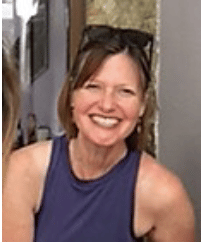
This is a photo of me when I arrived in Santiago. Everyone says it’s the happiest they have ever seen me, and they’re right –  so I like this photo.

Want more?

Make sure you don’t miss any posts or announcements by subscribing for free here. You’ll receive a free Spanish vocabulary guide with your first Spanish words + cultural tips. And… you’ll get access to exclusive content too.


¡Buen Camino!

Samaín

Samaín

This time of the year is the end of the harvest season; the days start getting shorter, the weather gets colder… In short, the end of octubre (October)-beginning of noviembre (November) marks the transition into otoño (autumn) and invierno (winter). It’s time for Samaín and other celebrations.

 We don’t celebrate Halloween as such in Spain, although in recent years it’s common to see both kids and adults dressing up on October 31 and Halloween parties being advertised. This is not a traditional celebration, though; but I guess any excuse is good to party! There are, however, some traditional celebrations:


Día de Todos los Santos (All Saints Day) & Día de Difuntos (Day of the Dead)- 1 & 2 de noviembre

These two days are all about remembering those who passed away. Most of the activity takes place on November 1, which is a national festivo (public holiday). On this day, people visit their loved ones in cemeteries and take flowers to them. Christianity has been honouring the dead on these dates from the 9th century, but there are older traditions…

Samaín (from the Irish Samhain)

It’s an old Celtic celebration marking the end of the harvest season and the beginning of winter. It was a time when the limits between this world and the next one got blurred, meaning that spirits could cross over to this world more easily. In Galicia there was a tradition of carving calabazas (pumpkins) and leaving them on the roads in order to scare passers by. People would also leave fires on all night, as well as food, for the spirits. Since 1990 there have been attempts to recover this old tradition.

Samaín pumpkin carving workshop

Pumpkin carving workshop.

Magosto (chestnut party)

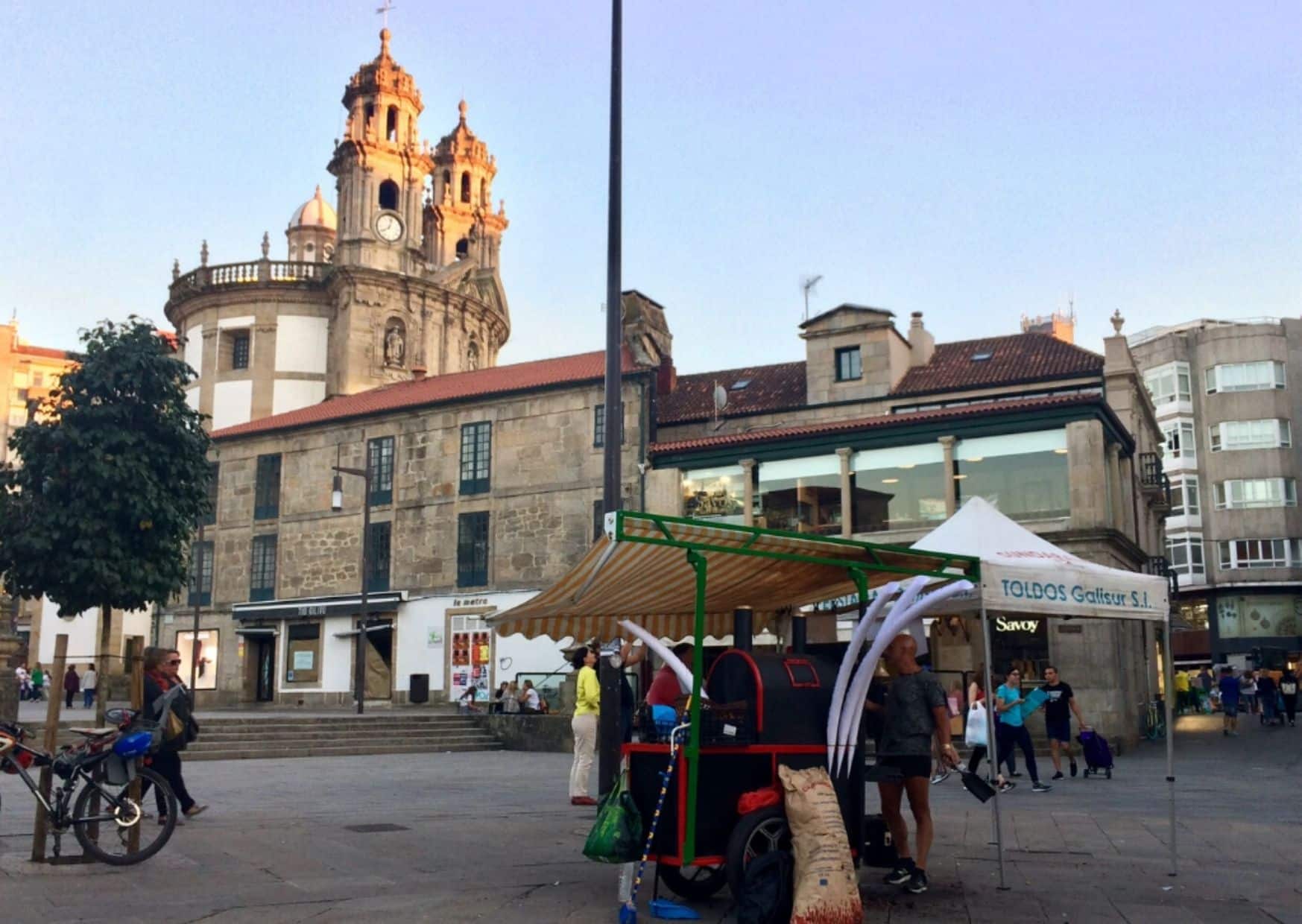
Linked to the end of the harvest season, magosto is celebrated mostly in northern Spain, as well as Portugal. The main elements of a magosto are castañas (chestnuts) and fire to roast them. People would gather around a bonfire, roast castañas (other foods too, but chestnuts are essential), sing and dance. It was also the perfect opportunity to taste the new vino (wine). There is not fixed date to hold a magosto. It could be any time between mid-October and mid-November. Usually, the last day to celebrate a magosto is November 11, festivity of St. Martin. Magostos apart, it’s common to see chestnut sellers on the streets once autumn starts. So, when you are out for a walk you can just buy a cone full of warm, freshly-roasted chestnuts. Delicious and a great way to warm your hands on cold days!


Samaín - roasted chestnuts

You can buy roasted chestnuts on the street.

Today’s Spanish words

Would you like to know about other Spanish celebrations? Check these posts:

El Carnaval, about the Carnival celebrations that usually take place around the end of February or beginning of March.

Feliz Navidad, about the celebration of Christmas in Spain.

Semana Santa, about the Easter celebrations.

Want more?

Make sure you don’t miss any posts or announcements by subscribing for free here. You’ll receive the transcripts + vocabulary guides + interactive exercises of episodes 1-5 of the Spanish for the Camino podcast. And… you’ll get access to exclusive content too.


¡Buen Camino!