A conversation with Kelli

A conversation with Kelli

Conversation with Kelli |

Kelli and her husband Jeff moved to Spain in Spring of 2018, after she had walked the Camino Francés from St. Jean Pied-de-Port to Santiago de Compostela. In her blog Viva España you’ll find everything they went through to get their visas, make the move and set up house as well as their new life in Spain. It’s very informative, especially if you are thinking of making a similar move; and… it’s so much fun too! If you’d like to know more about Kelli’s experience… keep reading our conversation!

Please tell us a bit about yourself

I live in Valencia Spain with my husband. We moved here after walking the Camino Francés. I’m in the editing of my first novel and am learning what it means to live in a country where everything from the language, customs, traffic laws, food and bureaucracy is so different from my own. But we are loving it more and more every day.

When did you first hear about the Camino? When did you decide to do it?

Before I decided to walk the Camino, I was a Director for a larger retailer in the US. I had a big job and I was miserable. At 50, I was sure there was something else out there for me. So when I quit my job my husband immediately asked if I was ‘going to take that walk in Spain’ that I had always talked about. I had read Paulo Coelho’s book ‘The Pilgrimage’ 20 years before and I was inspired, but family, career, a mortgage got in the way.

So I decided on a spur of the moment that I would go and I would take my 15 year old daughter with me. I waited until school was out, we bought our stuff, and we flew to Spain. Then we got up in the morning in St. Jean and started walking. We were clueless – if I’m honest.

Did you prepare either physically or mentally? How? 

Preparation is a relative term. I did walk a lot but we were living in Phoenix, Arizona at the time, so it was pretty flat. I did no pack training and wasn’t in great shape, honestly, to go walk 800km. I read a lot of blogs, joined closed FB groups and bought some books. But nothing could prepare me for what it would be like. I left my guidebook in Zabaldika on the 4th day. After that I just let the Camino take me where it wanted.

Tell us about your Camino. How was your experience?

My Camino was the most amazing experience of my life. It changed me in ways I can’t describe or fully comprehend myself. It made me fearless. I’m stronger because of it and I am willing to take risks I would not have taken before.

I think one thing that really made a difference for me was how it changed my relationship with my teenage daughter. On the Camino, she barely spoke to me. She was sullen and surly. They called me ‘The American whose daughter walks ahead’. I wish I was kidding. It was very hard. But now, she talks about it all the time and reminds me ‘Mom, remember when this thing happened on the Camino’? And I’m so happy we went together. We’re doing the Portuguese Way from Lisbon next summer.

It also changed my relationship with my husband. We didn’t speak for the first two weeks I was walking. When in Hornillos we talked by phone and had the-phone-call-to-end-all-phone calls. It was the best talk of our marriage and the best $100 I have ever spent. After that he wrote me letters each night while I was asleep and sent them to me to read in the morning. The Camino is a magical experience – it’s indescribable.

Did you learn any Spanish prior to the Camino?

Conversation with Kelli

I do wish I had learned more Spanish for a couple of reasons. I think it would have been much more respectful and frankly, easier, if I spoke to people (as much as possible) in Spanish. I think it would have been easier to interact with locals and more of the Spanish pilgrims themselves. There were alot of Spanish people I couldn’t speak to other than, ‘Buenos Días’ or ‘Café con leche’. Looking back, this was a mistake.

Do you think not knowing Spanish had any impact on your Camino?

Yes, I think knowing Spanish is a HUGE benefit. When I think of the experience of being in churches or sitting in cafés or walking into a local festival, knowing Spanish and being able to speak to people, to understand what is going on would have profoundly changed the experience for me.

There were days I felt lonely, and sometimes isolated, as I was in a village and there was no one else there but locals and I couldn’t communicate. I found Google Translate isn’t your friend. It’s like a twisted cousin who can cause you more harm than good.
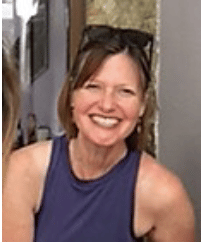


Kelli arriving in Santiago de Compostela

This is a photo of me when I arrived in Santiago. Everyone says it’s the happiest they have ever seen me, and they’re right –  so I like this photo.

Want more?

Make sure you don’t miss any posts or announcements by subscribing for free here. You’ll receive a free Spanish vocabulary guide with your first Spanish words + cultural tips. And… you’ll get access to exclusive content too.


¡Buen Camino!

Samaín

Samaín

This time of the year is the end of the harvest season; the days start getting shorter, the weather gets colder… In short, the end of octubre (October)-beginning of noviembre (November) marks the transition into otoño (autumn) and invierno (winter). It’s time for Samaín and other celebrations.

 We don’t celebrate Halloween as such in Spain, although in recent years it’s common to see both kids and adults dressing up on October 31 and Halloween parties being advertised. This is not a traditional celebration, though; but I guess any excuse is good to party! There are, however, some traditional celebrations:


Día de Todos los Santos (All Saints Day) & Día de Difuntos (Day of the Dead)- 1 & 2 de noviembre

These two days are all about remembering those who passed away. Most of the activity takes place on November 1, which is a national festivo (public holiday). On this day, people visit their loved ones in cemeteries and take flowers to them. Christianity has been honouring the dead on these dates from the 9th century, but there are older traditions…

Samaín (from the Irish Samhain)

It’s an old Celtic celebration marking the end of the harvest season and the beginning of winter. It was a time when the limits between this world and the next one got blurred, meaning that spirits could cross over to this world more easily. In Galicia there was a tradition of carving calabazas (pumpkins) and leaving them on the roads in order to scare passers by. People would also leave fires on all night, as well as food, for the spirits. Since 1990 there have been attempts to recover this old tradition.

Samaín pumpkin carving workshop

Pumpkin carving workshop.

Magosto (chestnut party)

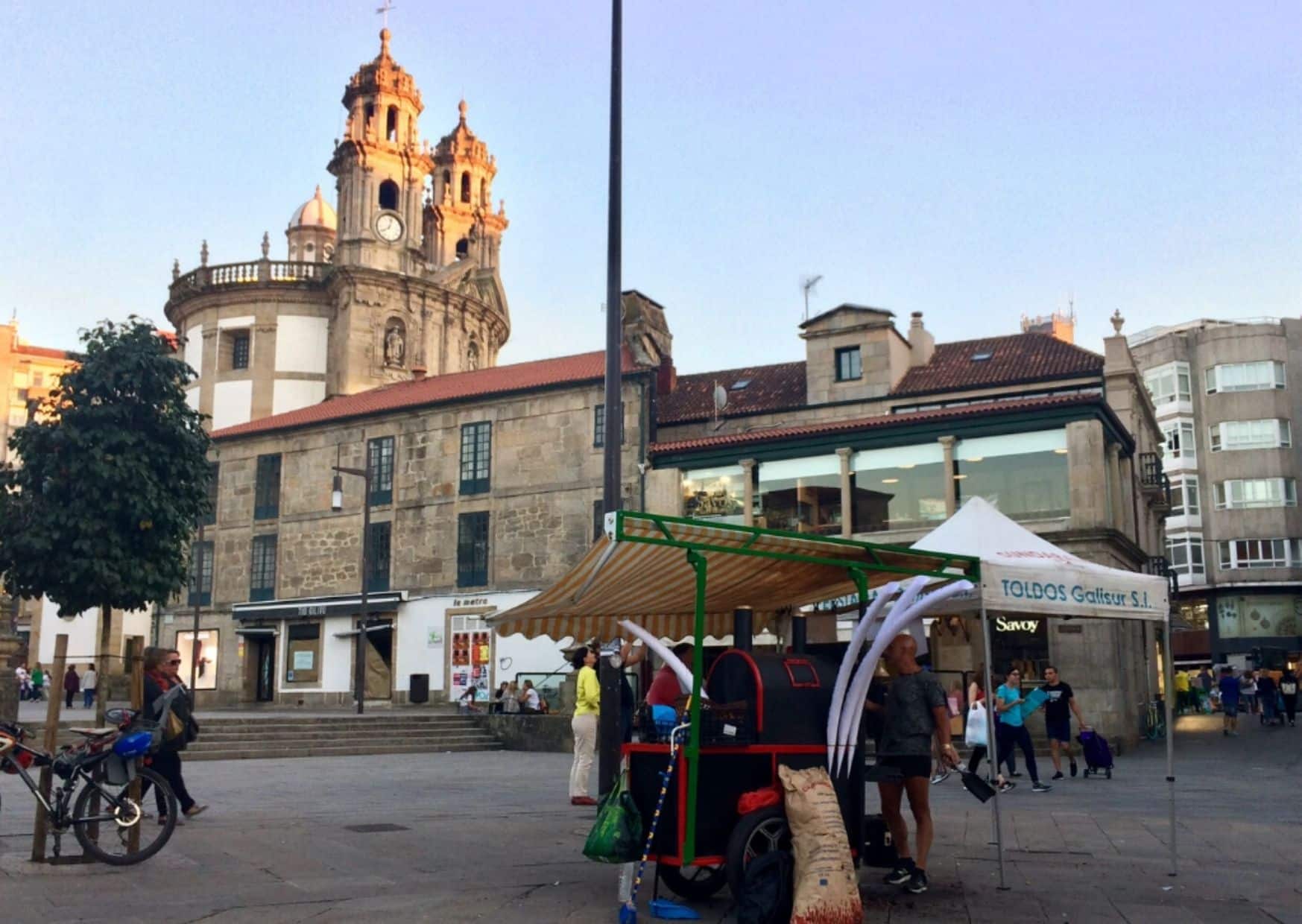
Linked to the end of the harvest season, magosto is celebrated mostly in northern Spain, as well as Portugal. The main elements of a magosto are castañas (chestnuts) and fire to roast them. People would gather around a bonfire, roast castañas (other foods too, but chestnuts are essential), sing and dance. It was also the perfect opportunity to taste the new vino (wine). There is not fixed date to hold a magosto. It could be any time between mid-October and mid-November. Usually, the last day to celebrate a magosto is November 11, festivity of St. Martin. Magostos apart, it’s common to see chestnut sellers on the streets once autumn starts. So, when you are out for a walk you can just buy a cone full of warm, freshly-roasted chestnuts. Delicious and a great way to warm your hands on cold days!


Samaín - roasted chestnuts

You can buy roasted chestnuts on the street.

Today’s Spanish words

Would you like to know about other Spanish celebrations? Check these posts:

El Carnaval, about the Carnival celebrations that usually take place around the end of February or beginning of March.

Feliz Navidad, about the celebration of Christmas in Spain.

Semana Santa, about the Easter celebrations.

Want more?

Make sure you don’t miss any posts or announcements by subscribing for free here. You’ll receive the transcripts + vocabulary guides + interactive exercises of episodes 1-5 of the Spanish for the Camino podcast. And… you’ll get access to exclusive content too.
 

¡Buen Camino!

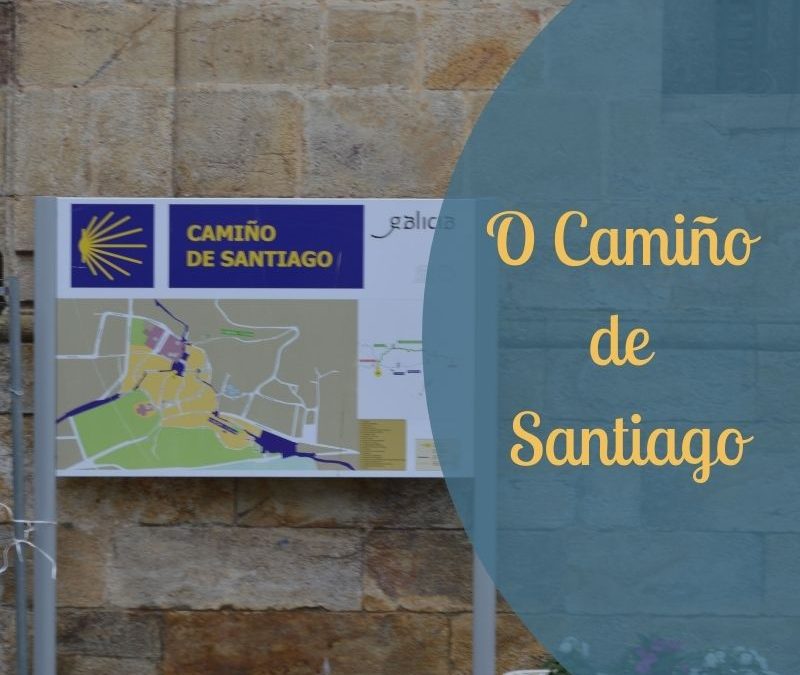
O Camiño de Santiago

O Camiño de Santiago

O Camiño de Santiago |

Imagine you are on the Camino Francés… or on the Camino del Norte, or the Primitivo or even on the Vía de la Plata. It doesn’t really matter.


The thing is, you are walking across Spain. Maybe you’ve prepared before your trip and learned a bit of Spanish. Or you’ve been picking up a few words along the way. And then you enter Galicia and you get the impression that people sound different.


What’s worse: things start getting confusing. Now you see Fisterra… later you see Finisterre… Are they different places? Is it the same place?


The good news is that you are not going crazy. Let me explain


Spain has not always been Spain as we know it today. A few centuries ago, there were several smaller kingdoms, ruled by different kings and queens. One of these kingdoms was the Kingdom of Galicia, which included the north of modern day Portugal as well as part of Asturias and León.


Latin was the language generally spoken in the Iberian Peninsula, but at some stage it started developing differently in different areas until it became several different languages. Some of them have survived until our days and they are co-official, together with Spanish, in their respective territories.


Such is the case of gallego (Galician), or galego in the Galician language. And that’s what you are hearing!


So, instead of teaching you Spanish, today I decided to teach you a few Galician words. After all, no matter what Camino you choose, the last 100km will always be in Galicia.


O Camiño de Santiago |


But let me give you a bit of background info first


  • The first written documents in gallego date back to the 12th century and during the Middle Ages, gallego was the language of poetry in all of Spain.


  • Gallego and portugués were initially the same language, but by the 14th century, that language had already split into the two separate languages we have today. This means that gallego and portugués have a lot in common. So, knowing a bit of gallego will help you in Portugal too!


  • Towards the end of the Middle Ages, gallego ceased to be used by the higher classes, due to political circumstances. It survived till our days thanks to peasants and fishermen, who kept it alive even if it was only orally.


  • In the 18th century, a group of intellectuals started becoming interested in the Galician language. One of them was Padre Sarmiento, whose pilgrimage to Santiago inspired the Variante Espiritual route.


  • One of the first and most popular authors to write in galego was Rosalía de Castro, who lived in Padrón, on the Camino Portugués.


  • We Galician people like to add the diminutive -iño/-iña to almost any word! It adds proximity, familiarity and even affection. So grazas (thank you) becomes graciñas and ata logo (see you later) becomes ata loguiño!


And here are the words… 

Today’s (not Spanish) words


If you’d like to increase your Galician vocabulary, check Galician on the Camino.

The podcast transcripts.

Want more?

Make sure you don’t miss any posts or announcements by subscribing for free here. You’ll receive the transcripts + vocabulary guides + interactive exercises of episodes 1-5 of the Spanish for the Camino podcast. And… you’ll get access to exclusive content too.


Bo Camiño!

Gazpacho

Gazpacho

Gazpacho |

It’s the end of September. Es otoño (it’s autumn). However, the temperatures this week have been very high, so it still feels a lot like summer. It gets a bit chilly early in the mornings and then again in the evenings but quite hot during the central hours of the day. ¡Hace calor! (it’s hot!).

It’s always important to stay hydrated but we must be extra careful in this kind of heat. In the south of Spain they know a lot about very hot weather so they came up with the perfect solution: gazpacho.

What is gazpacho?

Gazpacho is a cold soup. Its main ingredient is tomate (tomato), but it has other vegetables too. So it’s refreshing AND it’s also full of vitamins and minerals.

Gazpacho originated in Andalucía, in the south of Spain that’s why it’s also called gazpacho andaluz. But you can find it in other regions too. And as it happens with most traditional dishes, it has many variations.

Here’s the basic recipe.

You will need:

  • 1/2 kg tomates – they should be very ripe. In order to peel them, dip them in very hot water for a few seconds. The skin will come off very easily.
  • 1/2 pimiento verde (green pepper)
  • 1/2 pepino (cucumber)
  • Ajo (garlic), 1 clove
  • Aceite de oliva (olive oil)
  • Vinagre (vinegar)
  • 1 slice of pan (bread) – you need to soak it in a bit of water.
  • Sal (salt)

Gazpacho 

Chop the tomates, pimiento and pepino and blend them together with the ajo and pan. Season to taste with the aceite de oliva, vinagre and sal. Keep it in the fridge for one hour at least. And it’s ready!

Gazpacho can be taken as a soup or as a drink. When served as a soup, it is common to garnish it with croutons, cucumber and tomato cubes and chopped onion and egg. Actually, some people also add cebolla (onion) to their gazpacho, but not everybody does.

If you are planning to drink it, you can add some water, so it’s not so thick and you can also leave the bread out.


Gazpacho’s benefits

Gazpacho is refreshing and nutritious, but it has other benefits too:

  • It’s very easy to prepare!  All you need is a few basic ingredients and a blender. No cooking necessary.
  • It’s suitable for vegetarians and vegans. If you are ordering it at a restaurant, just remember to ask about the egg. It’s not part of the recipe, just a possible garnish. So even if the restaurant normally serves their gazpacho with some chopped egg, they should be able to accommodate you.

If you can’t remember how to ask about the ingredients in a dish, check my previous post Soy vegano/a.

  • It’s potentially suitable for coeliacs too. If you are not preparing it yourself, just remember to ask whether they’ve added pan.
  • You are on the Camino. It’s hot and you want some gazpacho but you can’t find it in bars/restaurants and you can’t prepare it. No worries! You can find it in supermarkets, in the chilled section, ready to drink.

Have you tried it already? No? What are you waiting for? Go get some gazpacho now!


Today’s Spanish words and phrases

For the pronunciation of pan, check Shopping on the Camino

For the pronunciation of aceite de oliva and sal, check Pulpo á feira

If you’re looking for the podcast transcript, you’ll find it here.

Want more?

Make sure you don’t miss any posts or announcements by subscribing for free here. You’ll receive a free Camino food guide. And… you’ll get access to exclusive content too.


¡Buen Camino!

Está cerrado

Está cerrado

You are planning to do some shopping when you get to the next town. You get there and find that everything está cerrado (it’s closed). And you don’t understand why… After all, it’s only the middle of the day.


Well, that’s exactly why everything is closed!


Lunch is the main meal of the day in Spain. And, although things are changing in the bigger cities, it’s common in smaller places for people to go home for lunch. In addition to that, the weather (especially in the summer months) can be too hot in the middle of the day. It’s just safer to stay indoors during the hottest hours.


That’s why, for instance, it is not advisable to walk the Vía de la Plata during the months of julio (July) and agosto (August) and why you should still be careful in junio (June) and septiembre (September).


So, most tiendas (shops) will close for lunch. Yes, for lunch. Not for siesta, sorry!


Some shops have horario continuo, meaning they don’t close in the middle of the day. This is more common in the bigger cities and also in the case of bigger shops: big supermercados, hipermercados or grandes almacenes (department stores).


In smaller towns, almost everything will close a mediodía; a mediodía literally means at midday, but we really use this expression to refer to lunch time, which could be anything between 1.30 and 4.30pm.


 ¿A qué hora abren?

What time do they open?

Shops opening and closing times may vary a bit from one establishment to another. But they will be similar to the one in this picture.

First of all, in Spain, when writing the time, we don’t use am and pm, as you can see in the picture. We use the 24-h clock. But just in writing.


The second thing you can see in the picture is that shops have some hours for weekdays (lunes a viernes – Monday to Friday) and different ones for sábados (Saturdays). It’s common for shops to be closed on Saturday evenings.


Almost everything está cerrado (is closed) los domingos (Sundays) except for bars and restaurants. Panaderías and pastelerías (bakeries and cake shops) open on Sundays too, but in the morning only.


Los bancos (banks) open in the morning only, usually from 8.00 or 8.30am till 2.00 or 2.30pm. They don’t open in the evenings or sábados.


Las farmacias have an on-call system, so that at least one is always open. You can check how the system works in El botiquín.

So, are you ready for some Camino shopping now?


For the pronunciation of supermercado, panadería and pastelería, check Shopping on the Camino.


For the pronunciation of junio, julio, agosto and septiembre, check Vía de la Plata. 

Want more?

Make sure you don’t miss any posts or announcements by subscribing for free here. You’ll receive the transcripts + vocabulary guides + interactive exercises of episodes 1-5 of the Spanish for the Camino podcast. And… you’ll get access to exclusive content too.


¡Buen Camino!