Camino Portugués: de Redondela a Pontevedra

Camino Portugués: de Redondela a Pontevedra

Camino Portugués: de Redondela a Pontevedra |

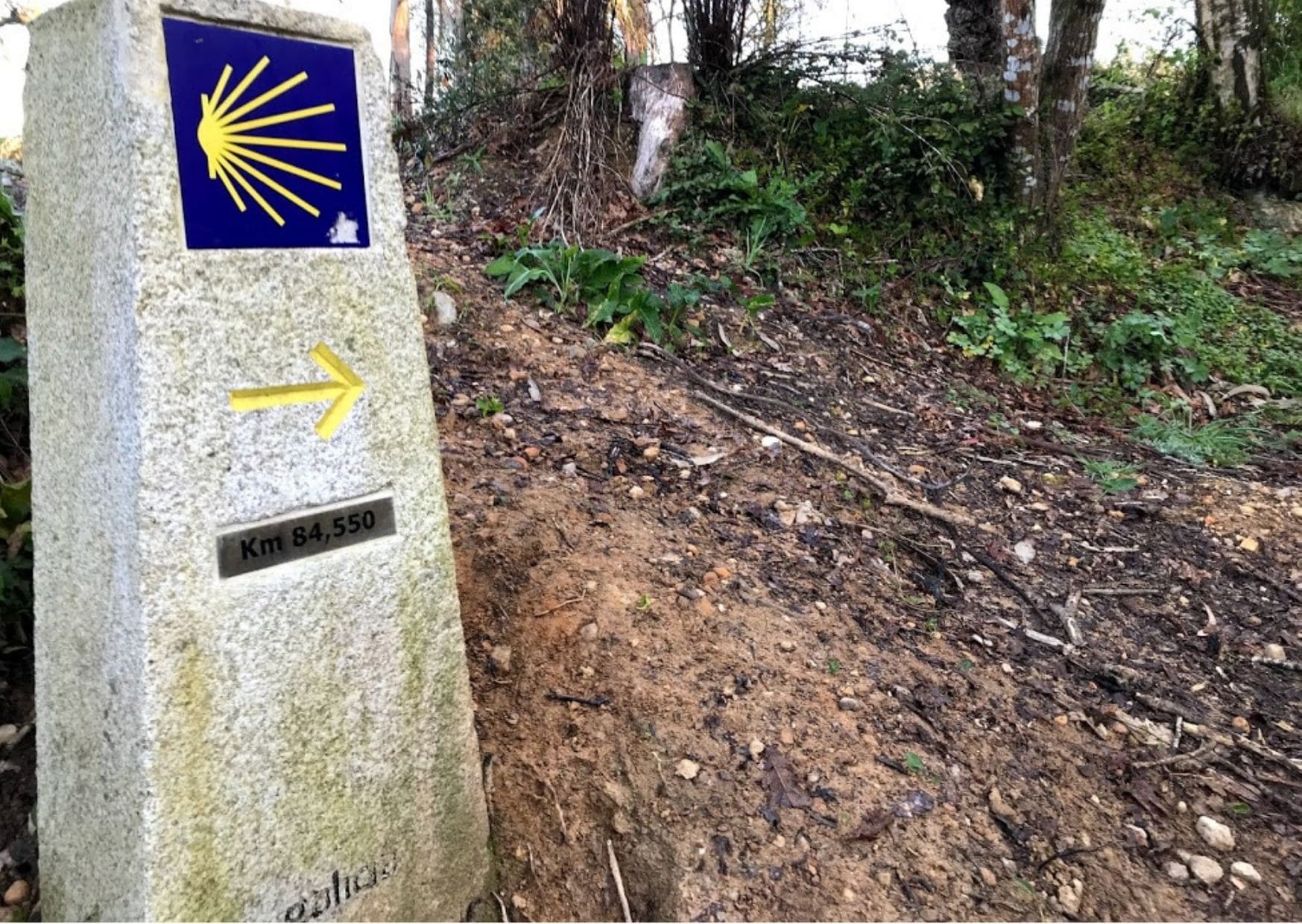
One of the advantages of living on the Camino is that you can walk the Camino every day. OK, it’s kind of a Groundhog Day situation: you walk the same stretch over and over and you never make it to Santiago de Compostela. But I must confess that I sometimes change my route so I can follow the flechas amarillas (yellow arrows) for a bit.


There’s something about following those arrows… If only every decision in life was so easy! You think “Should I do this or that?” And boom! A yellow arrow or concha de vieira (scallop shell) magically appears and shows you the way.


Another advantage of living on the Camino is that you can train for your next Camino… on the Camino. The Ruta da Pedra e da Auga, on the Variante Espiritual of the Camino Portugués, for instance, is a favourite route of ours.


The plan for the recent Carnival break was to walk 2 or 3 stages of the Camino Portugués. Life had other plans, however. That meant we could walk one stage only. We picked Redondela-Pontevedra because we could easily get to Redondela to start walking and we would finish at home. Not much planning required.


So el lunes (Monday) we took an early tren (train) to Redondela, had some café con leche and started walking. 


Redondela

One of the most characteristic features of Redondela are the two viaductos (viaduct) that cross town. They both date back to the 19th century.


Recently, I accidentally found out that there are two pieces of the Berlin Wall in Redondela. For more info check this article


I would have liked to walk around Redondela a bit, but by the time we got there and had breakfast it was already 9:00am. Great excuse to go back.


So, we set of from Praza da Constitución 1812, up rúa Cruceiro and past hórreo da Esfarrapada.


Hórreo. De Redondela a Pontevedra


Hórreos are a constant feature in Galician rural landscape. They are used to store grain. The pillars that raise them from the ground are ended in flat stones that prevent access by rodents. They are usually made of stone or a combination of stone and wood.

Soon we were out of town, walking on paved roads with little traffic. And after crossing a busy road we got to a pleasant picnic area with a fuente (fountain).


After that you walk mostly away from traffic, through forests. There’s an area where you get a nice view of the Ría de Vigo on your left. Right before that, there’s a display of shells, on your left too. I must say I was surprised by the number of these kinds of displays on this stage only. I don’t think I saw any on the whole Camino Inglés last year.


Another difference I noticed was that we never saw another pilgrim on the Inglés around the same time a year ago. On this one stage of the Camino Portugués from Redondela to Pontevedra we saw between 10 and 15 other people walking.


De Redondela a Pontevedra

Into Arcade

The worst part of the stage, for me, came right before Arcade. This stretch probably feels longer than it actually is, because you’re walking on a busy national road with cars, trucks and buses flying past you. But you are soon in Arcade, a nice little town famous for its ostras (oysters). In fact, every year, in the month of April, they celebrate an oyster festival.


Arcade has bars, restaurants, banks, shops… any service you may need.


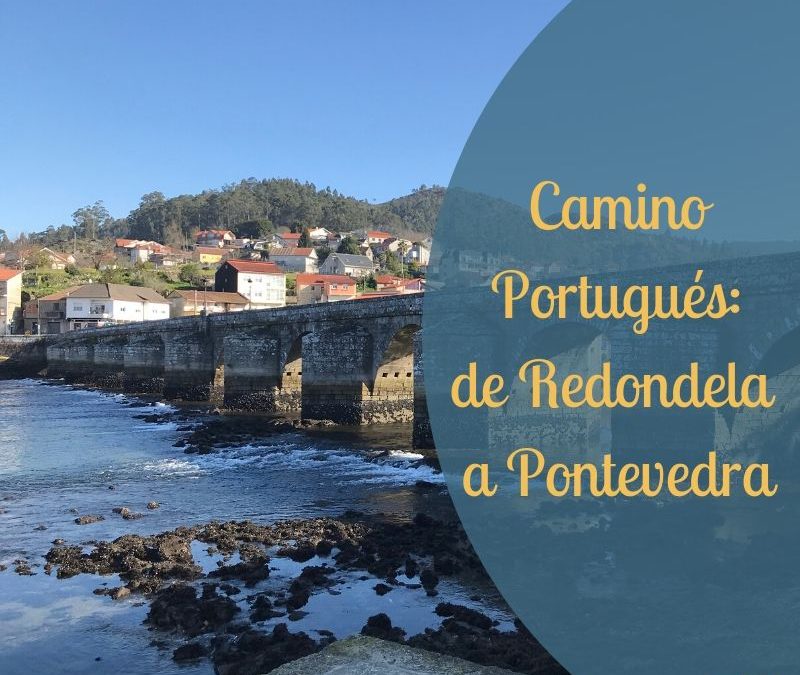
Right after Arcade you pass Pontesampaio… and one of the most photographed bridges on this route. A plaque on one of the sides reminds us of the historical relevance of Pontesampaio: in June 1809, during the Independence War, the Spanish troops defeated the Napoleon’s army and thus ended the French occupation in Galicia.


Historical events aside, this is a beautiful spot.


After that, you continue through rural areas and forests for most of the way until Pontevedra.


The weather was nice, dry and sunny but not too warm and I found most of the stage quite a pleasant walk. There are some uphills, although they are not very demanding.


The most difficult part of the stage came after Pontesampaio, with a section on stone paths. Although it wasn’t raining that day, it has rained a lot this winter, so there was a lot of water and mud in between the stones, making the walk a bit trickier. Our bastones (hiking poles) came in quite handy here.

Entering Pontevedra

There is an alternative route or camino complementario into Pontevedra. After a small chapel (Capilla de Santa Marta in Tomeza). I was really looking forward to this section, after seeing photos and comments from other pilgrims. This camino complementario is longer than the official one but you get to walk in nature, surrounded by trees and with a river flowing by your side. Quite idyllic, as opposed to walking on the side of a road.


Well, the beginning of this alternative route is clearly marked but we had to skip it because there was also a sign saying that it was closed. A couple of months ago we had a few storms with heavy rain and strong winds. As a result, the small bridge over the river disappeared. I remember reading about this at the time but I had forgotten about it. So, we had to stick to the road. Not as scenic.


And we were finally home. One of the first things you see when you enter Pontevedra is the albergue. It’s right beside the train station and quite close to the bus station too. But you still have to walk a bit more to get to the city centre and see the famous church in the shape of a scallop shell: iglesia de la Virgen Peregrina, patron saint of the Camino Portugués.


I think Pontevedra well deserves a post. And you can find it here.


For a collection of legends and historical tidbits about this route, check my book Historias tras cada Paso. Leyendas y curiosidades del Camino Portugues. All the stories are about places along the Camino Portugués; many of them are directly related to the Camino or St. James. The book is in Spanish, for intermediate learners, and includes a vocabulary guide with English translation.


If you’d like to read about the previous stage, Porriño-Redondela, you can do so here.


Today’s Spanish words for the Camino


For the pronunciation of Redondela, Arcade, Pontevedra and Variante Espiritual, you can check this post about the Camino Portugués.

Want more?

Make sure you don’t miss any posts or announcements by subscribing for free here. You’ll receive a free Spanish vocabulary guide with your first Spanish words + cultural tips. And… you’ll get access to exclusive content too.


¡Buen Camino!

Topics you should avoid

Topics you should avoid

Topics you should avoid |

You’ve been dreaming for ages about walking the Camino. You’ve planned,  packed, trained… and you’re finally in Spain. Of course, you want to make the most of this amazing experience and hope that the time spent in Spain will go as smoothly as possible.


That can include a wide range of things, such as your flights not being delayed, not suffering any injuries or ampollas (blisters) and making meaningful connections with both fellow peregrinos and locals.


Some of these things are beyond your control, so we’ll not discuss them now. Others, however, you have power over.


It’s surprising how different things can be in another country, even one that is in theory close to ours: you say or do something that is perfectly OK in your homeland, and all of a sudden you can sense the mood changing. For the worse.


So, what should you do?

In order to minimise potential problems or awkward situations with Spaniards, there are certain behaviours and topics you’d better avoid.


Don’t criticise

As mentioned in this previous post, avoid criticising our customs; whether it’s mealtimes, siesta, bullfighting or something else. We may privately agree with you. But the fact that you, a foreigner, just came into our country and “have the nerve” to tell us how we should be doing things will not be welcome.


I mean, you wouldn’t like it if we went to your country and told you how to run it, would you?


Topics you should avoid

You should tread carefully if discussing política (politics) and religión (religion). In fact, my advice would be to stay away from those 2 as much as possible.


Politics is maybe an obvious subject to avoid. People can be very passionate about their political ideas and things can easily get heated when we don’t agree.


And I’m not just talking about current affair issues like the latest election results or the independence of Cataluña (Catalonia). Other “older” topics like the Spanish Civil War can also be very touchy and nobody will appreciate you, a foreigner, sharing your thoughts about it and “coming to teach us lessons”. That’s how most Spaniards would see it and that’s also one of the most polite replies you will get. So, stay away from it.


Oh! And please don’t even suggest that the Catalan, Basque and Galician languages are dialects, especially if you are talking to someone from one of those regions! They ARE languages and, in fact, they are co-official with Spanish in their respective territories. It really upsets many of us when you call them dialects.


Religion, on the other hand, is considered a private matter in Spain. You don’t ask someone you just met about their religious beliefs or practices. Of course, some walk the Camino for religious reasons, but some others don’t. So, unless they bring it up, I would also stay away from it. You’re just going to make people uncomfortable if you ask.


Bursting stereotypes

While I’m on this topic, I’d like to clarify some common misconceptions people tend to have about Spain and religion.

  • First of all, Spain has no official religion. After Franco’s dictatorship, Catholicism was abolished as the country’s official religion. Our current Constitution, adopted in 1978, establishes the right to religious freedom.


  • Secondly, Spain is not a deeply Catholic country, at least not in the way many foreigners think it is. According to the latest surveys, 2 thirds of Spaniards consider themselves Catholic, but only 22% of them attend church on a regular basis. Almost 30% of Spaniards identify as atheist, agnostic or non-believers.


You should avoid this, too

Before we finish for today, let me give you one final tip:


Please, don’t tell us we have a lisp because of some king or another a few centuries ago!


It’s not true; actually, it’s quite a ludicrous theory and all it shows is that you don’t know what a lisp is.


A lisp is a speech disorder characterised by  the inability to correctly pronounce the S sounds. People with a lisp typically pronounce S sounds as TH.


In Spain, there is a difference in pronunciation (and meaning) between the words seta (mushroom) and zeta (the letter z), or cocer (to boil) and coser (to sew), just to mention a couple of examples. Just the same way that an English speaker pronounces sink & think differently. So, if we have a lisp, I guess you do, too!

You’ve been warned. Now you know what topics you should avoid, so it’s up to you to stay out of trouble.


Today’s Spanish words

Want more?

Make sure you don’t miss any posts or announcements by subscribing for free here. You’ll receive a free Spanish vocabulary guide with your first Spanish words + cultural tips. And… you’ll get access to exclusive content too.
 

¡Buen Camino!

A conversation with Gary

A conversation with Gary

He was a carer for Diane, his wife, for many years, as well as having his own health issues. He heard about the Camino and thought it would be something special to do in Diane’s memory. But he caught the Camino bug and has walked some more, and volunteered as hospitalero last summer. Read my conversation with Gary to find out more.

Conversation with Gary

Please tell us a bit about yourself.

I am 63 years old, retired and I live close to Sheffield in Yorkshire in the North of England. I was a carer for my wife for many years, until she sadly passed away. Being pretty much housebound during those years left me very unfit and losing my wife caused me a lot of mental and emotional stress. I was diabetic, on over 200 units of insulin daily and I also had a pacemaker fitted. Following the death of my wife I took up walking, which gave me a real boost both mentally and physically.

When did you first hear about the Camino and when or why did you decide to do it?

I had never heard of the Caminos until I saw a TV programme that aired in the UK, following a number of celebrities as they walked sections of the Camino Francés. I joined a number of Forums and online groups and began to learn more about the various Caminos.


My wife Diane was outgoing with a real zest for life. She loved the outdoors and in addition to being a Scout Leader for 15 years she was also a talented artist. A few weeks after her 50th birthday, Diane suffered a massive stroke which left her paralysed down her left side and blind in her left eye. This was a doubly cruel blow because Diane was left handed and she never mastered painting right handed. 


Through all the pain and struggles, Diane never lost hope or her sense of humour, she fought to recover every minute of every day; unfortunately she never recovered and eventually passed away. I wanted to do something special in her memory and I think the Camino fitted the bill perfectly. Diane would have been really enthusiastic about this challenge and would have loved to do it herself. I discussed it with David Critchlow, a close friend, and we agreed to give it a go.


Tell us about your Camino. 

We looked at the various options and eventually chose to walk the Camino Portugués in September of 2018. We only had limited time available to us and initially looked at starting in Tui but decided it would be more fitting to start the Camino Portugués actually in Portugal. We therefore began our walk across the river in Valença.

We were blessed with good weather every day and the scenery was stunning. Whilst we walked separately during the day we bumped into many of the same people most evenings so we formed a sort of loose knit community. I had never been to Spain before but the friendliness of the locals was fantastic. On one occasion we had taken a wrong turning and asked for directions from an old lady, who, instead of just giving directions, insisted on walking with us for 2 miles, on a very hot day, to ensure we were on the right path.


To say that we enjoyed our Camino would be an understatement. We had the bug and on returning to the UK we began to research our next Camino the very same day. Another bonus was that between the training and walking the Camino I lost 7st in weight and no longer need the insulin.


You then decided to become an hospitalero. Why? 

During our research we discovered information about the Confraternity of St James, a UK based organisation dedicated to supporting Pilgrims. They manage 2 Donativo Albergues, one in Rabanal on the Francés, the other in Miraz on the Norte. Having met so many helpful hospitaleros on our Camino, we both agreed that this looked like an excellent way of giving something back.


conversation with Gary

How did you go about finding a volunteering opportunity? 

We contacted the CSJ by email to enquire about volunteering opportunities. We were delighted to hear that they had an opening for this year, 2019. My eldest grandson Kane asked if he could join us, so we completed the application forms and the 3 of us attended a training session with the CSJ early in 2019; were accepted as volunteers to run the Albergue San Martín, for 2 weeks in Miraz, in July 2019.


We decided that instead of flying in to A Coruña and catching the bus to Miraz, that the 3 of us would fly to Avilés and walk the Camino del Norte from there to Miraz, which is exactly what we did. Again stunning scenery, great people and apart from one wet day we were again blessed by the weather.


How was your experience?

We were very grateful for the training we had received from the CSJ as on arrival in Miraz we were very much thrown in at the deep end. The previous team of hospitaleros departed for home just a couple of hours after our arrival.

The three of us eventually settled in to a routine that worked for us and for the pilgrims who stayed with us.


We met some truly inspiring pilgrims, ranging from the very young travelling with their families, to the very old; I believe the oldest pilgrim we met was an 82 yrs old lady walking with her granddaughter. One person who sticks in my mind is a young man from Texas, USA. He was carrying the biggest backpack I’ve ever seen, his pack literally weighed more than our 3 packs put together. He was carrying all of his personal possessions in his pack and upon completing the Camino he would be heading to Hungary, where he would be staying in a monastery for several months and assisting the monks to improve their brewing processes.


On completion of our time as volunteers we had to return to the UK but next September we plan to return to Miraz, where we will again volunteer for 2 weeks. After which we will finish walking the Camino del Norte in to Santiago, from there, catch the bus to Ferrol and then walk the Camino Inglés; we really have got the bug.

conversation with Gary

Did you learn any Spanish prior to the Camino/volunteering? Do you think knowing (or not) Spanish had any impact on your experience?

Prior to walking the Camino Portugués we had very little knowledge of Spanish. We had a couple of phrase books, watched a few videos on YouTube and listened to a couple of CDs. Although our use of the language was very rudimentary, it was very useful and the local people that we met appreciated that we made an effort and were very happy to assist in our learning and point out our mistakes, which was great. I think things would have been much more difficult had we not made some attempt to learn the language, however basic. We both also have a working grasp of German, which proved to be very useful because we met many German speaking Pilgrims. 

Having decided to volunteer as hospitaleros I thought that a better command of the Spanish language would be needed. I therefore began to learn basic Spanish at a local night school. This improved my use of the language a great deal and although it is still basic, it did prove to be very useful.

As hospitaleros in addition to dealing with the needs of the pilgrims, we had to converse with and negotiate with the local utility providers, local tradesmen and shopkeepers. Our use of Spanish is far from perfect but life would have been much more difficult without it. My grandson found that not speaking any Spanish did tend to isolate him somewhat whilst we were running the Albergue.


Gary’s words and phrases 

¿Cuánto es?  – how much is it?

La hora de salida check out time. this literally means “time of departure”, so you can also use it for trains, buses or planes. 

¿Dónde empezó? where did you start? 

La lavandería laundry 

El tendedero clothes line

Por favor escríbalo please write it down

¿Está lejos? is it far?

Gracias por todo thanks for everything

¿Hay camas libres? are there free beds?

Quisiera I would like


Want more?

Make sure you don’t miss any posts or announcements by subscribing for free here. You’ll receive a free Spanish vocabulary guide with your first Spanish words + cultural tips. And… you’ll get access to exclusive content too.


¡Buen Camino!


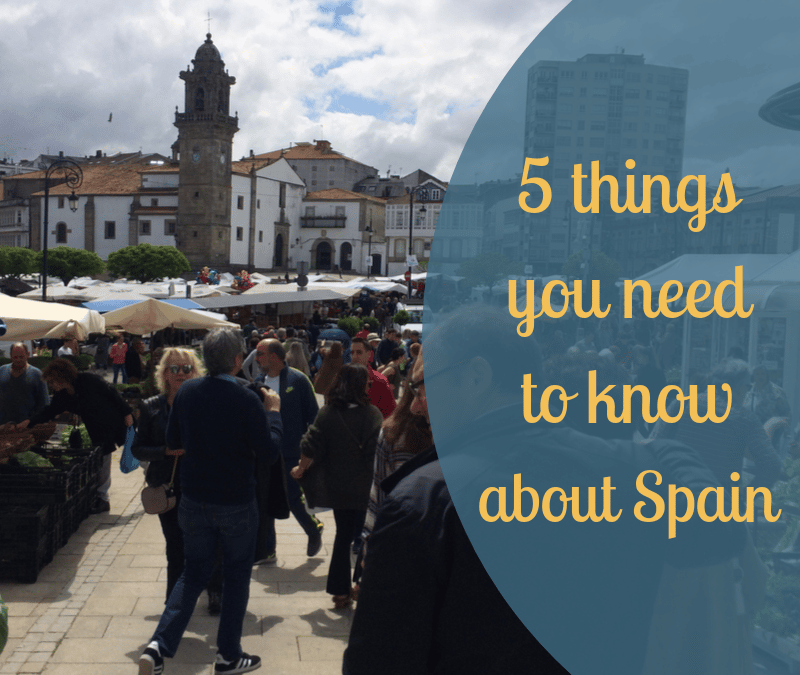
5 things you need to know about Spain

5 things you need to know about Spain

When you travel to a foreign country it’s easy to make mistakes because we don’t know how things work over there. It’s easy to assume that everybody does things the same way we do and this can lead to difficult or embarrassing situations.

So, what are the things you need to know about Spain? There are more, but let’s start with these 5:

1. It’s not siesta time!

I read a lot of comments about siesta in Camino forums: 

“Everything was closed because it was siesta time” 

“There were no people on the streets because it was siesta time” 

It’s almost like anything unfamiliar you experience gets blamed on the siesta. Sorry to burst your stereotypes but… siesta is not really a thing in Spain. At least not the way you think it is. If you go to a shop at 3:00 or 4:00pm and it’s closed it is not because it’s siesta time. It’s because it’s lunch time. 

Yes. Lunch time. But that’s way more than the usual one hour lunch break, you may say. Well, lunch in Spain is the main meal of the day, quite often a 3-course meal. So, one hour is not enough. Also, traditionally, people would go home for lunch. Not everybody can do that these days, especially in the bigger cities, but many people still do. For more details about eating times, go to nº2.

And if you go for a walk around town at 6:00 or 7:00pm in the summertime and the place is deserted, it’s not siesta time. People could be either at the beach or pool or simply at home, staying away from el calor (the heat).

We don’t put our pyjamas on, get into bed and sleep for 2 or 3 hours in the middle of the day, as many foreigners seem to think. Most of us don’t even take siestas at all. Those who do, it’s mostly a 10-15 minute nap on the sofa. So, por favor, if you find shops closed or streets empty, don’t blame it on the siesta. 

2. Don’t criticise our meal times. Try to adapt to them instead.

As I already mentioned, lunch is the main meal of the day, quite often a 3-course meal. It is usually served between 1:30 and 3:30 or 4:00pm.

You’ll have trouble finding dinner  before 8:30pm. 

The picture shows average kitchen hours, although they may very from place to place.

Instead of complaining because dinner is too late, why don’t you try the Spanish way? Have lunch when you get to your destination for the day; shower, rest and and then you can have something light for dinner, like a drink and a tapa or two.

3. Avoid criticising Spanish customs, even those that we, Spaniards, criticise. 

This is like family: you may complain about them but when an outsider criticises them, you feel compelled to defend them. Same thing here: I may disagree with that particular custom but if you, an outsider, criticise it, I may feel forced to defend it. How would you feel if we went to your country and started criticising what you do?

“Why do you not have a proper 3-course meal for lunch?”

“Oh, so you don’t eat tortilla de patatas? That’s weird!”

“Shops close at 6:00pm? Ridiculous!”

Not nice, right? For me, one of the beauties of travelling is to get to see and experience different things, eat different foods… Embrace the difference and enjoy it!


4. Manners, please!

Don’t go over the top with your gracias and por favor. I’m not suggesting you shouldn’t use those words, but we don’t use them half as much as in other cultures. Once or twice per conversation is fine. More than that is too much and you’re going to make the other person uncomfortable. This doesn’t mean we’re rude or don’t have manners. We just express it in different ways.

5. Yes, I’m greeting you.

We might not say please and thank you as much as you do, but we probably greet each other more, even total strangers: you go into a shop, you greet the shop assistant; go into a doctor’s waiting room, you greet the people who are already there; get into a lift with strangers, you greet them.

A simple hola is fine or, depending on the time of the day, you can also add buenos días (in the morning, until lunch time -Spanish lunch time), buenas tardes (in the evening) or buenas noches (later in the evening, from 9:00pm roughly).


These are just 5 basic things you need to know before you travel to Spain. There are more, especially around food, but they would make this post too long and we’ll leave them for another occasion. If, on the other hand, you would like to know whether it’s OK or not to tip and how much is appropriate, you can check this post.


Today’s Spanish words

Want more?

Make sure you don’t miss any posts or announcements by subscribing for free here. You’ll receive a free Spanish vocabulary guide with your first Spanish words + cultural tips. And… you’ll get access to exclusive content too.


¡Buen Camino!

A conversation with Randall

A conversation with Randall

He was diagnosed with Stage IV Prostate Cancer in 2015. He fought it. Five years on, he walked the Camino with a mission: raise awareness about the disease and encourage men to get screened. Read my conversation with Randall to find out more.

Please tell us a bit about yourself.

Hola amigos, mi nombre es Randy. I was born in Honolulu, Hawaii and went to Damien HS, an Irish Christian Brothers school –  namesake Saint Damien, the savior of the Lepers on Molokai. Moved to California in 1979 and attended Loyola Marymount University, run by the Jesuits. Stayed in California and attended USC School of Dentistry – not the Universidade de Santiago de Compostela  🙂

In 2014, at a too young age of 57, I had done the Long Beach, CA marathon. I had a PSA test at 555.2 (under 4 is normal) and my journey began.


When did you first hear about the Camino? You had been running marathons for years. So, why did you decide to walk the Camino?

I had seen the movie “The Way” in the early 2000s and was, as many have been, inspired by that poignant story of a Dad walking the Camino in memory of his son.

A dental patient told me that she was going to Madrid to teach English this year and that sparked an idea about doing The Camino. I did some online research, contacted my son, who lives in London, and suggested that we do it together.

I found out that September tends to be cooler and less traveled. I knew that September is Prostate Cancer Awareness month, and my almost five year survival with Stage IV Prostate Cancer was upcoming. 


This would be a perfect time for me to walk/bond with my son, spread PCa awareness, and maybe get a man screened. Since the diagnosis in 01/2015, I’ve had signs on my back at marathons (31 so far) telling my saga, urging men to get screened, and more recently – honoring those taken.


Did you prepare either physically or mentally? How?

I ordered hiking shoes online and walked four days per week either with my wife or up at my other dental office for over two months. My wife and I even did a walk, eat, walk to prep for 9 miles to simulate life on The Camino. I knew that marathon fitness (151 so far) would confer a base but I didn’t know how a backpack would affect me. Doing a marathon entails mental and physical discipline and I knew that would really help in the hike. 


A conversation with Randall

Tell us about your Camino. How was your experience? Is there any particular anecdote you would like to share?

My son’s new wife and a friend decided to walk with us. The Camino was a wonderful contemplative, spiritual, bonding, and life affirming experience. We disconnected from the real world and connected with nature and each other.


I had a sign en español on my back and that sparked a conversation with numerous Peregrinos. I also placed Blue Ribbons on The Camino and a group of Spaniards in Portomarín asked why. I told them in my so-so Spanish “Tengo cáncer de próstata estadio 4 desde 2015” (I have Stage 4 prostate cancer since 2015).  They asked how I was doing and I communicated that estoy bien (I’m OK) and the reason for being out there.


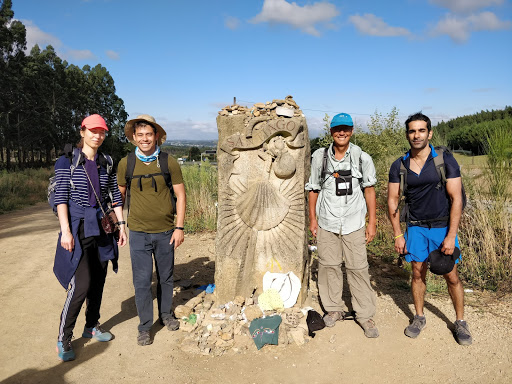
At one point, my son and I had eaten possibly mejillones malos (bad mussels). One of that quartet below had not seen me one day on The Camino and left me an Instagram message Oye, ¿dónde estás? (Hey, where are you?). We caught up with them at another rest/sello/cerveza/tortilla stop and I told them I was fine, toasted them with a beer and took a group pic.

This was such a great experience; strangers on The Camino became friends/supporters all because of The Camino. She messaged me Me alegro que hayas disfrutado tanto aquí. Ha sido un placer conocerte . Mucha suerte y buen viaje” (I’m glad you have enjoyed it so much here. It has been a pleasure to meet you. Good luck and safe trip). 

conversation with Randall

 Did you learn any Spanish prior to the Camino? Do you think this had any impact on your Camino?

I had four years of Spanish in High School and one year in College, but still had to review quite a bit. Spanish for the Camino was so very helpful in refreshing my long unused Spanish skills. Knowing some Spanish is very beneficial on The Camino; you can engage/communicate, and bond better knowing key words or phrases.

Randall’s words

  • First, some general vocabulary such as greetings and other words you can use in many conversations.

Hola: hello

¿Dónde esta?: where is it?

Buenos días: good morning

Buenas tardes: good afternoon/evening

Muchas gracias: thank you very much

Por favor: please

De nada: you’re welcome (after someone says thank you).

Vale: OK.

Está bien: it is OK/fine.

Claro: of course

  • Some food and drink related words too:

Cerveza: beer 

Caña: a glass of beer

Vino blanco: white wine

Vino tinto: red wine

Tinto de verano: it literally means summer red and it’s a drink made with red wine and soda; very common in the summer (verano), hence the name.

Pulpo: octopus (and if you want to learn how to prepare it, check this post). 

Mejillones: mussels 

Pimientos de Padrón: Padrón peppers

Jamón: ham

Bocadillo: sandwich made with baguette-type of bread, not with sliced bread.

Tortilla: Spanish omelette, with eggs and potatoes (you can find the recipe here).

La cuenta: the bill (at a restaurant, mainly). 

More of Randall’s adventure on : #chinononcamino  / @Dockam57 on Instagram


I hope that my Camino adventure “makes a ripple” and maybe a man’s life saved. 


The Camino is a metaphor for your own life. The Fleetwood Mac song says “Go your own way”. We all have our own “Camino” that we are on; how do we do it, who do we meet and what impact can you make?


Buen Camino, Buen Viaje, y vive una gran vida


PS. I’m signed up for the Long Beach, CA marathon again next month. I’ll celebrate my unofficial five year survival then! (old data said only 28%). Also, doing the New York City Marathon in November (my 4th in a row, raising over $14,000 for ZERO).

To learn more about Randall’s story, you can check these:


¡Buen Camino!

Want more?

Make sure you don’t miss any posts or announcements by subscribing for free here. You’ll receive a free Spanish vocabulary guide with your first Spanish words + cultural tips. And… you’ll get access to exclusive content too.

Tipping etiquette on the Camino

Tipping etiquette on the Camino

Updated February 2026


What is the tipping etiquette on the Camino, and in Spain in general?

I see this question come up regularly in Camino-related forums. The answers given can vary a lot depending on people’s personal experiences. Some will tell you they got strange looks when they tipped while some others felt their tip was welcome and appreciated.

I’ve even read one or two stories about bar owners chasing people in order to return their tip!


So, should you tip or not?

One of the stereotypes about Galicians is that we answer questions with another question, we don’t give straight answers and so you never know whether we’re coming or going. So, as the good Galician that I am, my answer to “should you tip or not?” is… it depends.

But before we go into details, do you know how do you say tip in Spanish? The word we’re looking for here is propina. BUT! Propina means tip in this context only. If you’re talking about the tip of your tongue or a piece of advice, just to name some other tips, there are different words in Spanish for those. We’ll leave those for another day.

And now, let me elaborate on that “it depends”. First of all, a couple of general things you should know about propinas in Spain:

  • Tips are not mandatory. Bar/restaurant staff are paid a living wage; they don’t depend on tips to survive. A tip is usually a way to show that you were very pleased with the food and/or service.


  • All tips go into a common pot. At the end of the week or month, this money is split between all staff. So your tip does not go straight to your server.


  • Using a credit card to pay? You can’t add a tip. In theory, you could ask them to increase the amount you have to pay to reflect the tip you want to leave. But chances are that money will go to the owner of the establishment, not your server. So, use your card to pay la cuenta (the bill) and then leave the tip in cash… if you’re planning to leave a tip at all.

After the pandemic, some establishments starting offering the option of adding a tip when you’re paying by card. But this is not widely available.


There’s no tipping in Europe.

I read this a lot, but it’s not true.

First of all, Europa is a diverse continent and every country has different customs. In this post, I’ll try to clarify the tipping etiquette in Spain. I’m Spanish and I live in Spain, so that’s what I know best. I can’t guarantee that this will work for Francia (France), Portugal or any other European country.

So, what’s the tipping etiquette on the Camino (and in Spain in general)?

Looking for the podcast transcripts? Click here to find them.


Tipping in bars and cafés

No tipping is the norm in bars and cafés. What we sometimes do is just round up to the next euro. Let’s say you stop for a second desayuno (breakfast) of café con leche and tortilla, and you must pay a total of €3.80. You can pay 4 euros and not collect your change of 20 céntimos (cent).

And that’s if you feel you must leave a tip. As I said before, it is not mandatory and it’s not generally expected (unless maybe you are in a very touristy area full of foreigners who regularly tip).


Tipping in restaurants

As a general rule, the more informal the place is, the less common tips are. So propinas would be more expected in high-end restaurants, but not so much in basic establishments serving menú del peregrino. It’s also more common to leave a tip if you’re part of a large group.

How much should you tip? You can just leave the change or, if that’s too little, around 5% of your bill. And that’s if you’re happy with the food and service.


Tipping in taxis

Again, propinas are not expected. But if your driver was very nice and extra helpful you can round up to the next euro or leave a €1 tip.


Today’s Spanish vocabulary for the Camino

Want more?

Make sure you don’t miss any posts or announcements by subscribing for free here. You’ll receive the transcripts + vocabulary guides + interactive exercises of episodes 1-5 of the Spanish for the Camino podcast. And… you’ll get access to exclusive content too.


¡Buen Camino!