8 ways to incorporate Spanish into your daily life

8 ways to incorporate Spanish into your daily life

Incorporate Spanish into your daily life |

You believe there are good reasons to learn Spanish before your next Camino de Santiago. You have the best intentions to learn some. Maybe you’ve even started, very enthusiastically… only to give up a few days later.

I’m demasiado viejo (too old). Or muy cansada (very tired). Or muy ocupado (very busy). Or muy… you can add any adjectives you like in there. Deep down, you know it’s just an excuse. I know. I’ve used them all! OK, maybe not the ‘too old’ one, but definitely all the others.


It could also be that you have the wrong ideas about learning a new language:

Maybe you believe you have to study for at least 1 hour every day in order to make any progress.

Or you think you must take traditional lessons, full of complex grammar explanations and repetitive exercises.

And then you start feeling overwhelmed, bored, stressed… And that’s why you give up. I know, I’ve done that too, not following the advice I give my own students.


You know the phrase ‘It’s your Camino’, right? You can apply this to learning Spanish too: there is no right or wrong way to learn Spanish (or any other language); you just have to find what works for you.

A tiny bit of grammar and a couple of exercises won’t do you any harm. But learning a language should be an enjoyable experience. You’re more likely to remember new words if you learn them while doing something you enjoy. If you enjoy doing grammar exercises, go for it! But there are other things you could be doing too.

You don’t need to take my word for it; this has been researched (an example). It has also been researched that consistency is quite important.


What does this mean?


Let’s say you spend 1h per week on your Spanish. In the long term, you will learn more if you spread that hour throughout the week (let’s say 10 minutes per day), than if you spend that hour on one day and then you don’t have any exposure to Spanish for the rest of the week.

So, to sum up, it’s OK to have fun while learning Spanish. In fact, it’s not just OK. This is what you should do.

And it’s also OK not to spend hours on it daily. It’s good to get as much exposure to the language as possible, but this doesn’t mean you should spend hours doing exercises that don’t bring you any joy. You can have Spanish in the background while you’re doing other things (here’s the Spanish for the Camino playlist on Spotify), you can watch Spanish TV for as long as you like… but remember to spend 10-15 minutes really focusing on the language.


Listening to music and watching TV are quite obvious, but there are many other things you could do to incorporate Spanish into your daily life and boost your learning.


Incorporate Spanish into your daily life | 

8 ways to incorporate Spanish into your daily life


Flecha azulStill on music and TV

Listening to Spanish música in the background is OK, and so is watching Spanish films and series. But there are things you can do to maximise the experience:

  • Find the lyrics to your favourite songs and sing along, out loud (you’re more likely to remember things if you say them out loud, according to research).


  • Keep pen and paper cerca (nearby) and write down any words you recognise. You can later check in a dictionary if you got them right. There are many free online dictionaries. I like to use WordReference.


  • Take a very short clip of your favourite show and use it as a dictation exercise: listen as many times as you need and try to write everything down. Check with the Spanish subtitles how well you did.

Yep! Writing things down helps with your memory too.


Flecha azulUse your hobbies

Cocinar (cooking), deportes (sports), crafts, fishing… or the Camino. It doesn’t matter what your hobby is. Find a website on your chosen topic in Spanish. Or a YouTube channel. Or a book… whatever you prefer. Games, such as la Oca, are great too. And enjoy!


Flecha azulUse everyday stuff

  • Are you going to do your grocery shopping? Try writing your shopping list in Spanish. Does any of the items you bought have Spanish on their label? Read it and compare it to the English version.
  • How many times a day do you check your phone? You can use it to your advantage. Go to your móvil‘s settings and change the language into Spanish. Every little helps.


Flecha azulGet creative

  • Do you keep a diary or do journaling? Do some of it in Spanish. You don’t have to write long texts or complicated sentences. Start with a few words; it could be as simple as a list of things you did that day, such as ‘trabajo (work), compra (shopping), paseo (walk)’. As you learn more, you can start creating your own simple sentences. Remember: they can be as long or short as you like and they don’t have to be perfect.


  • Are you the creative type? Try things like blackout poetry or collage in Spanish. Blackout poetry (or found poetry) is a form of poetry where you select words that catch your attention from any printed text. To ‘get rid’ of the words you don’t want, you normally use a black marker, hence the name blackout poetry. I’ve only recently started doing this, as part of my Italian learning efforts and I am amazed by how much I’m learning. All you need is a page of text in Spanish, a marker and your creativity.
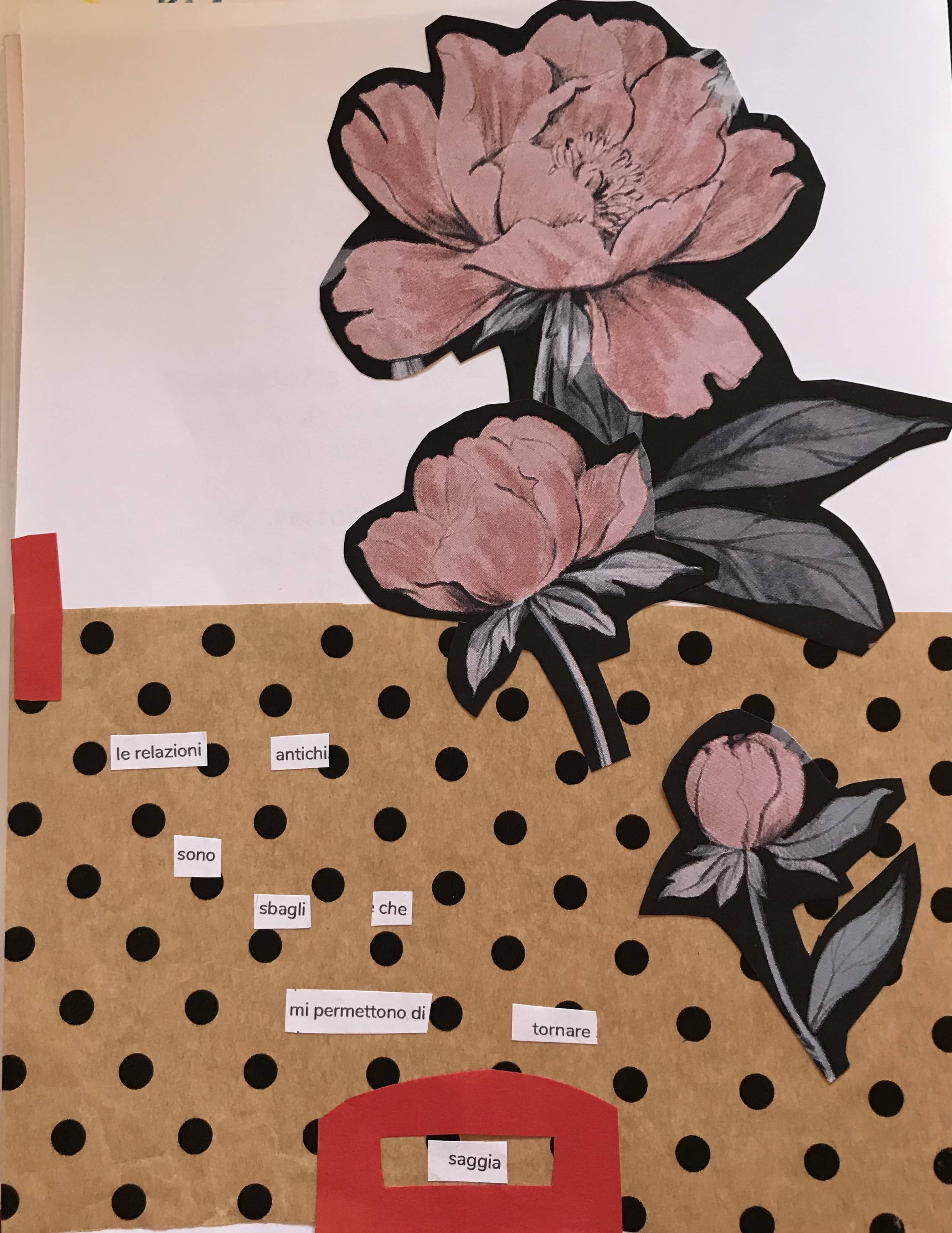
incorporate Spanish into your daily life - collage

A couple of examples of blackout poetry and collage, so you can get a better idea of what I’m talking about.

How many of these are you going to try? You know what they say: the more the merrier. So, go on! Try them all and see which one suits you best. Or come up with your own ideas and share them with us in a comment. You never know who you might inspire.


Today’s Spanish words


Want more?

Make sure you don’t miss any posts or announcements by subscribing for free here. You’ll receive a free Spanish vocabulary guide with your first Spanish words + cultural tips. And… you’ll get access to exclusive content too.

 

¡Buen Camino!

A Conversation with Leigh

A Conversation with Leigh

A Conversation with Leigh |

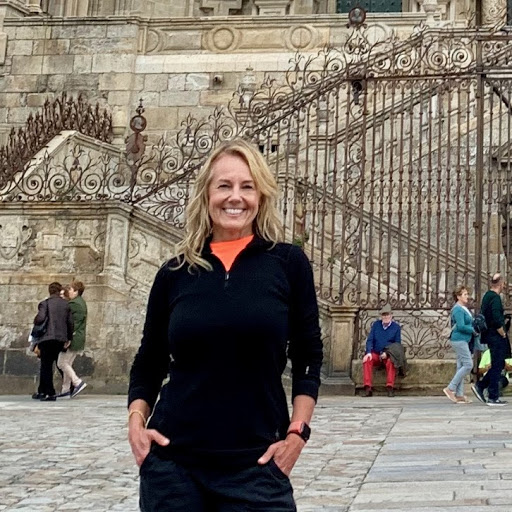
The Camino de Santiago helped Leigh find new meaning in her life after a painful and difficult period. In the past year, she has co-founded The Camino Café, which serves the Camino de Santiago community with video interviews, podcasts, virtual happy hours… and Spanish lessons, among other things.

In this conversation, we’ll find out how the Camino has transformed Leigh’s life.


Please tell us a bit about yourself

Leigh Brennan

Hello, my name is Leigh Brennan. I currently live on Bainbridge Island in Washington. I am a Mom to an amazing 21 year old Daughter, Kiley, currently at University for Architecture and to a cute new Labradoodle puppy, Cooper. By vocation, I am a yoga teacher, a co-founder of Sacred Compass Journeys, a Yoga + Camino retreat company, and co-founder of The Camino Cafe Podcast, Zoomcast, and Facebook Community. In my spare time I love to walk, practice yoga, learn about the Camino, and interview Camino Pilgrims. 

When did you first hear about the Camino de Santiago? When or why did you decide to do it?

I first heard about the Camino several years ago while watching the Movie, The Way. A few years later, someone I knew went on a Camino Pilgrimage and when she returned, I was inspired by her transformation. I thought it would be something I would do many years from now during retirement with my husband. However, an unexpected divorce led me to take the Pilgrimage in 2019 to begin the process of healing my broken heart. 

How was your experience on the Camino? Is there any particular anecdote you would like to share?

I am so grateful that I went on a Camino Pilgrimage. I walked in the Fall of 2019 with a group of women I just met who were walking to help process various life challenges. Our group was led by a therapist which very positively added to our experience. Although we went as a group, I walked solo most days with an hour or so mixed in walking with folks in my group and/or with Pilgrims I met along the way.

The Camino helped me find new meaning in my life again and helped me to see that I could still experience moments of joy despite the breakup of my long-term relationship. Upon my return, I decided to focus my life and work around the Camino. I plan to move to Spain once the world normalizes. 

The first anecdote I want to share is the advice a fellow Pilgrim gave me on day one.  He told me to keep in mind that “the Camino doesn’t give you what you want. It gives you what you need.” This advice helped me to let go of my expectations and to open up to what unfolded during my Pilgrimage. In the end, he was correct. The Camino provided me way more than I could have even dreamed. 

Conversation with Leigh

Another anecdote is one that a veteran Pilgrim and Albergue owner gave me a few days before arriving in Santiago. He told me that the “The Camino doesn’t end in Santiago, it begins.” I didn’t understand this quote until I got home. He was so accurate. My Camino has continued far beyond Santiago in so many ways. I consider myself a lifelong Pilgrim now and I can’t wait to walk again. 

You have plans to go back to the Camino…

Yes, I hope to walk the Camino Francés with my best friend and business partner in Fall 2021 and the Portuguese in Spring 2022 with my Dad, as well as, co-lead several Yoga + Camino tours for small groups in 2022. 

Conversation with Leigh

 Did you learn any Spanish prior to the Camino? Do you think it had any impact on your experience? 

No, I did not learn any Spanish beforehand and once I arrived, I felt very inept by not knowing Spanish. On the first day meeting-up with my group, I was involved in trying to coordinate transportation to get us to our starting point. I greatly frustrated a busy cafe owner trying to get help with arranging a taxi. It was a powerful lesson.  I felt bad for not showing more respect by learning some Spanish before my Pilgrimage.

I found that in the smaller villages, very few people spoke English and even in the larger cities, I found it difficult ordering meals and communicating with albergue owners in several instances. I knew when I came back to the US that I needed to improve my Spanish speaking skills before returning.  I am so happy that I am now studying with Maria to help me in this endeavor.

Any words or phrases you wish you had known?

I wish I had known how to read menus and place orders more proficiently. Other things that would have been useful:

I want… – Quería…

I need… – Necesito… 

Where can I buy/get… – ¿Dónde puedo comprar / conseguir…? 

What time do you open/close? – ¿A qué hora abren / cierran?

Would you help me get a taxi? – ¿Me puede ayudar a llamar un taxi?

Where is the train/bus station? – ¿Dónde está la estación de tren / de autobuses?

Do you have any yoga mats we can borrow? – ¿Tiene alguna esterilla de yoga que me pueda prestar?

Is there a space here where we can practice yoga? – ¿Hay algún sitio donde podamos hacer yoga?

May I get the bill/check? – ¿Me trae la cuenta, por favor?

May I get a diet coke with lemon and ice? – ¿Me pone una Coca cola light con limón y hielo?

What is your local wine/beer/cheese? – ¿Cuál es el vino / la cerveza / el queso local?

The Camino Café is on Youtube as well as on Facebook and on Instagram.


Today’s Spanish words & phrases

Want more?

Make sure you don’t miss any posts or announcements by subscribing for free here. You’ll receive a free Spanish vocabulary guide with your first Spanish words + cultural tips. And… you’ll get access to exclusive content too.


¡Buen Camino!

Conversation on the Camino

Conversation on the Camino

Conversation on the Camino

I met Kate Fisher in person while she was walking the Camino Portugués in October 2018. We had known each other online for a while and this was the perfect opportunity to connect.

Kate has recently published a book recounting her experience of walking the Camino de Santiago after recovering from anxiety and depression.

In the post that follows, Kate writes about the conversations that take place on the Camino, both with others and with ourselves. She also gives us some tips on how to improve those conversations.


Conversation on the Camino

by Kate Fisher 

(includes excerpts from her book Beyond Expectations: 6 Days on the Camino Portugués and her guide, “Calm Your Brain: 7 Tips to Connect and Communicate”)


My very first day on the Camino Portugués began in the dark. The day before, I had flown from Madrid to Vigo and then taken a taxi to a hotel north of Tui. I arranged for the hotel van to transport me to the Camino at 7:30 am without checking the time of sunrise. The van driver spoke no English and already I wished I had spent more time studying Spanish!


I was the only passenger in the van and when he dropped me off at a dimly lit and empty parking lot behind a small church, I felt foolish. It was early October and it would be another 45 minutes before dawn. I also felt disoriented. Which way was north, toward Santiago? What if the pilgrims were walking south toward Fátima? I took a deep breath and said a little prayer for safety.


Then I saw it, a large yellow arrow painted on a crumbling concrete wall, pointing the way. Fátima arrows were blue, I remembered. This yellow arrow was the only bright spot in a shroud of darkness. Should I follow it now or wait as I’d been instructed? I decided to do a walking meditation around the parking lot until daybreak.


Before long, my attention was caught by three small lights bobbing up and down in the distance. They seemed to draw closer and I recognized them as headlamps on three people walking in rhythm down the sidewalk in front of the church. I ran toward the yellow arrow and through the driveway to catch up with them. As I approached, I slowed down and joined the line of pilgrims, barely visible by the light on their foreheads. Not one of them made a sound. It felt a bit strange, and yet I was relieved. I was walking on the Camino!


When I thought about the fact that these walkers had also started in the dark, I relaxed a bit. Maybe I knew what I was doing, after all. The line of pilgrims spaced out into small groups, everyone walking at their own pace, still in complete silence. 


I sensed someone behind me and turned to look. A small woman carrying a large backpack smiled at me. I smiled back and whispered, “Is it against the rules to talk?”

“If it is, I guess we are breaking the rules,” she said wryly, and thus began a conversation with my walking companion for the day.


Walking and Talking

If you ask me, I will tell you that “walking and talking” is one of life’s greatest pleasures. I enjoy walking alone, to be sure, but there is a special connection to be made between people who enjoy a good conversation while walking.


Maybe it’s the fresh air. Or the freedom from a schedule and interruptions. I have had some of my very best conversations while walking with a friend and I found that to be true on the Camino, too.


Small talk guidelines are generally to avoid talking about politics, religion, and personal health. Perhaps because we were mostly strangers and may never see each other again, these small talk rules did not seem to apply. Most of my conversations were about politics, religion, and mental or physical health.

A German man told me about his liver transplant. A young man from Israel was eager to talk about religion and his Polish grandfather, who had lived through the Holocaust. When people found out that I was from the US, they asked me what happened to cause the outcome of the 2016 election. They were baffled. My explanation was that 2016 was The Year of the Rooster on the Chinese calendar, and it was most definitely a wake-up call.

Conversation on the Camino

Some people dedicate their walk to someone or something. Grateful for my own recovery, I dedicated my walk to those who struggle with depression and anxiety.

It just so happened that at the time I was preparing to walk on the Camino, I discovered that Project Happiness was promoting The Race For Wellness Project to raise money for mental wellness resources for youth. 


The project also aimed to raise awareness and help remove the stigma that prevents people of all ages from getting help. All I needed to do was pledge to walk at least 50 miles (approximately 80.5 kilometers) and invite friends and family to be sponsors.

Every day I had opportunities to talk about mental health and share my story. On some days, I would share it as my reason for walking. Fellow pilgrims were eager to talk about their own depression or their concern for a friend or family member. Because of the stigma, hardly anyone talks about it in day-to-day life. Here on the Camino, it felt like the most natural conversation in the world. 


Meeting Maria

Not every conversation was serious. Some were observations like “blisters are my sisters.” Or talking about a 90-year-old pilgrim who seemed to have more energy than all of us. 

One of my favorite conversations was with Maria. We had met online in the Opted Out Community of language teachers and I’d been learning about Spain and the Camino through her blog articles, workbooks, and courses. I was delighted to walk through Pontevedra and have the opportunity to meet her at the end of my third day. 


Conversation on the Camino

Conversation with food or wine

Maria and I enjoyed our conversation over a glass of wine and then she needed to return to her family so I had dinner around 9 pm. At home, this would have been very late. Since this was my second week in Spain, I was beginning to get used to the different times of eating. 


Breakfast was usually light, consisting of café con leche, toasted baguette with jam, and a glass of fresh-squeezed orange juice. I usually started walking on an empty stomach and stopped at a café sometime mid-morning. Conversations were light, too, and often involved the cafe proprietor who was happy to stamp our credencial or passport and send us on our way with the ubiquitous greeting, Buen Camino!


The midday meal was also later than I normally eat. Instead of noon, we often ate around 2 pm, and even pilgrims liked to linger at the table afterward for conversation. I learned that there is actually a word for this time of conversation, sobremesa


Conversation starters

If you want to have an interesting conversation on the Camino, I recommend asking open-ended questions. In other words, questions that can’t be answered with yes, no, or simply one word, Here’s an example that does not promote conversation. Question: Where did you start your Camino? Answer: Porto. 

Open-ended questions usually begin with “what” or “how” and invite people to elaborate and share their opinions, views, and personal stories. Start with something that is not too personal or specific.

Some examples:

What brings you to the Camino? – ¿Qué te trae al Camino?

How do you use hiking poles/GPS/your guidebook? – ¿Cómo usas los bastones / el GPS / tu guía?

What has been your experience at the albergues? – ¿Cómo ha sido tu experiencia en los albergues?

How do you like this part of the Camino? – ¿Qué te parece esta parte del Camino?

How do you like Spanish cuisine? – ¿Qué te parece la cocina española?

What do you recommend for a vegetarian? – ¿Qué recomiendas para un vegetariano?

Has anything surprised you about Spanish culture or customs? – ¿Te ha sorprendido algo de la cultura o las costumbres españolas?


Follow up with another open-ended question or “That’s interesting. Tell me more.”


Conversation with myself

Because the Camino Portugués was not crowded, I experienced a lovely balance of inner conversations with myself while walking alone and meaningful conversations with other pilgrims while walking or enjoying a meal or cafe con leche in a cafe.


I think that many people come to the Camino to sort out things in their life and these inner and outer conversations are one way to do it. It’s almost as if pilgrims hold up a mirror for one another, listening to each other’s stories and reflecting back what each person needs to see or hear.

All in all, 6 Days on the Camino Portugués gave me the perfect opportunity to think about my own life and have conversations with people from Spain and at least a dozen other countries around the world. If you can’t be away for more than a week, I highly recommend walking from Tui to Santiago. And if you have any questions for me, I’d be happy to have a conversation. 

You can listen to some of our Conversations about the Camino on Kate’s podcast. You will find a link to those conversation on my About page.

Today’s Spanish phrases

¿Te ha sorprendido algo de la cultura o las costumbres españolas?

Conversations with Kate

Kate is a hiker and language enthusiast from the US who has dabbled in German, French, Spanish, and Polish at different times in her life. Through volunteer work in Poland and Spain, she discovered a passion for helping business professionals develop confidence speaking in English and began teaching online at Conversations with Kate. She is a certified Neurolanguage Coach®, hosts a podcast, and recently published her first book for English Language Learners and anyone interested in walking six days on the Camino. She’s grateful to Maria for helping her with Spanish for her walk and for the book. : )

You can connect with Kate on Linkedin, Instagram and Facebook.

Want more?

Make sure you don’t miss any posts or announcements by subscribing for free here. You’ll receive a free Spanish vocabulary guide with your first Spanish words + cultural tips. And… you’ll get access to exclusive content too.


¡Buen Camino!

3 reasons to learn Spanish before the Camino

3 reasons to learn Spanish before the Camino

3 reasons to learn Spanish before the Camino |

  Should I learn Spanish before my Camino?

This is a frequently-asked question in Camino groups and forums. The answer?

Some people will tell you that a smile is enough. And the truth is you will survive. But this is also true: by not learning any Spanish you’ll be putting yourself at a disadvantage.

First of all, you’ll be going through rural areas, where finding an English speaker can be challenging, if not impossible.

Secondly, things don’t always go according to plan: accidents happen, we get sick, a number of things can go wrong. And if they go wrong when there’re no English speakers in sight… well, who wants that added stress?

Finally, most pilgrims asked agree that knowing even very basic and limited Spanish gave them a richer, fuller experience on the Camino. And the majority of those who didn’t learn any ended up regretting it.

If you’re still not convinced, keep reading and learn the top 3 reasons why you should learn Spanish before your Camino… and learn some Spanish while you’re at it.


1. Peace of mind &  freedom

Picture this: you find yourself in an emergency. Your phone’s battery is dead. There are no English-speaking people around. What do you do? The situation is stressful enough as it is. You don’t want to add the worry of not being able to communicate what you need.

A smile will take you a long way. True. But it’s not always enough. There are situations when you might need at least some basic knowledge of Spanish. You never know when phrases like necesito un médico (I need a doctor), no me encuentro bien (I’m not feeling well) or ¿dónde hay una farmacia? (where is there a pharmacy?) might come in handy.

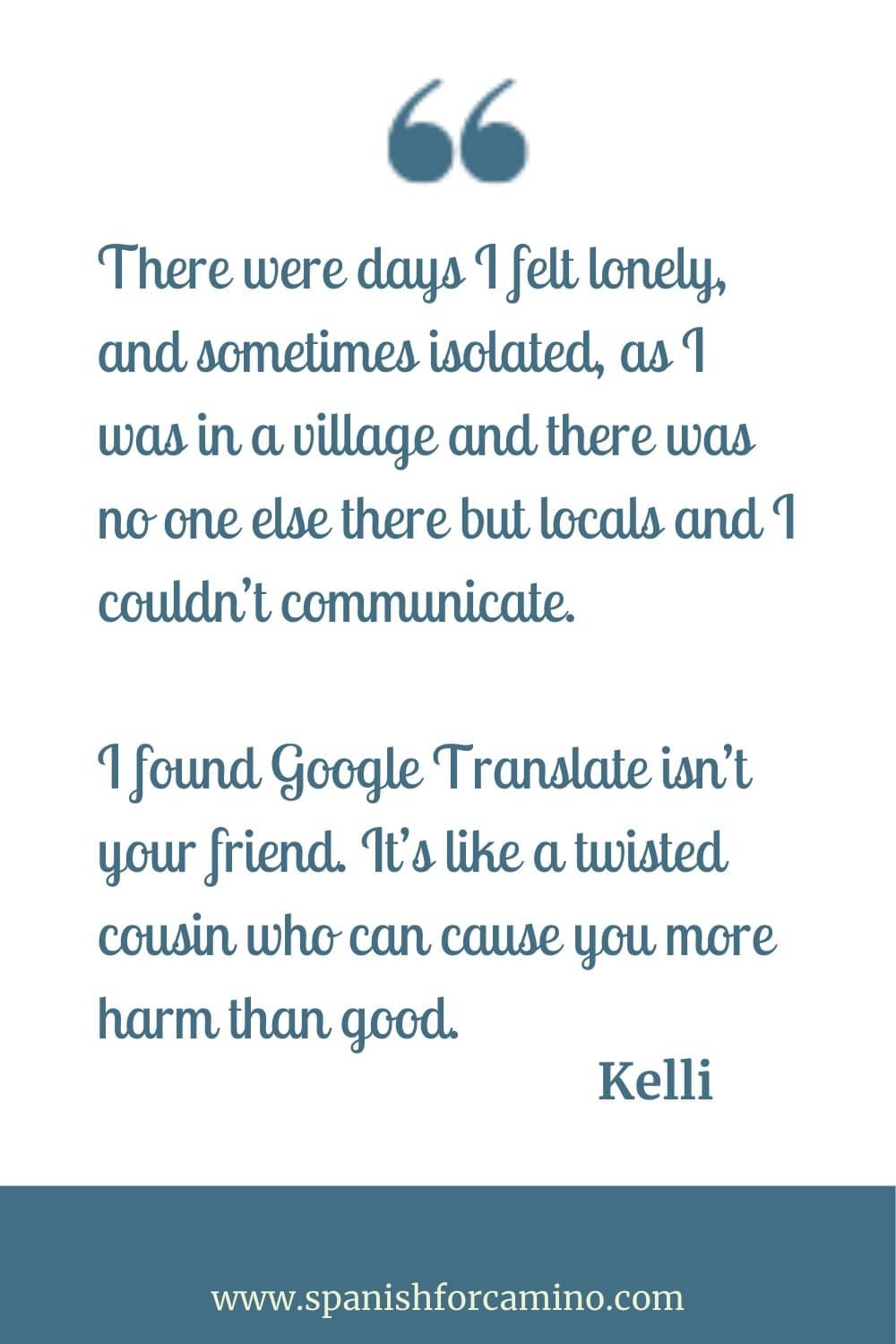
Spanish is not only for important, urgent needs. How about spending the night in a small village where nobody speaks English? It could be a looong and lonely evening. That’s what happened to Kelli on the Camino Francés.

reasons to learn Spanish

Imagine being able to communicate your needs without having to rely on a translating app on your phone or on finding someone who can speak English or who can translate for you.

You could even become a Camino angel for other pilgrims who didn’t think learning Spanish was important!


2. Respect & connection

Making an effort to use the local language shows respect for your host country. And Spanish people are generally pleased if you have a go at Spanish. Give it a try and you’ll experience a warmer welcome.

Even basic greetings such as hola (hello), buenos días (good morning) or buenas tardes (good evening) can open doors that would remain otherwise closed. Polite words like gracias (thank you) and por favor (please) will go a long way too.

In Spain, people acknowledge each other with hola or the greeting of the time of day.  Even relative strangers. And we will say hasta luego (see you later) or a clipped version of this at parting. So remember to greet before launching into asking a question. This applies in shops, doctors’ waiting rooms, elevators, before ordering food or even a café con leche at a bar… everywhere. 

Anyone who tried their Spanish on the Camino, no matter how limited it was, will tell you this: they got a much better reaction from the locals. 

Of course, the better your knowledge of Spanish, the better chances at making deeper connections with the locals and knowing what’s going on around you. OK. So, you find yourself in a small village where nobody speaks English.

If you’re the “a smile is enough” type, chances are you’ll spend the evening by yourself.  You’d love to know what that festival is about or why people are wearing strange clothes, but communicating with these people is too hard. You’re missing an opportunity to learn about local traditions, history, culture.

And this brings me to the next reason to learn Spanish before the Camino.


3. Broaden your mind

We all know the Camino can be a life-changing experience, a wonderful opportunity to become a truer version of ourselves, find answers, heal, etc. But why limit the experience to learning about ourselves? There are people on the Camino who have never been to Spain before. Their “knowledge” about Spain is in many cases full of stereotypes and misconceptions bearing little resemblance with reality. They spend days, probably weeks, walking through Spain. Yet, they go back home full of the same stereotypes.

I see this every now and then in Camino-related Facebook groups. There’s one case in particular that caught my attention: This couple was sharing their journey along the Camino Portugués. Neither the husband nor the wife knew any Spanish. Every day, they posted pictures of their stage, with their comments. Every day, at least one of the pic’s descriptions showed a couple of things:

  • they were interpreting things through their own pre-conceived ideas of Spain. Some of these were way off the mark.


  • because they were not talking to any locals, they went back home convinced that their wrong assumptions were true. Their distorted vision of Spain was reinforced.


In essence, maybe the Camino was a very spiritual experience for them, but they missed the opportunity to broaden their minds, to learn about Spain and its culture.

3 reasons to learn Spanish before the Camino and countless benefits.


What type of pilgrim are you going to be: the “a smile is enough” type? or the one with the richer, fuller experience?

reasons to learn Spanish
Games and the Camino

Games and the Camino

Have you ever played any games on the Camino? Have you even considered it?

I had a lovely evening on the Camino Inglés last year, playing cards. It was fun, but it was also an opportunity to bond and, of course, to learn about Spanish culture and language.

So, if you hadn’t thought about it, please think again and keep reading.

In this guest post, Vickie Kelty tells us about the benefits of games and how you can incorporate them in your Camino… and in your life after the Camino.

Over to Vickie!Flecha azul


I know you have a lot of things to pack for the Camino and you want to keep it as light as possible, but I have one request: please don’t forget to pack a game (juego).

Now, obviously you aren’t going to put a big board game like Clue or Monopoly in your backpack! I’ll bet a deck of cards (baraja), some dice (dados), or a tiny travel size game would fit though, wouldn’t it?


First, why you’ll wish you brought a game on the Camino

  1. Relaxation! After a long day walking the Camino playing a game is just one way to chill out and start getting to know other pilgrims. Read about what it’s like walking with strangers in this post
  2. You can play them anywhere! It isn’t necessary to wait for a table to play a round of cards, just sit right down on the ground and play.
  3. No time limit. You decide how long to play, so don’t worry about time. It’s not necessary to keep score or finish the entire game. Sometimes just one hand of cards is a nice way to unwind after a long day of walking or travel.
  4. Forget language barriers. Playing a game is a great way to take the Spanish you know and the English or other language the other person knows and use it to play a game together. Be prepared for laughter and fun to ensue! 


What Spanish games can I learn before I do the Camino?

Keep in mind, the games I’m about to mention are suggested based only on my own personal experiences living in Spain and in the U.S. So, please take that into account if there’s a game mentioned that you’ve never heard of or isn’t popular where you’re from.

I also invite you to research any games you don’t know, perhaps they’ll become your next favorite game!

Let’s start with board games. 

Games and the Camino Parchís
If you know the game Sorry!, which I grew up playing in Nebraska, then Parchís will look familiar to you. I found a cool magnetic travel size version called Ludo (this game goes by many names!) at a dollar store and I often bring it with me on vacation. In fact, it proved entertaining while on a road trip with my parents one summer, even though my mom always beat me.

Perhaps you’ve heard of this next game too, The Game of the Goose or La Oca. This one I hadn’t played before coming to Spain and I can’t wait to play it with my family the next time they visit. Even though I don’t have the travel size version I did see one available online. It’s like a game I grew up playing called Chutes and Ladders in that you never know if you’re going to land on a good or bad square next!

Games and the Camino La Oca

By the way, both of these board games have special Camino versions available – though perhaps not in the travel size – and they could make for nice souvenirs! So even if you don’t play them on the Camino you can play them when you get home and share your experience with others.


Although board games are nice, nothing beats a good old-fashioned card game.

While there are many popular Spanish card games, I suggest checking out Brisca, which can be played in pairs, and another game called Chinchón, which is similar to Rummy.

It might also be fun to buy a Spanish deck of cards to play with! Another nice souvenir – and this one will easily fit in your backpack.

Obviously, there are many more Spanish card and board games, but these are the ones I’ve played the most and found easiest to learn.


If you’re like me, you want to share your culture too!

Think about some easy games you can share with other pilgrims. I’ll share two of my examples. A couple easy to teach card games that I played growing up are now my favorite games to teach others when I travel. They’re Old Maid and Go Fish.

Although I have special cards (cartas) for them, I don’t travel with those. I just carry a standard 52-card deck that I can play both games with. A little secret for Old Maid, I simply leave one joker in the deck and call that the Old Maid. (I know some people will remove three Queens so there’s only one Queen. Do what works for you).

Another card game I’m obsessed with is UNO! I’ve been delighted to find out that it was recognized by most of my Spanish friends when I’ve brought it out to play. Although I was surprised to find out that their rules are slightly different than the ones we played with in my family. Sometimes we play with my rules, sometimes with theirs. It’s fun to change it up!

Honestly, for me, UNO is one of the best games to travel with because the rules are easy to follow (even if they differ slightly from country to country) and the vocabulary you need to play is quite basic. Besides, when you don’t know the words gestures go a long way! 

By the way, if you don’t want to play cards, even carrying five dice and playing a version of Yahtzee can easily be done. The game options are endless!


Just remember, whatever game you choose to bring, it’s worth it for the memories you’ll make.

What game will you bring on the Camino?


Today’s Spanish words


Vicky Kelty

Vickie Kelty is an English speaking skills teacher originally from Nebraska, USA. She specializes in using games to help English language learners speak with ease and enjoyment. You can find her at vickiekelty.com or follow her @vickiekelty on IG where she posts regularly.


Want more?

Make sure you don’t miss any posts or announcements by subscribing for free here. You’ll receive a free Spanish vocabulary guide with your first Spanish words + cultural tips. And… you’ll get access to exclusive content too.


¡Buen Camino!

La Luz del Camino

La Luz del Camino

A month ago I had the opportunity to take part in La Luz del Camino initiative.


But what is La Luz del Camino?

After the confinamiento (lockdown), some peregrinos (pilgrims) decided to start a Camino from Roncesvalles, on the Camino Francés, carrying a special mochila (backpack) with a light on. The purpose of this pilgrimage was to remember all those people who have died of covid-19. The idea was for the backpack to be carried in relays, by different pilgrims, all the way to Santiago.


Once that backpack was on its way to Santiago, the question was “why not do the same on a different Camino? And that’s how La Luz del Camino Portugués originated. Plans were made to start a pilgrimage from Porto, in Portugal, along the central route of the   Camino Portugués. Also, both pilgrimages were coordinated so that the 2 mochilas would enter Santiago on the same day, July 24, the day before the festivity of st. James.

Oihana, someone I’ve met online and hope to meet in person soon, was one of the people involved in the organisation of La Luz del Camino Portugués. She invited me to participate and I immediately said yes!

First, because it was a very thoughtful project in general. But also because it gave me the chance to do something meaningful for my friend and fellow Spanish teacher Inés, who lost both her parents to coronavirus.

Inés is from Madrid but lives in the US with her American husband. Her parents died in April and, 5 months later, she still hasn’t been able to travel to Spain, which is making her grieving process harder. Her parents, Vicente and Carmen, were deeply religious and also had a strong interest in art and history. They never walked the Camino, but they did visit the cathedral in Santiago, as well as many other places along the Caminos.

So, going back to the light of the Camino, our special mochila left Porto on July 11, after a blessing at the cathedral. It made its way to Spain on the central route and reached Tui a few days later. You can follow the journey on this Facebook group, which has plenty of photos and an account of each day’s walk.


From Pontevedra to Caldas

On Tuesday July 21 the backpack travelled from Pontevedra, my home town, to Caldas de Reis. And that’s where I came in. I didn’t know who I was going to walk with or how many people I was going to meet.

Arrangements were made to leave very early, at 6.00am, because the weather had been particularly hot that week; the maximum expected temperature for that day  was around 40ºC (104ºF). ¡Mucho calor!

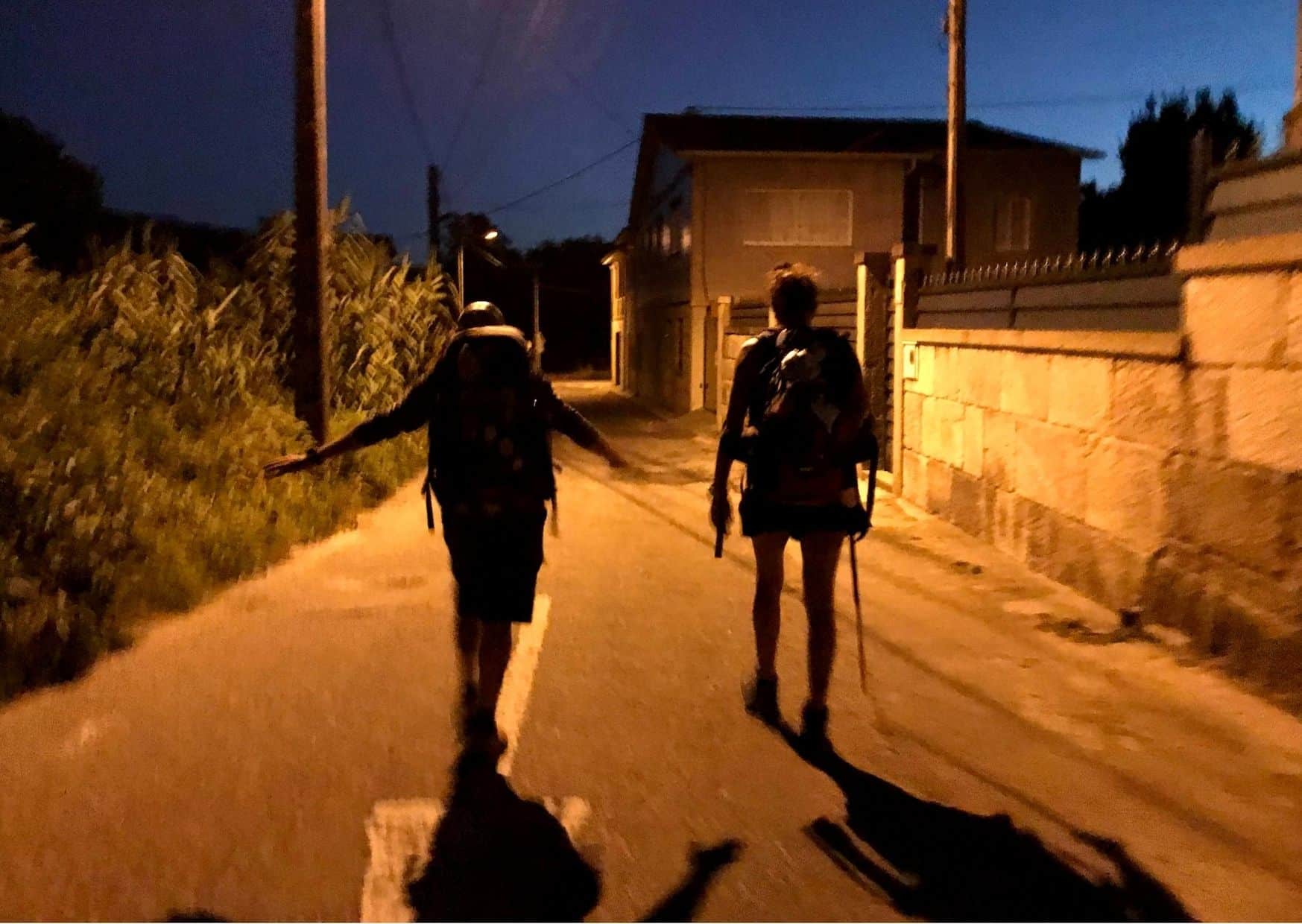
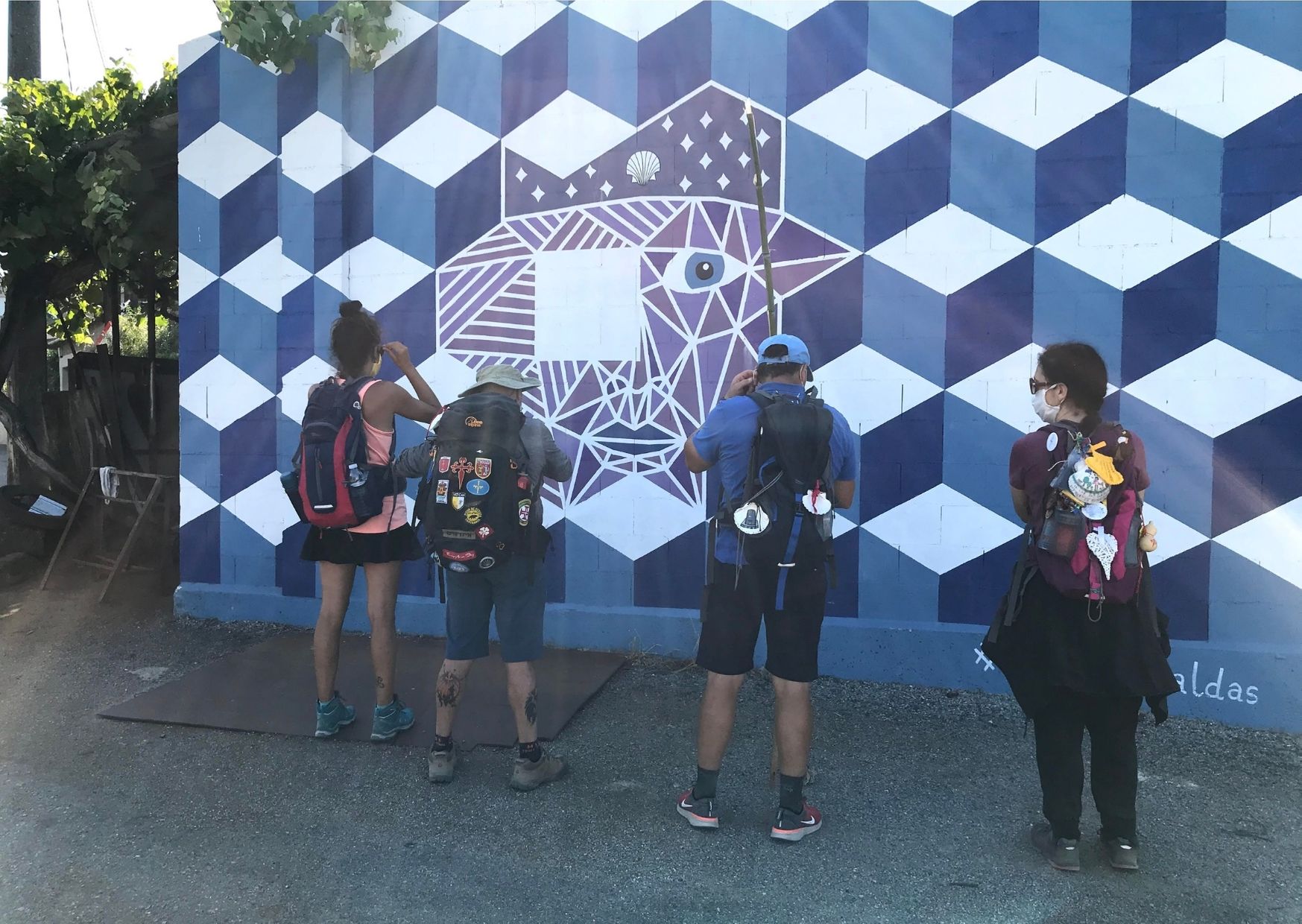
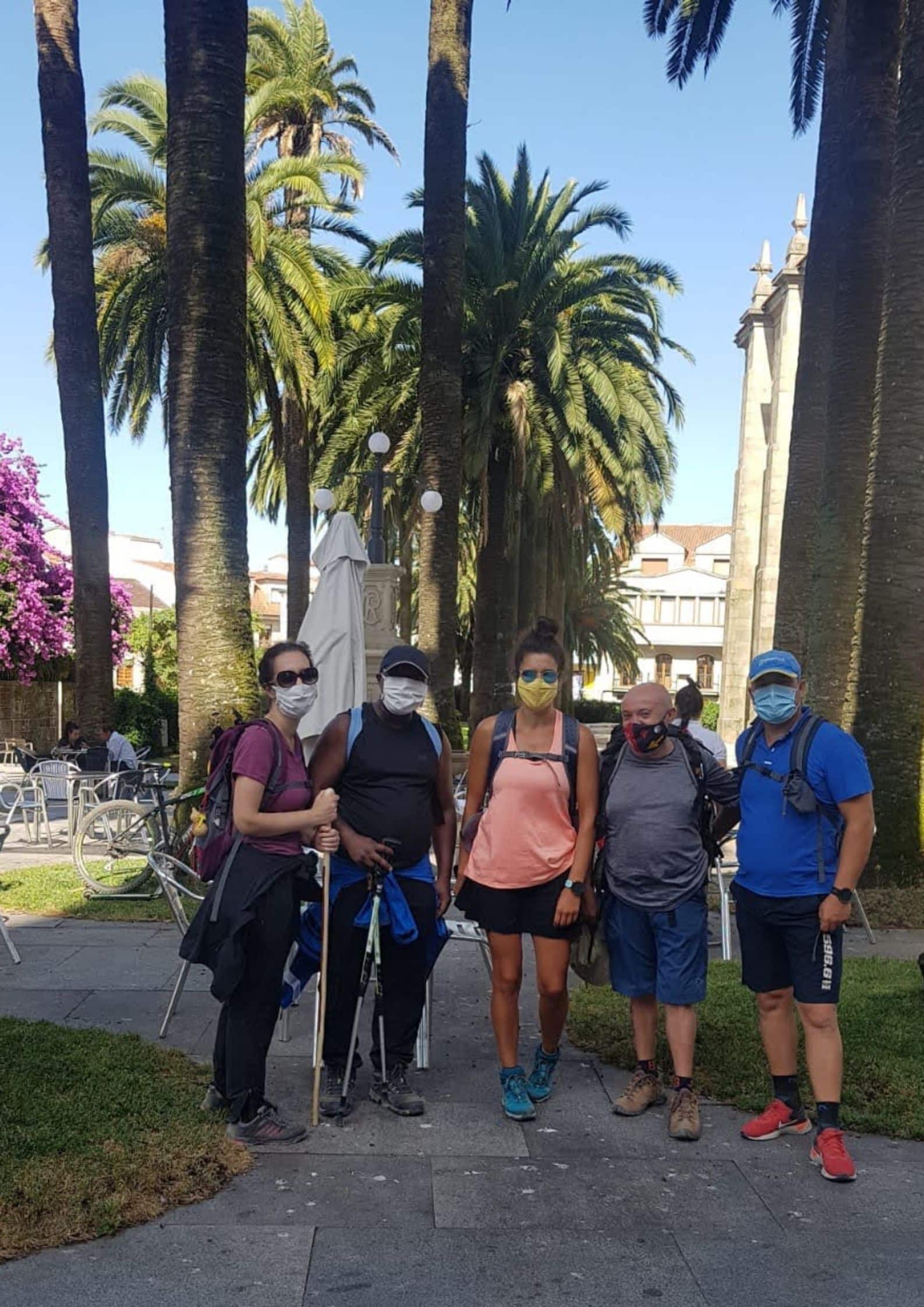
We met outside the Peregrina church, with our mascarillas (facemasks), as the “new normal” requires, and we started walking. It turned out there were 5 of us in total. It was still oscuro (dark) but at least the temperature was nice and fresh.


La Luz del Camino en la Peregrina
La Luz del Camino
Leaving Pontevedra

 We left Pontevedra in the dark, making good speed to try and beat the heat, and continued on to Alba, San Amaro and A Portela.  After a while, we started distancing from each other so we could remove our masks. We saw one or 2 pilgrims along the way and a couple of locals too as we passed through villages. But, in general, we were on our own.


The bares and cafeterías we passed were closed. Maybe it was too early, or maybe it was one of the side effects of covid-19. I’d say it was the latter, because we didn’t find anything open until we got to Caldas, which means… we were not able to have café con leche or tortilla! 

Luz del Camino

La mochila

As I mentioned before, the backpack was carrying a light, but that was not the only thing:

There was also una concha de vieira (scallop shell) hand-painted by Julia, the same girl who later carried the backpack into the cathedral in Santiago, as well as different items added by different people at different stages.

I added a yellow knitted shell, for all of those who had plans to walk this year and had to cancel (myself included). 

La mochila de la luz del Camino

There was also un bordón (a staff), that was especially made for the occasion and that you can see in the video.

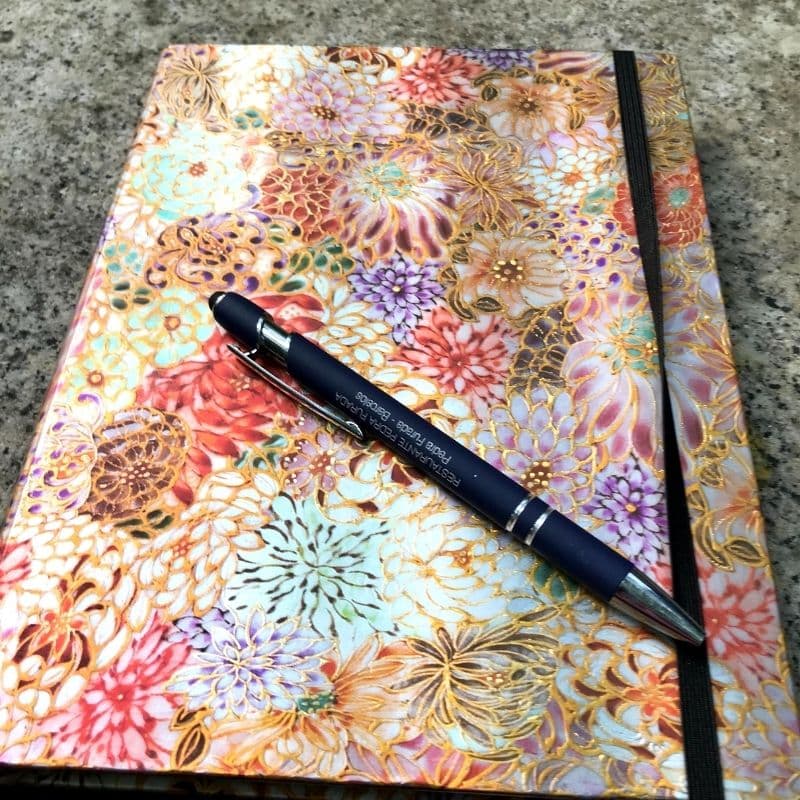
Inside the bag, there was a notebook where anyone could write about their experience accompanying the light of the Camino, a special message for a loved one, etc. So I asked my friend Inés if she would like me to write something on her behalf.


After walking through forests and villages for a while, the Camino joins the busy N-550 road. At this point, if you look across the road, you’ll see a sign saying “Parque Natural Río Barosa”. It’s a beautiful place with waterfalls and old watermills. It’s about 500m off the Camino, but it’s well worth the detour. Whenever you find yourself walking the Camino Portugués, if you have the time, please stop by. You won’t regret it.

We chose this place for a break (sadly, café con leche was not an option, as I mentioned, because everything was closed); we were all carrying snacks, but a colleague of one of the people walking met us there with donuts, cereal bars, nuts and drinks! The Camino provides, right?

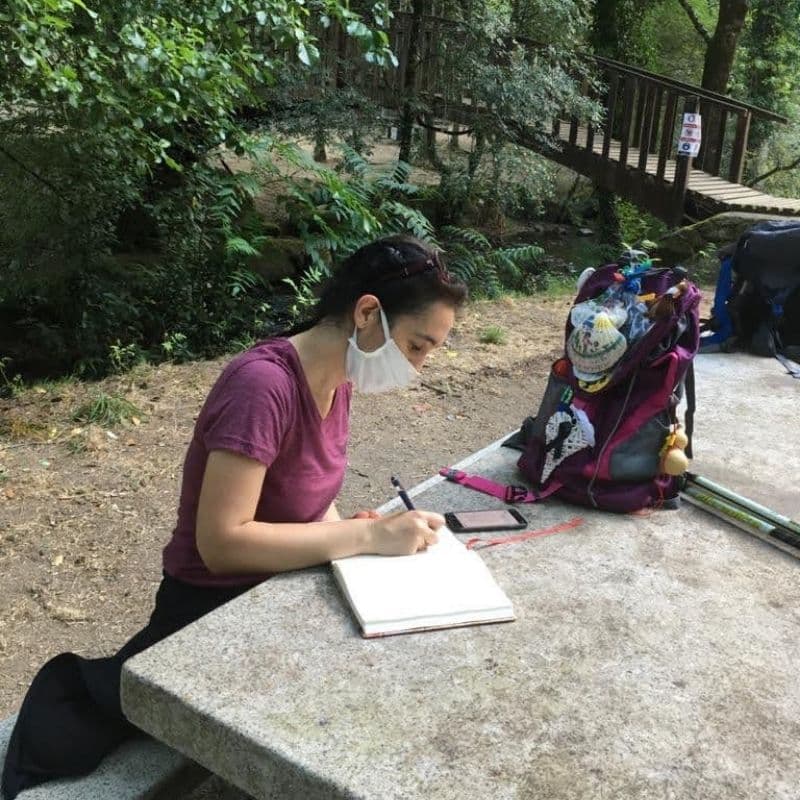
I also chose this place to write Inés’ message on the notebook. It’s beautiful, it’s peaceful… I couldn’t think of a better spot to complete my mission.

El cuaderno

The notebook

Mensaje de la luz del Camino

Writing on behalf of my friend

So we had a break, I wrote on the special notebook and we continued our way to Caldas de Reis, which was not too far away.

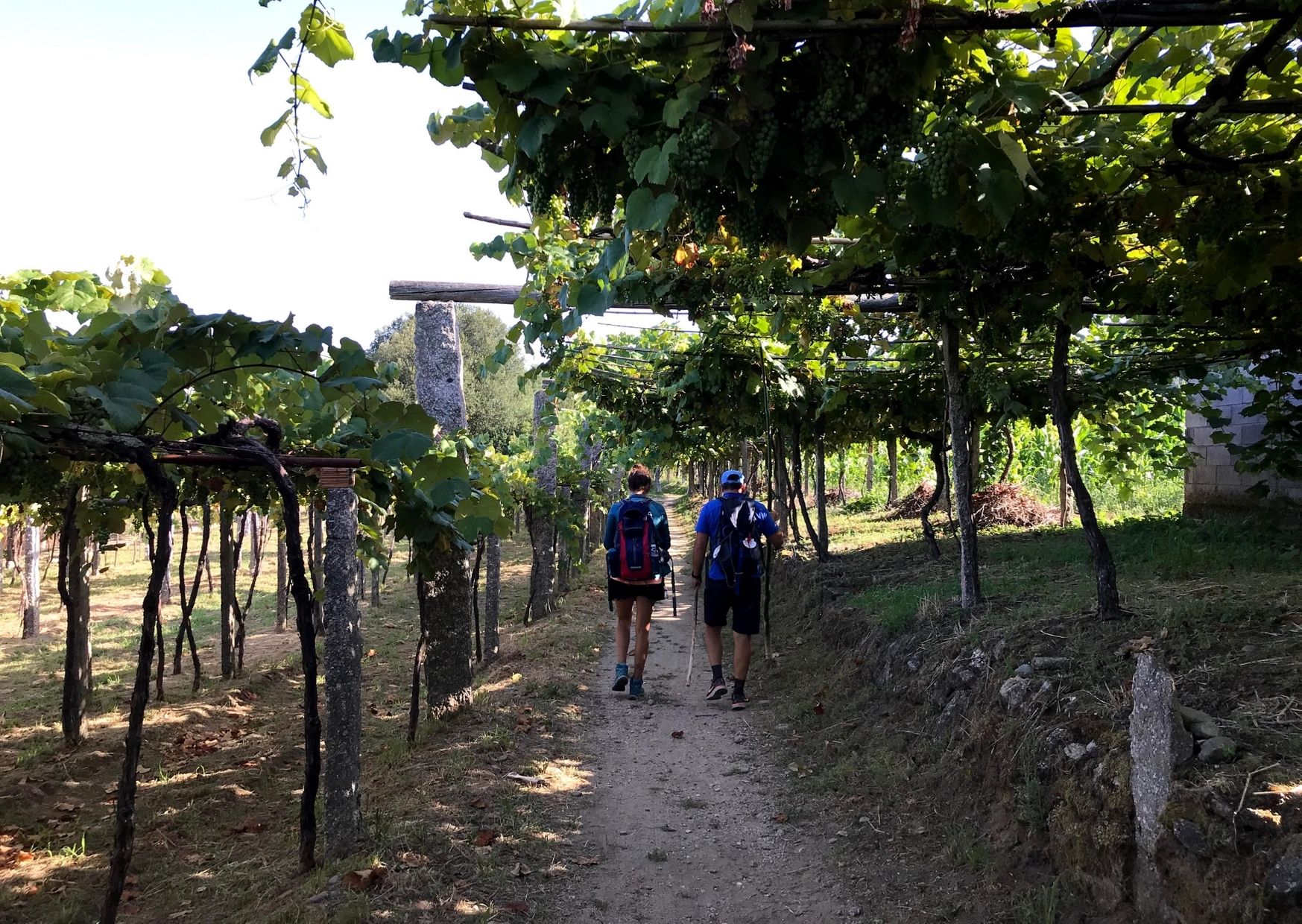
That meant back to busy N-550. I’ve travelled that stretch of the road on numerous occasions (by car) and I often see pilgrims walking on the side of the road. I wasn’t looking forward to this part of the walk. But I was pleasantly surprised to find out that there’s actually no need to do this. The Camino runs more or less parallel to the road, but you don’t actually have to walk on the hard shoulder.


After Barosa

Not walking on a busy road

Getting close to Caldas

Getting close to Caldas de Reis

There’s around 5-6km between Barosa and Caldas, so most of our walking was done by the time we took our break. We entered Caldas before 11.30am… and before the worst of the heat!

Caldas de Reis is nice little town well known for its hot springs and spa. We had no time to enjoy any of it on this occasion, because we were going back home. But if you’re ever staying in Caldas, make sure you don’t miss it. Your feet will thank you for it.

En Caldas de Reis

Work commitments meant we couldn’t keep on walking to Santiago. It would have been great to see that mochila enter Santiago and the cathedral; but I’m happy and grateful I was able to be a part of this initiative (even if it was a small one).


Today’s Spanish words