It’s hot on the Camino

It’s hot on the Camino

 It’s hot on the Camino |

¡Qué calor! (it’s so hot).

We’re experiencing extremely hot weather in Spain (and Portugal) at the moment. It’s not the first ola de calor (heat wave) of the year, but it is the worst so far. It has even reached Galicia.

I don’t remember having temperatures over 40ºC here on the Galician coast ever in my life. El verano (summer) around here is never this hot. Until this week. So, our main concern has been to keep as cool as possible. Not easy!


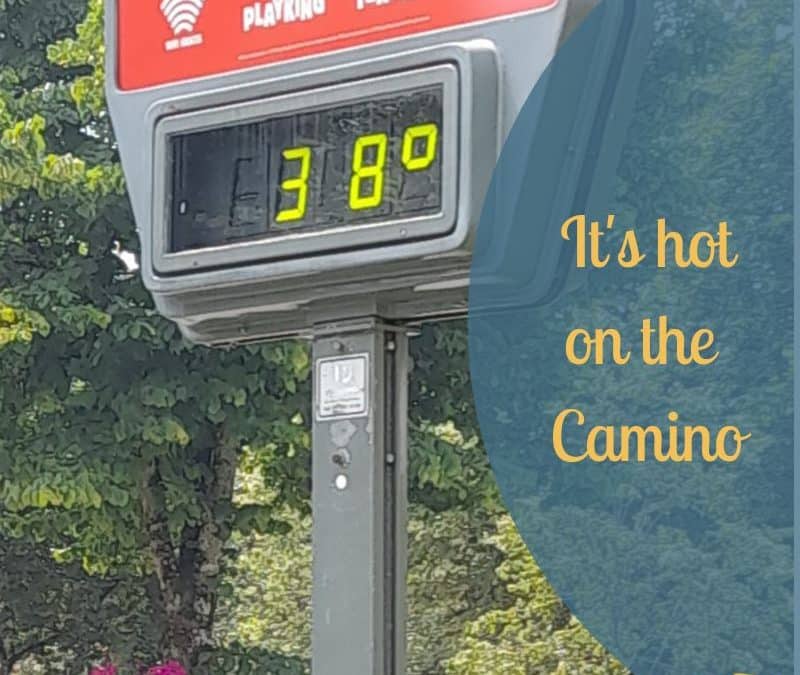
It’s 38ºC outside right now, as I write this. Plus the humidity, which is always high in Galicia. Let’s just say it has been a slow week: staying indoors most of the day, drinking lots of fluids and sweating from the effort of bringing the bottle of water to my mouth.


It’s OK for me, because I can choose to stay at home. But this is a busy time on the Camino. And walking right now is dangerous. 


A 48-year old Belgian pilgrim died earlier this week of golpe de calor (heatstroke) after his first day on the Camino. So, this is not something that should be taken lightly.


I’ve heard of several pilgrims who decided to stop their Camino and finish some other time when it’s not so hot. Wise idea.


But if you are going to walk in this kind of heat you should be extra careful. The last thing you want is to end up with insolación (sunstroke), golpe de calor or agotamiento por calor (heat exhaustion).


What to do when it’s hot on the Camino 

Although there are some differences between sunstroke, heatstroke and heat exhaustion, they should all be taken very seriously. The best plan, of course, is to prevent them. So, what can we do?


  •  Check the forecast. You can use el eltiempo.es or aemet. Both pages allow you to search for specific areas and get a more accurate report. It can be hot even if overcast.
  • Start temprano (early). Very early. And finish early too. Avoid being out in the sun during the central hours of the day.

  • Protect yourself. Wear a gorro (hat), crema solar (sunscreen) and light coloured clothes, and cover exposed skin.

  • Prevent dehydration. Don’t wait until you feel thirsty; it’s better to take small sips constantly. So, make sure you drink enough and you replenish your electrolytes too. You can take salty snacks or, if you need, you can ask for electrolitos at any pharmacy.

  • Keep humidity in mind. Temperatures in Galicia are usually not as high as in other parts of Spain (although that’s not the case this week!) but humidity  makes you feel fatigued and dehydrated faster than in dry heat. 

Worrying signs

As I mentioned earlier, there are some differences between sunstroke, heatstroke and heat exhaustion, but all should be taken very seriously. 

Remember  you can always contact the emergency services if you (or someone you know) are not feeling well. The number is 112, it’s free to call and it offers 24/7 emergency service to anyone in Spain. Operators speak English as well as Spanish.


So, what are the signs that you might be suffering from heatstroke or heat exhaustion?

  • Calambres, or muscle cramps.
  • Dolor de cabeza, or headache.
  • Nausea and or vomiting.
  • Dizziness.
  • Disorientation.
  • Either heavy sweating or lack of sweating in the case of heatstroke.
  • Rapid heart rate.

This is not an extensive list of symptoms and I’m not qualified to give medical advice. So, be careful out there and, if you come across someone who might be suffering from either heatstroke or heat exhaustion, seek medical attention immediately.


To finish on a lighter note, please don’t say estoy caliente  when you want to say you’re feeling hot. That’s not what it means and you might get some unwanted reactions. I’ll leave it there and let you figure out what estoy caliente means…

Today’s Spanish words


For the pronunciation of verano, check Weather on the Camino.

For the pronunciation of crema solar, check El botiquín.

Want more?

Make sure you don’t miss any posts or announcements by subscribing for free here. You’ll receive a free Spanish vocabulary guide with your first Spanish words + cultural tips. And… you’ll get access to exclusive content too.

 

¡Buen Camino!

Bedbugs and other creatures

Bedbugs and other creatures

Bedbugs and other creatures |

There’s one tiny thing that worries many pilgrims even before they start their journey: chinches (bedbugs). Other tiny, little creatures too, but bedbugs are the main concern. The bad news is that chinches are not attracted to dirt, so they can be found anywhere, even in 5-star hotels.


Should you worry about bedbugs on the Camino de Santiago?

It’s mainly a matter of luck whether you come across chinches or not. Some people have done several Caminos and never had an issue; other are not as lucky.

Their picaduras (bites) usually happen on exposed skin, such as cara, cuello, manos and brazos. Keep yourself covered!

They don’t transmit any diseases but they can cause itchy red bumps on your skin and some people can experience a reaction. Picaduras can become infected if scratched. Try  to resist the temptation! You can visit the next farmacia and buy something to alleviate the itchiness.


What can you do about bedbugs?

Some people spray permethrin on their stuff. If you choose this option, you should do it 2-3 days before you travel. But be careful! Permethrin is toxic while wet (and very toxic to cats in particular). It’s safe once it dries, though. You can also use natural remedies such as peppermint oil.

But no matter what you use, keep in mind that, if you stay in albergues, you’ll be sharing your space with many other people. So, think of them too and make sure you don’t use anything with a very strong scent or that can cause an allergic reaction to others.

Once you are on the Camino, there are some precautions you can take too:

  • Chinches can be easily transported in your mochila or clothes. So, don’t put your mochila on your bed.


  • Check the bunk frame and colchón (mattress) for signs of chinches such as tiny black spots. If you find any, notify your hospitalero immediately and move on to a new place.


What to do if you’ve been bitten by bedbugs

  • You should tell your hospitalero, so they can act on it and prevent future pilgrims being affected too. Picaduras by chinches are usually in a line. If you don’t notice them until after you’ve left the albergue, please inform your next hospitalero. They will make the call for you.


  • Before you settle in your next albergue, you need to debug. The easiest way is to wash all your belongings in hot water and dry them in a hot dryer. If you can’t do this at once, put all your stuff in a big plastic bag and close it tightly until you get to a lavadora (washing machine).

Then examine all the seams and pockets to make sure there are no chinches left. If you fail to act promptly and thoroughly you could be spreading chinches along the Camino and even taking them home. Not a nice souvenir, is it?


Any other creatures you should worry about? 

Unless you have some serious allergy, not really. There are several types of arañas (spiders) but none is particularly dangerous. And in the warmer months, you’ll probably come across moscas (flies), mosquitos, abejas (bees) or avispas (wasps).

Moscas are basically annoying but harmless. The others could potentially bite you. If they do and the picadura is bothering you, visit the next farmacia and ask for some antihistamínico cream/gel.


All this writing about chinches and other creepy crawlies is making me feel itchy. So, that’s it for today! I hope you have an insect-free Camino.


Today’s Spanish words


For the pronunciation of cara and cuello, check I’m not feeling well.


Want more?

Make sure you don’t miss any posts or announcements by subscribing for free here. You’ll receive a free Spanish vocabulary guide with your first Spanish words + cultural tips. And… you’ll get access to exclusive content too.


¡Buen Camino!

Food allergies on the Camino

Food allergies on the Camino

Updated March 2026


Food allergies on the Camino de Santiago


The Camino is a life-changing experience for many. It takes you out of your comfort zone: you are in a foreign land surrounded by a different language and culture… and they eat differently too!


For many pilgrims this can be a wonderful opportunity to try new foods and discover new flavours that they may later try to recreate at home.

But if you have any food allergies or intolerances, it can be very stressful not knowing whether you can get the right food, or whether something is safe for you to eat.


In this post, you’ll learn:

  • How food allergens are labeled in Spain

  • What to expect in supermarkets and restaurants along the Camino

  • Essential Spanish phrases to communicate food allergies


Check also the post about finding vegan and vegetarian food on the Camino. I know it’s not the same, but most of the tips and vocabulary I shared in that post can be used in case of alergia or intolerancia.


Grocery shopping on the Camino with food allergies

If you decide to buy your food, you’ll be glad to know food labeling laws are strict and clear.

Here’s how it works:

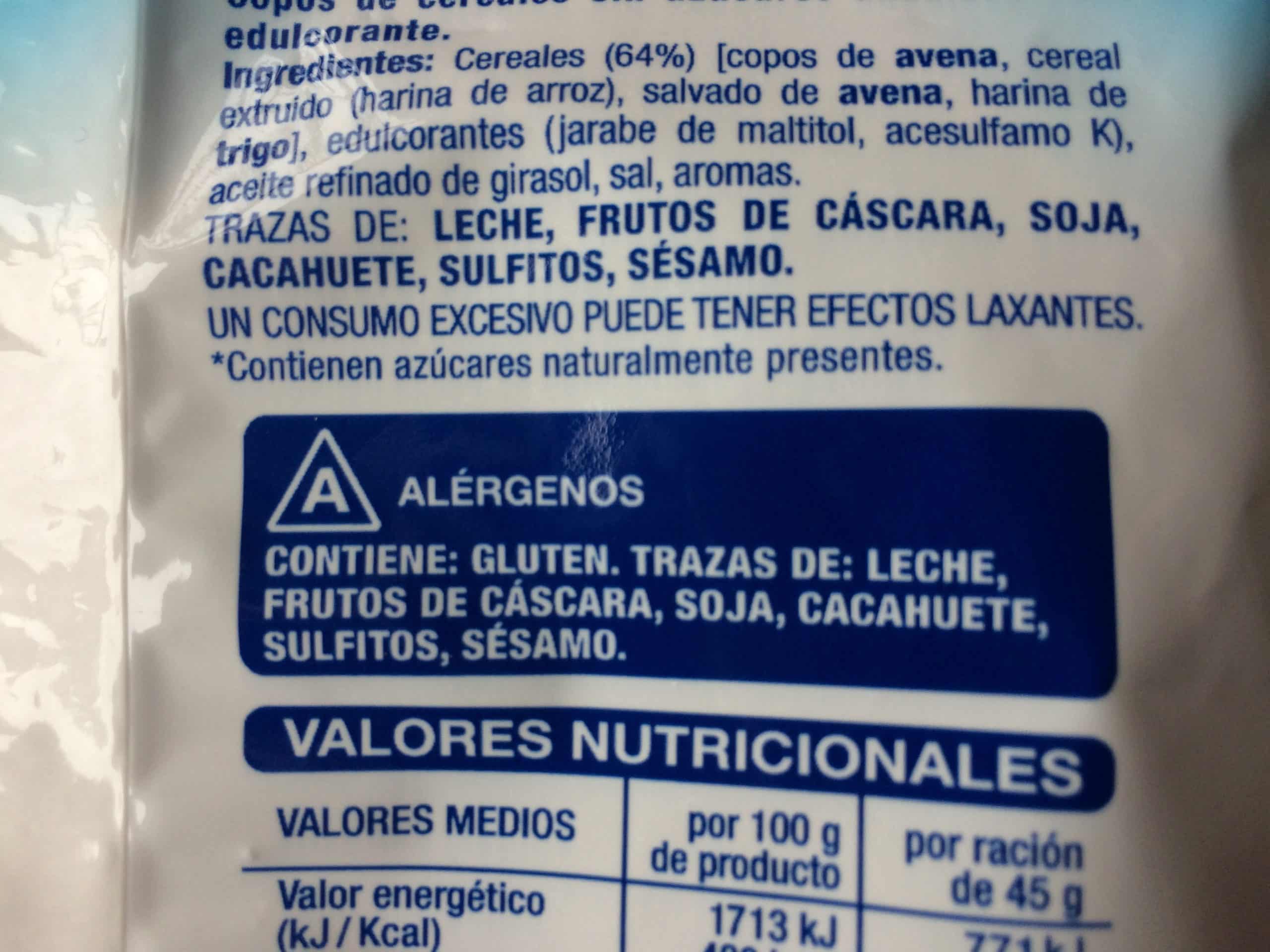
  • Allergens are clearly marked in the ingredient list (usually in bold or capital letters)

  • Many products include a “may contain traces of…” section

  • Some labels also include a separate allergen summary, but not always; so always check the ingredients carefully


Common Labels You’ll See

  • Sin gluten → gluten-free

  • Sin lactosa → lactose-free

  • Vegano → vegan


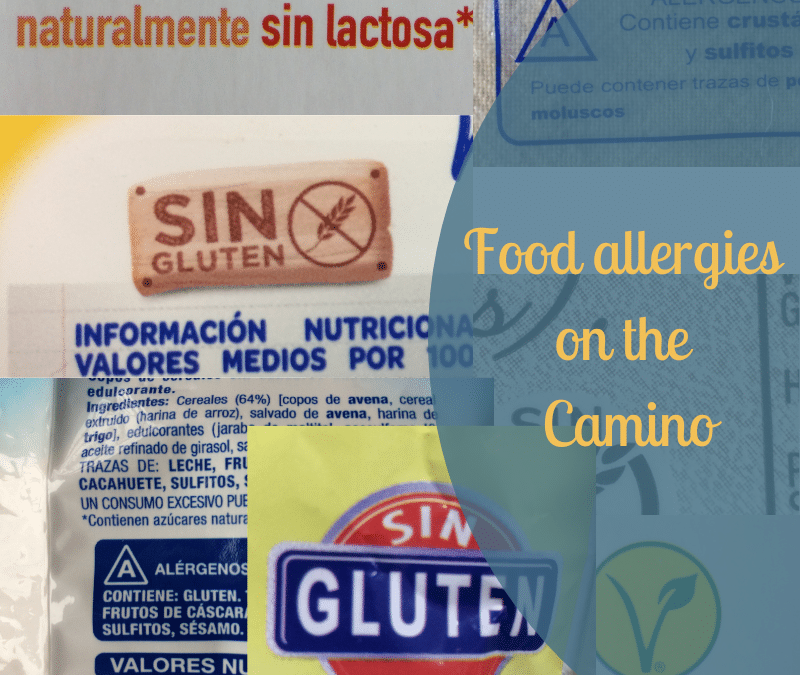
When a particular product is safe to eat for a specific group, the label clearly indicates so. You can see different examples in the pictures.

These show a variety of food products that are suitable for celíacos (celiacs), because they are sin gluten (literally, without gluten).

The first picture shows a product that is suitable for veganos (sin huevo y sin lácteos – no egg, no dairy), which would also make it suitable for people with egg or dairy allergies. The second one shows a product sin lactosa(lactose free).


Most supermarkets have a good selection of products sin gluten and sin lactosa, as well as plant-based alternatives. Smaller towns and villages might not have so many options, so it’s a good idea to buy a few extra things when you get the chance.


Eating out when you have food allergies

Eating outside is also possible, as long as you take some precautions.

The main thing: communicate clearly.


Many restaurants provide allergen information on their menus, often using symbols. But if you’re unsure, always ask.


Things you can say: 

  • No puedo comer… (+ food you are allergic to), which means “I cannot eat…
  • Tengo alergia a… (again, complete with food you are allergic to).


For example, if you’re allergic to peanuts, you could say:

No puedo comer cacahuetes or Tengo alergia a los cacahuetes or a combination of both, just to make sure the message gets a cross: No puedo comer cacahuetes. Tengo alergia.

And you can also ask for an ingredient to be left out. For instance, if you don’t want cream you could ask sin nata, por favor.

tengo alergia a

 * For celíacos, here’s a link, where you can find gluten-free bars, restaurants, etc.: https://www.viajarsingluten.com/en/restaurantes-sin-gluten/


This other link is specific to Galicia and includes establishments that have an agreement with the Celiacs Association to  provide a menú sin gluten: https://celiacosgalicia.es/es/restauracion-sin-gluten/


Today’s Spanish vocabulary

Want more?

Make sure you don’t miss any posts or announcements by subscribing for free here. You’ll receive a free Camino food guide. And… you’ll get access to exclusive content too.


¡Buen Camino!

Necesito un médico

Necesito un médico

Necesito un médico (I need a doctor) is probably something you don’t want to say while on the Camino, right? And hopefully you won’t need it but… you never know.


  • You are an EU citizen and you got your  Tarjeta Sanitaria Europea (European Health Insurance Card). And if you are from outside the EU, you got seguro.


  • Farmacias and parafarmacias can help with many of the most common problems. But you need to let them know of any relevant alergias (allergies) or conditions you may have, so they can give you the right remedy.


If you are allergic to something, you can just say Tengo alergia a… and complete the sentence with whatever causes your allergy: Tengo alergia a la penicilina or la aspirina, to name a couple.

*Note that you can use this expression in bars and restaurants too when ordering food, if you have any food allergies. Here’s a little test for you:

How would you say “I’m allergic to eggs” in Spanish?

(leave a comment with your answer!)


Sometimes the pharmacist can’t help or you already know you need medical attention. Then you may say… Necesito un médico (I need a doctor). As I explained a couple of weeks ago, you can go to the local centro de salud.


The médico will ask ¿Qué le pasa? (What is wrong?) and you can then explain. You can check last week’s lesson to revise how to talk about pains and other common ailments. Let’s add está hinchado (it’s swollen) and diarrea (diarrhea) to the list.


As with the pharmacist, you need to inform the médico of any medical history that may be relevant. I’ll give you a couple of examples: soy diabético (I’m a diabetic; replace the final -o in diabético with an -a if you are female) or tengo la tensión alta (I have high blood pressure).


Today’s Spanish words & phrases


¡Buen Camino!

Want more?

Make sure you don’t miss any posts or announcements by subscribing for free here. You’ll receive a free Spanish vocabulary guide with your first Spanish words + cultural tips. And… you’ll get access to exclusive content too.

I’m not feeling well

I’m not feeling well

I’m not feeling well |

As I promised last week, here is the second part of the body series. In today’s lesson you can learn a few more body parts and a couple of expressions you can use if you are not feeling well.

For the parts of the body, I’ll leave you again with an image (check the pronunciation below).

For the expressions, scroll down a bit.

I'm not feeling well

I’m not feeling well

OK. So you’ve learned a few new parts of the body. But they are not enough. Keep reading if you want to learn how you can use them to let someone else know that you are not well. We just need to add a couple more words.


  • Tos (cough) and fiebre (fever, temperature) are two common ailments you can suffer while doing the Camino de Santiago. If you want to say that you have a cough or a fever, all you have to say is Tengo (I have) tos or tengo fiebre.

  • Another common problem you can have is a pain somewhere in your body. If that is the case, you can say Me duele + body part; e.g. me duele la cabeza (I have a headache).


So how do you say “I have blisters” in Spanish? And “my shoulder hurts”?

Leave your answers in a comment.


And remember that a pharmacy is always a good starting point is you’re not feeling well. Pharmacists are quite knowledgeable and they might be able to help. If they can’t, they will tell you where to find help.


Today’s Spanish words

Want more?

Make sure you don’t miss any posts or announcements by subscribing for free here. You’ll receive a free Spanish vocabulary guide with your first Spanish words + cultural tips. And… you’ll get access to exclusive content too.

¡Buen Camino!


Your health on the Camino

Your health on the Camino

Since I started this blog I’ve discussed different topics such as accommodation or food, but I only briefly touched on a very important one: your health during the Camino. So let me correct that.


Do you need any vaccines to walk the Camino de Santiago?

First, I’d like to clarify something: every now and then people ask on forums what vacunas (vaccinations) they need in order to enter Spain. The answer is NONE! You don’t need any vacunas to enter Spain or any other European country.

You can find that information, as well as other practical travel info in the following link: https://www.spain.info/en/how-to-get-there/

In case of emergency…

Secondly, the number to contact emergency services in Spain and the rest of Europe is 112. It’s a free number. And they speak English. Make sure you know this number or keep it handy at all times. It would be a good idea to store it in your phone.


A few weeks ago I wrote a short post, El botiquín, about first-aid items to carry in your mochila. Hopefully, that’s all you will need: a couple of tiritas and an ibuprofeno or two.

But some things are beyond our control: You could get sick or even have an accident. That’s why it’s a good idea to be prepared.


  • If you are an EU citizen, don’t forget your Tarjeta Sanitaria Europea (European Health Insurance Card). The Tarjeta Sanitaria Europea entitles you to state-provided healthcare during a temporary stay under the same conditions and at the same cost (free in some countries) as people insured in that country.

The following link has contact information for every country where you can apply: http://ec.europa.eu/social/main.jsp?catId=563&langId=en#nationalinfo


Where should you go?

If you need medical attention while in Spain, you can go to the local centro de salud with your Tarjeta Sanitaria Europea. 

On the other hand, when the centro de salud is closed (or your problem can’t wait) you can go to urgencias (A&E or ER, depending where you are from) to be seen by a doctor.

If you can’t get yourself to the centro de salud or urgencias, call 112 for assistance. Don’t worry if your Spanish is limited. As I mentioned, they have English-speaking operators to help you. They will assess the situation and dispatch an ambulancia or any other emergency services they deem necessary.


  • If you are coming from outside the European Union, then you should consider getting seguro (insurance).

And even if you are coming from within the EU, getting some seguro is not something you should dismiss, since the Tarjeta Sanitaria Europea is not an alternative to travel insurance. It does not cover any private healthcare or costs such as a return flight to your home country.


If you are not convinced, read Nidarosa’s story:

My Scouse Spouse and I have walked together several times – Astorga to Santiago for our honeymoon, Hadrian’s Wall, then Astorga to Santiago again earlier this year. I knew he enjoyed it and he sometimes mentioned wanting to walk the Francés from St Jean Pied de Port to Astorga to see what I have seen, […]

via Accidents and Emergencies — Somewhere Slowly


You can find more health-related info and Spanish in Necesito un médico. Ideally, you won’t need any of this, but you know what they say: Better safe than sorry or Más vale prevenir que curar, if you would like to say it in Spanish!


Today’s Spanish words & phrases


¡Buen Camino!

Want more?

Make sure you don’t miss any posts or announcements by subscribing for free here. You’ll receive a free Spanish vocabulary guide with your first Spanish words + cultural tips. And… you’ll get access to exclusive content too.