Galician language on the Camino

Galician language on the Camino

Updated February 2026.

Imagine you are on the Camino Francés… or on the Camino del Norte, or the Primitivo or even on the Vía de la Plata. It doesn’t really matter.


The thing is, you are walking across Spain. Maybe you’ve prepared before your trip and learned a bit of Spanish. Or you’ve been picking up a few words along the way. And then you enter Galicia and you get the impression that people sound different.


What’s worse: things start getting confusing. Now you see Fisterra… later you see Finisterre… Are they different places? Is it the same place?

Don’t worry! You’re not going crazy. You’re encountering Galician, or galego, a language you’ll hear and see during the last 100 km of any Camino.

A brief history of Galician

Spain has not always been Spain as we know it today. A few centuries ago, it consisted of several smaller kingdoms, including the Kingdom of Galicia, which covered modern day Galicia, the north of  Portugal as well as part of Asturias and León.


Latin was the dominant language in the Iberian Peninsula, but over time, it evolved differently across regions, giving rise to several languages. Some of them have survived until our days and they are co-official, together with Spanish, in their respective territories.


Such is the case of gallego (Galician), or galego in the Galician language. And that’s what you are hearing!


  • The first written documents in gallego date back to the 12th century. During the Middle Ages, gallego was the language of poetry in all of Spain.


  • Gallego and portugués were initially the same language, but by the 14th century, that language had already split into the two separate languages we have today. This means that gallego and portugués have a lot in common. So, knowing a bit of gallego will help you in Portugal too!


  • Galician was banished from public life in the 15th century, and it remained so until the 19th century. During this period, the upper classes spoke Spanish, while Galician remained the language of the lower classes. Add to this the fact that Galicia became impoverished during this time and many had to emigrate. In many cases, these people were ridiculed and made fun of because of their language.


  • In the 18th century, a group of intellectuals started becoming interested in the Galician language. One of them was Padre Sarmiento, whose pilgrimage to Santiago inspired the Variante Espiritual route.


  • One of the first and most popular authors to write in galego was Rosalía de Castro, who lived in Padrón, on the Camino Portugués.


Why town names can be confusing

As I just mentioned, during the 15th to 19th centuries, Galician was marginalized. Upper classes spoke Spanish.

Many names of towns (and family names too) were changed to make them sound more Spanish, more upper class. More recently, during Franco’s dictatorship, Galician was banned again.


All of this contributed to create the belief, that many still hold today, that Galician is an inferior language, that if you want to do well in life, you must speak Spanish and not Galician.

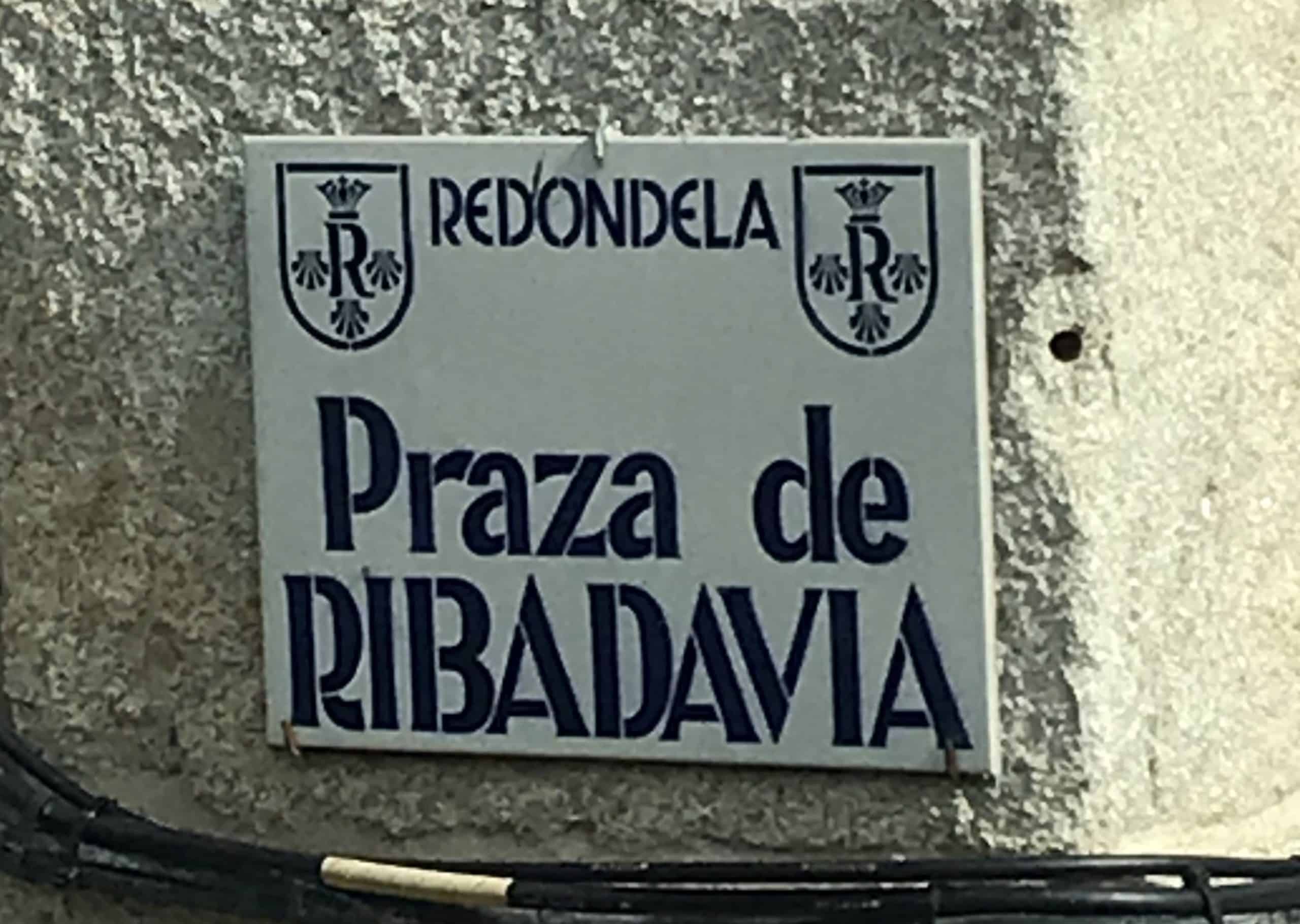
As a result of all of this, even today, you’ll see some towns with two versions of their name: the official Galician version and the older Spanish-sounding version.

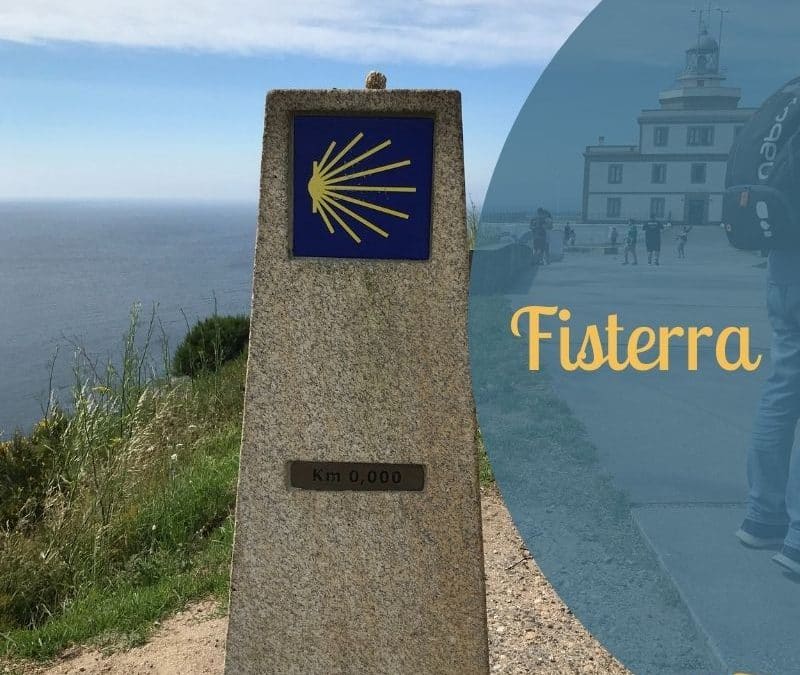
To use an exampled I’ve mentioned before, Fisterra is the official name of the town where many end their Camino, but you’re likely to see Finisterre too.


Not every town has 2 names, but there are several well-known Camino towns where this happens. Wikipedia, for instance, tends to favour the Spanish name. Certain apps will only display the Spanish name too.


Muxía is an example of this. The Spanish-sounding version is becoming less and less common, but you may still see Mugía in places. Melide may sometimes appear as Mellid and Tui is still frequently spelled as Tuy (no change of pronunciation in this case).

    Common Galician words you’ll see on the Camino

    The use of galego varies across the region, so how much of it you see or hear will depend on where you are. Rest assured. Everyone can and will speak Spanish. But it’s nice and can be helpful at times to be familiar with some common words you’re likely to see often.

    Rúa (calle in Spanish): street

    Praza (plaza in Spanish): square

    Igrexa (iglesia in Spanish): church

    Mosteiro (monasterio in Spanish): monastery

    Concello (ayuntamiento in Spanish): town council

    Castelo (castillo in Spanish)

    We Galicians like to add the diminutive -iño/-iña to almost any word! It adds proximity, familiarity and even affection. So grazas (thank you) becomes graciñas and ata logo (see you later) becomes ata loguiño!
    Galician language
    Calle Peregrina Pontevedra


    Today’s Camino vocabulary

    For the pronunciation of Muxía, check the post about Muxía.

    For the pronunciation of Tui, check Camino Portugués.

    For the pronunciation of calle, iglesia and monasterio, check Camino Inglés: de Ferrol a Neda.

    For the pronunciation of plaza, check Santiago de Compostela.

    For the pronunciation of Fisterra and castillo, check Finisterre.

    Want more?

    Make sure you don’t miss any posts or announcements by subscribing for free here. You’ll receive a free Spanish vocabulary guide with your first Spanish words + cultural tips. And… you’ll get access to exclusive content too.

    You will come across Basque as you walk through País Vasco and Navarra. Oihana teaches us some basic words in this post.


    ¡Buen Camino!

    (or Bo Camiño, as we say in Galicia)

    Pontevedra

    Pontevedra

    For those not familiar with the Camino Portugués, Pontevedra is around 65km (3 days) from Santiago. The coastal and central routes join in Redondela, before Pontevedra. And right outside Pontevedra the Camino splits again: the traditional Camino on the right. The Variante Espiritual on the left.


    Pontevedra also happens to be my home town. I grew up here, then lived abroad in Ireland for a few years and moved back here in 2014. I love the place. There are so many things I’d like to tell you about it I would go on forever. So, I’ll try to keep short and practical.


    Pontevedra is the biggest town on the Spanish section of the Camino Portugués, after Santiago. It’s common now to see pilgrims throughout the year, but it hasn’t always been like that. I don’t remember ever seeing any pilgrims growing up and until the time I moved abroad. There were no flechas amarillas or conchas de vieira in every corner either.

    The Camino has always been there. In fact its origins date back to the 12th century. So, it is part of the history of the city, and we have many references to prove it, like a calle Virgen del Camino or a calle and plaza Peregrina.


    Calle Peregrina
    Calle Virgen del Camino

    And, of course, one of the main symbols of Pontevedra is the popular Iglesia de la Virgen Peregrina, dedicated to the patron saint of the Camino Portugués. Its construction began in 1778 and its most characteristic feature is its floor plan, in the shape of a scallop shell.

    So, we can’t imagine Pontevedra without its links to the Camino de Santiago, but the 20th century was not a good one for the Camino in general. Until the Holy Year of 1993. The Camino was then heavily promoted by the Galician authorities; pilgrims started returning. Nowadays, the Camino Portugués is the second one in number of pilgrims, after the Camino Francés.


    Short history of Pontevedra

    According to legend, Pontevedra was founded by Teucro (Teucer or Teucrus), one of the heroes of the Trojan War. The truth is that it’s not clear when Pontevedra was founded exactly, but it goes back at least to Roman times. There is evidence of a settlement on the Vía Romana XIX, in the area close to the Puente del Burgo. This is the bridge pilgrims must cross on their way out of town.


    The Middle Ages

    In the Middle Ages, Pontevedra was a prosperous city: it had one of the most important ports in western Europe, which attracted a lot of international trade. There was an important shipyard too. In fact, the Santa María, one of the 3 ships that Columbus took to the Americas, came out of here.

    In 1467, King Enrique IV granted the city the right to host a ‘feira franca’, a 30-day tax free market that attracted many people, rich and poor.  

    This market is remembered nowadays with a medieval festival. It’s called Feira Franca and it takes place during the first weekend in September. People dress up in medieval fashion, the whole historic centre is decorated to look more medieval, there’s a market, music, entertainment and other events (there are a couple of images of it in the video below).


    Pontevedra was the most populated city in Galicia during the 16th century. But the next 2 centuries brought in a recession, caused by several factors.

    Then, in the 19th century, it started to grow again. The old city walls were demolished to allow the expansion of the city. Some remains of those old walls have been found in recent years and you can visit them.


    More recent times

    The end of the 19th and beginning of the 20th centuries was an era of great expansion, and not just physically. Pontevedra was then a cultural and intellectual hub. It was also the first Galician city with electric light. In fact, you can still see where the electricity was produced. The place is aptly called Casa da Luz (house of light) and you can find it in one of Pontevedra’s many squares: praza da Verdura. 

    The Civil War (1936-1939) put an end to this. The repression afterwards was important and a new era of depression and decay started.

    Then, around 20 years ago, Pontevedra began a deep transformation to become more ‘people friendly’. During this period, most of the city centre has been pedestrianised. Streets that used to be full of cars, with only a small space for people, are now virtually car-free and full of people. CO2 emissions are down 70%. Kids can safely walk to school unaccompanied.


    The historical centre was very run-down and it was a rough area that most of us would avoid.  Then cars were banned. The area was renovated. Now, it’s perfectly safe and full of life. And winning international awards.

    I love just walking around, enjoying the atmosphere, going for a drink, shopping,  admiring the architecture, discovering new details every time…


    What to see in Pontevedra

     What not to see?! 

    I’m a big fan of my city so I’d love for everyone to spend some time exploring it and falling in love with it. It is the perfect size to walk around and with the historical centre being mostly car-free, it is a very enjoyable experience too. So, you can simply wander around and admire your surroundings. But there are a few places you shouldn’t miss.

    You can come and enjoy Pontevedra with Patricia and myself next September (2026). And improve your Spanish in the process.

    Iglesia Peregrina Pontevedra

    First on the list is, of course, the Iglesia de la Virgen Peregrina.

    It’s right on the Camino, so you can’t miss it and it’s full of Camino symbols. As I mentioned earlier, its floor plan has the shape of a scallop shell. You can appreciate this if you climb to the base of the dome.

    I know climbing stairs is not your ideal plan after a long day on the Camino. But the perspective is totally different.

    Anyway, in case you don’t feel like climbing the stairs, I got a picture for you.

    There’s a statue of a parrot opposite the Peregrina church. It’s not just any parrot. It is an important figure in the city’s recent history. Would you like to find out more about it? Read (or listen to) the whole story here.

    If you keep following the arrows, you’ll arrive at the Plaza de la Herrería, the heart of the city. On one side, you can see the typical soportales (arcade), on the other, there’s the convent and church of San Francisco. According to tradition, St. Francis himself  founded the convent when he stopped in Pontevedra while walking the Camino Portugués.


    Other churches

     Pontevedra belongs to the diocese of Santiago, so there’s no cathedral here. But there are several churches worth a visit, apart from the 2 I already mentioned.

    The main one is the Basílica de Santa María. The main façade is quite spectacular (can you spot the saint wearing glasses?) and the interior is very beautiful too. It was built in the 16th century with money donated by the sailors guild, which was quite powerful at the time.

    Iglesia de San Bartolomé. The Jesuits built this church between the 17th and the 18th centuries. The buttresses on one of the sides were added later to reinforce the building after the Lisbon earthquake in 1755.

    Ruinas de Santo Domingo. Only the ruins are left of this church and convent but they’re quite magnificent. Little story about them: the remains of this once spectacular building were almost blown up at the end of the 19th century. The local council wanted to clear the space and build something else there, despite many requests to preserve the remains. So they secretly hired someone from out of town to place some explosives there and make the church disappear.

    But there used to be an orphanage next door. The person hired to cause the explosion heard children’s cries and decided he didn’t want to be responsible for killing or injuring any children. So, he left without completing the job.


    The squares

    If you wander around the historical centre you’ll discover many squares, some bigger, some smaller. The main one, as I said, is the Plaza de la Herrería. But if you keep on the Camino route, you’ll see the Plaza de Curros Enríquez (where the arcade ends) and the Plaza del Teucro. 


    Other squares that are worth visiting are:

    Praza da Verdura. There used to be a vegetable market here, hence the name. Today, it’s the perfect location for a drink and some tapas. This square is also the location of the Casa da Luz that I mentioned earlier. You can also find here the oldest farmacia in town.

    Praza da Leña. It takes its name from the firewood that used to be sold there in the past. Today, it’s another great location to enjoy some food in one of its many bars and restaurants (there’s even a Michelin star restaurant here!).

    Praza de Méndez Núñez. There is a statue of Galician writer Valle-Inclán here. When you get to Santiago, you can look for a similar statue of the same author in the Alameda.


    Other things to see in Pontevedra 

    Correos (the post office) is not far from the Iglesia de la Peregrina. You can get your credencial stamped here as well as admire the beauty of this historic building.

    Santuario de las Apariciones. Not many people know this but Lucia, one of the 3 children who reported the apparitions of the Virgin Mary in Fátima (Portugal), later joined the St. Dorothy congregation in Pontevedra. While staying there, she had another apparition in 1925. This place is considered the third most important Marian shrine, after Lourdes and Fátima.

    And finally, why not walk around the Alameda park or even along the river, towards the sea. Sunsets there can be quite beautiful.


    Where to stay in Pontevedra

    Albergue Pontevedra

    There is a public albergue in Pontevedra. It is next to the train station, as you enter the city. More info about it and contact details here.

    If you prefer something else, the options are many.

    For obvious reasons, I haven’t stayed at any of the following places but I know people who have and are happy to recommend them, so I’ll pass the recommendation on. All these places have the perfect locations to explore the city.

    Hotel Rúas. Right in the heart of the historical centre, between 2 popular squares with plenty of places to have a drink or some food. This hotel has a restaurant/bar too. That, I can recommend. 

    Casa Sara Hospedaje. A cosy pensión, also in the historical centre. It’s on a quieter street, but still close to all the ‘action’.

    Acolá Hostel. A modern albergue with a view to the Santa María church.

    Bulezén. Very central hostel that several pilgrims friends have recommended.

    And, of course, if you’d like to splurge a little, we have a Parador too. 


    I have so many pictures of Pontevedra and I wanted to share them all but that was not possible, so I made a selection and put them together in the video below.


    See inside book of Camino Portugues legends
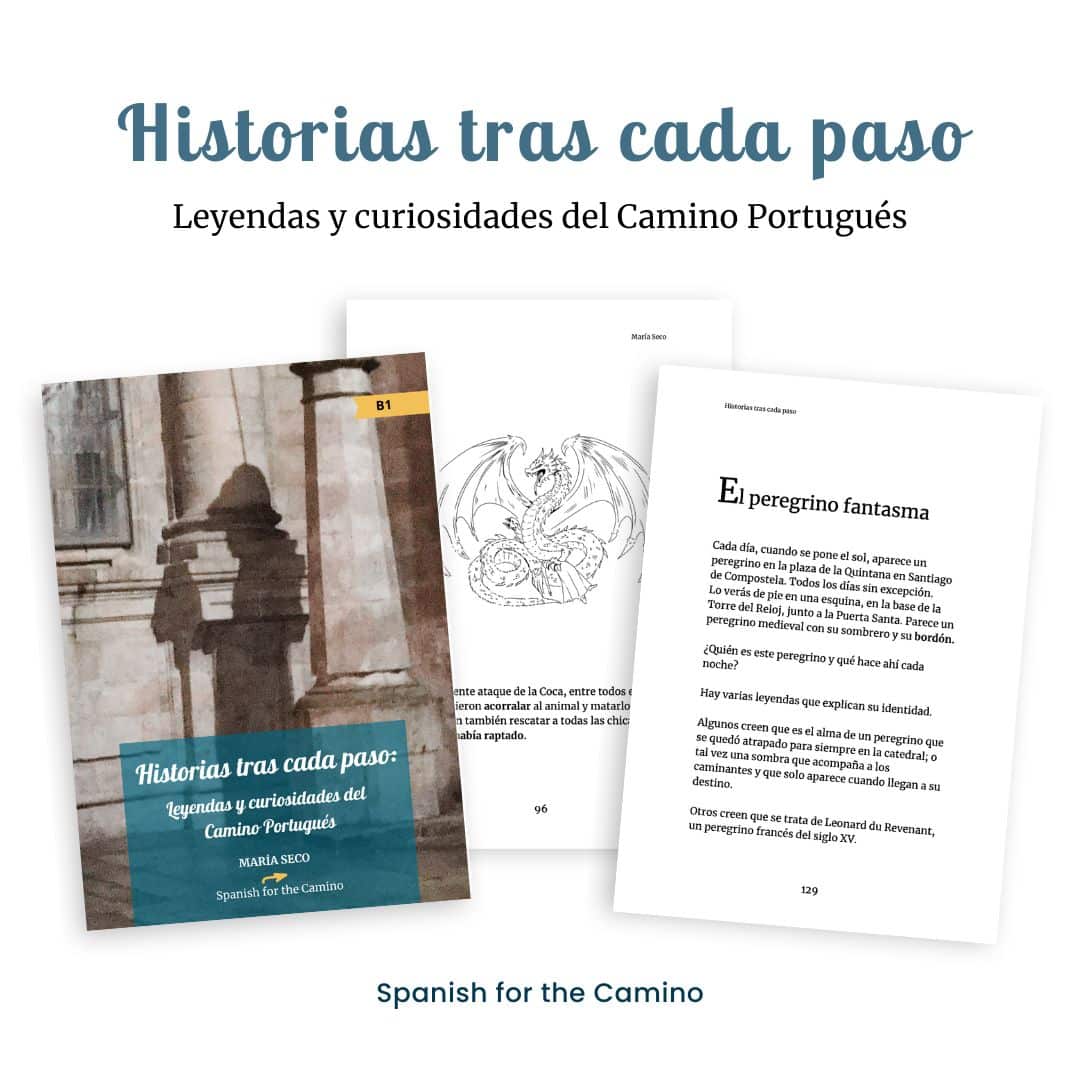
    For the story behind the statue of the parrot, the miracle that St. James performed in Pontevedra and other stories, check my book Historias tras cada paso. Leyendas y curiosidades del Camino Portugués, a collection of legends and historical tidbits about places along the Camino Portugués.
    The book is in Spanish, for intermediate learners, and includes a vocabulary guide with English translation.

    Today’s Spanish words


    Warning: You should be aware that the names of towns, streets, squares, etc. can be in either Spanish or Galician. I wrote a post a while ago about the Galician language.

    You may have noticed that I used both plaza and praza. The first one is the Spanish word, the second one is the Galician one. Pronunciation is the same, except for the l/r. Keep this in mind if you see similar names. They probably refer to the same thing, just like plaza/praza, or virgen/virxe.

    For the pronunciation of albergue and parador, check Where to sleep on the Camino

    For the pronunciation of plaza, check Santiago de Compostela

    For the pronunciation of iglesia, check the post about Finisterre


    Want more?

    Make sure you don’t miss any posts or announcements by subscribing for free here. You’ll receive a free Spanish vocabulary guide with your first Spanish words + cultural tips. And… you’ll get access to exclusive content too.


    ¡Buen Camino!

    Finisterre

    Finisterre

    Last weekend I was in Fisterra. Or is it Finisterre? And why do so many people end their Camino de Santiago there? Or in Muxía.

    Let’s start with the name. Is it Finisterre or Fisterra? You may already be aware that Galicia has its own language, apart from Spanish. You can learn more about it in O Camiño de Santiago.

    Both languages, Galician and Spanish, are used on a regular basis. Some people prefer one, some people prefer the other. And some switch from one to the other without even thinking. It’s common to see signs and documents in both languages. Same applies to town names, although the official name is the Galician one. So, in this case, the official name is Fisterra, but you’ll see Finisterre too.


    Where is Fisterra?

    Fisterra, or Finisterre, is on the Atlantic coast of Galicia, around 90km from Santiago de Compostela. When the Romans arrived there, they named it Finis Terrae (the end of the earth); it was the end of the known world and, for a very long time, it was considered the westernmost point in Europe.

    The stretch of coast where it’s located is known as Costa da Morte (coast of death) because of all the ships that have been wrecked in the area.

    Faro Finisterre


    Fisterra is a fishing village but it’s best known for the faro (lighthouse) at the tip of the cabo (cape).

    The perfect location to watch the puesta de sol (sunset) over the ocean.


    Why do people walk to Finisterre?

    Pilgrimage to Fisterra is believed to have existed for centuries before Christian times. According to legend and tradition, Cabo de Finisterre (Cape Finisterre) was the location of the Ara Solis (altar to the sun). Pagan worship took place there even before the arrival of the Romans, who simply continued with the existing rituals.  

    According to one legend, St. James destroyed this pagan shrine and built a chapel in its place. But Christianity didn’t totally replace these ancient traditions. In many cases, both traditions have merged.

    The Church promoted devotions to Mary in that region. As a result, we have the santuario (shrine) da Virxe da Barca in Muxía as well as the iglesia (church) Santa María das Areas in Fisterra. Pilgrimages to these 2 places were encouraged during the 15th-16th centuries.

    In the Middle Ages, it was common for criminals to be sentenced to complete a pilgrimage to remote places. Finisterre was one of these destinations.

    On the other hand, the symbol of a pilgrim to Santiago was and still is a scallop shell. In the past, scallop shells were sold in Santiago. But, why not walk to the coast and find your own? Arriving in Fisterra and el mar (sea) also symbolises the end of your pilgrimage, the beginning of your journey back home, a new beginning.

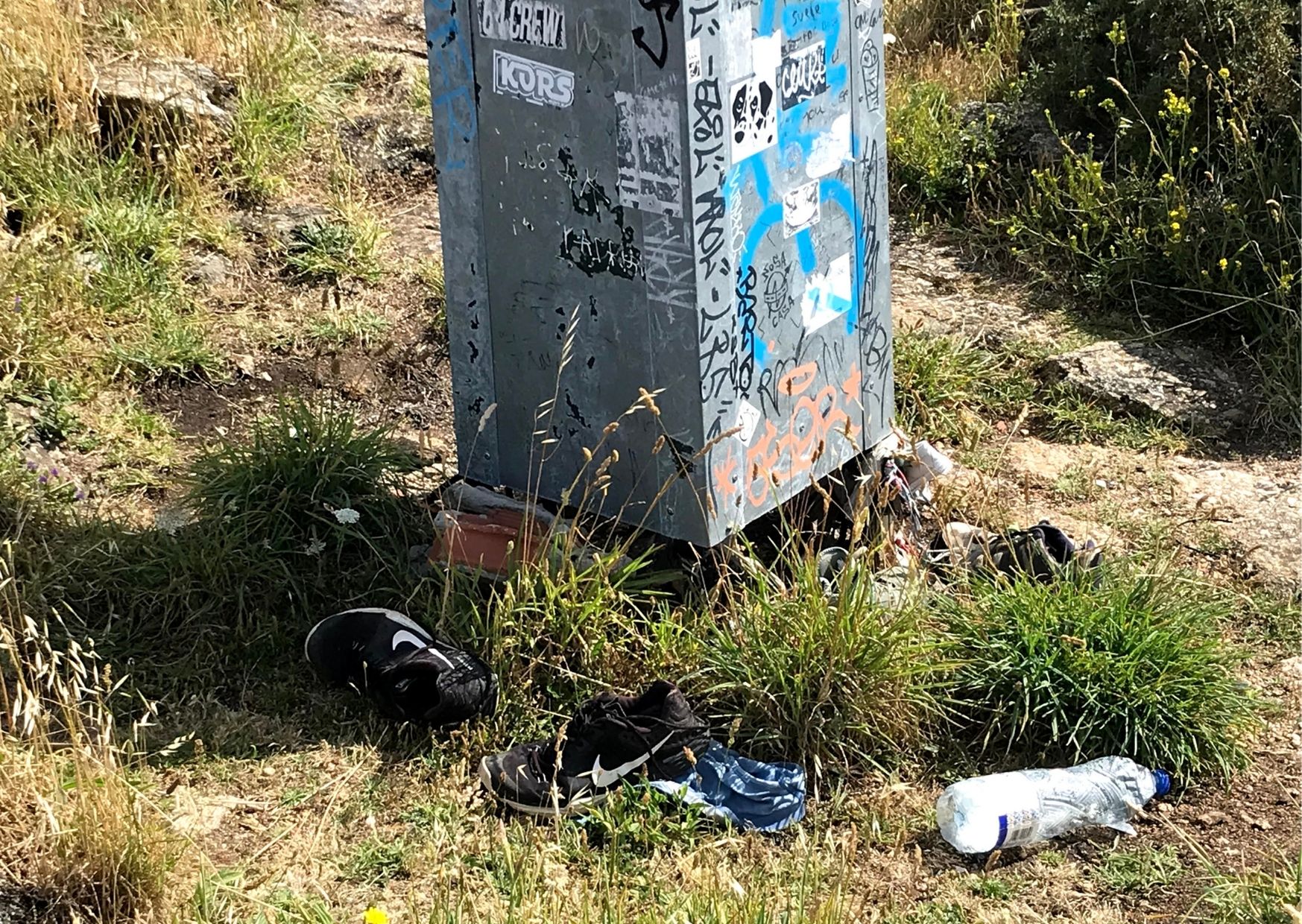
    This brings me to a certain practice that has been banned for years but some people continue to do: burning your clothes or shoes at the end of the Camino. There is a notice there, quite visible as you walk towards the rocks behind the lighthouse asking you NOT to make fuego (fire) or leave anything that wasn’t there before (see the first picture on the left).

    Cartel en Finisterre
    Burnt T-shirt in Finisterre
    Shoes in Finisterre

    However, as you can see in the other 2 pictures, people are ignoring it and littering the place. The number of pilgrims on the Camino at the moment is far from what we would normally see around this time of the year. So I was shocked and disappointed to see several half-burnt pieces of clothing, as well as discarded shoes, bottles and other items.

    You may think burning your clothes by the ocean at the end of your Camino is a very meaningful ritual. But please, don’t do it. It’s harmful to the environment and a fire hazard. It’s happened too many times before that the simple burning of shoes or clothing resulted in a forest fire.

    So let me say it again: don’t burn your stuff!

    It’s not cool. The locals are fed up with it. And you could be fined.


    The town

    I know the highlight of Fisterra is going to the lighthouse and watching the sunset over the ocean, but don’t forget to have a look around town too. Fisterra has always been a fishing village, so a visit to the port is in order.

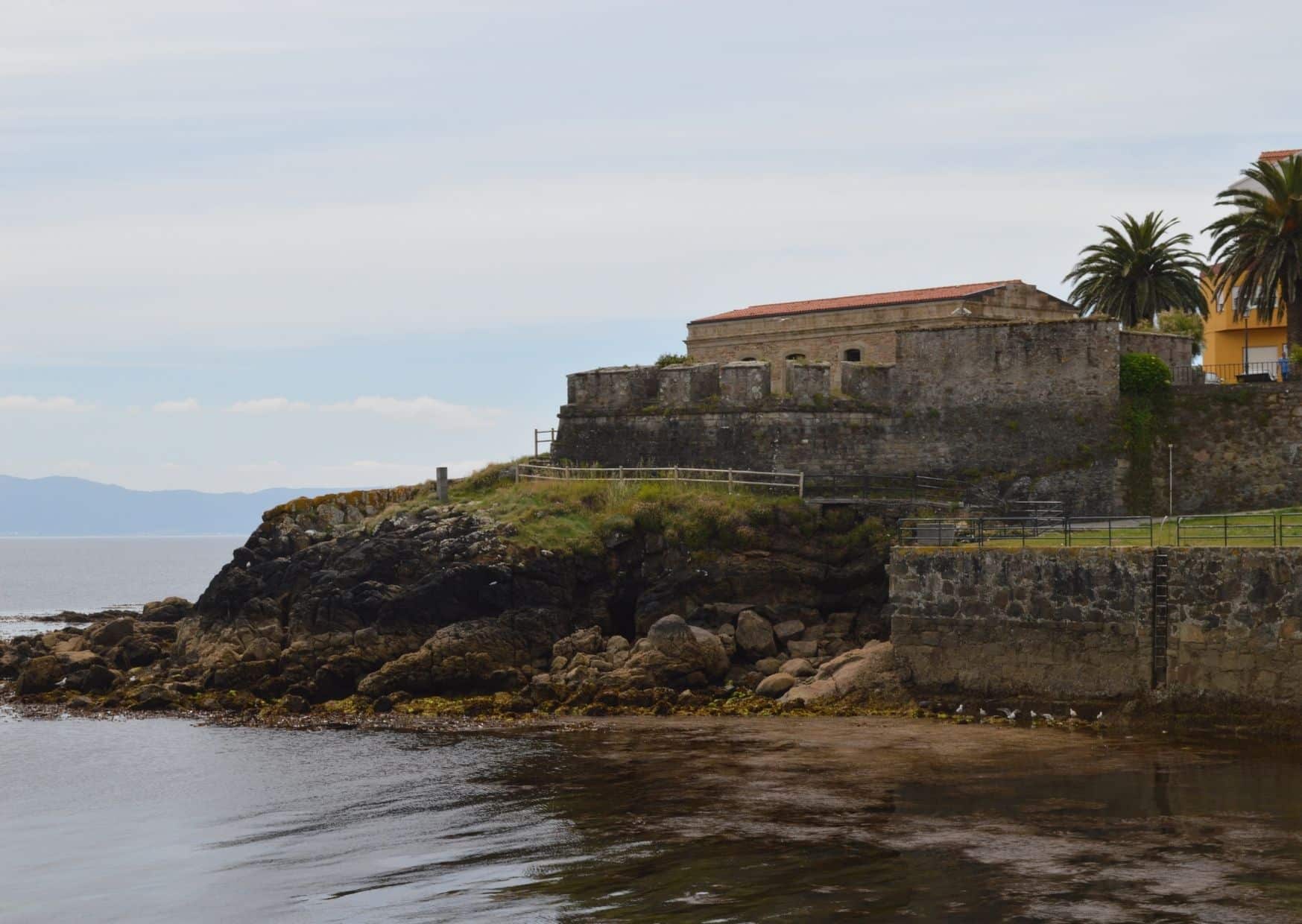
    And I would recommend a visit to the fishing museum that can be found in the castillo de San Carlos. The castle dates back to the 18th century and was built as part of a defensive plan for the coast in the area. The fishing museum is small but Manolo, the person in charge, is very knowledgeable and is full of amazing stories. Well worth the visit.

    And if you like fish and seafood… you’re in the perfect place!


    Fishing Museum

    Castillo de San Carlos

    Castillo de San Carlos.
    Fishing Museum. Finisterre

    Fishing museum

    Calle Finisterre
    Through a field of stars

    Through a field of stars

    Through a Field of Stars

    Brian John Skillen, is a professional filmmaker, author, and international dance instructor. His many adventures around the world have strongly influenced his life, but nothing has affected him more than his pilgrimages along the Camino de Santiago. He was first inspired to write the Through a Field of Stars trilogy on his pilgrimage in 2017, where he was told about the clues the Knights Templar left behind on the Camino de Santiago.

    Since 2017 he has walked over 1,000 miles across Spain doing research for the trilogy. He has walked the miles his characters have walked and learned the lessons they have learned. All of the characters in the novel that aren’t based on historical people are based on pilgrims Brian met on his Camino. Brian’s goal with the trilogy is to inspire one million people to take a pilgrimage on the Camino de Santiago.

    He tells us more about in this guest post. Over to Brian!

    Flecha azul


    Have you ever seen something so amazing it changed your life in an instant?

    In 2017, I took an epic pilgrimage on the Camino de Santiago. I saw many amazing things, but when I first saw the Arc of San Anton, I knew my life would never be the same. To me, it looked like something that could only exist in a movie or a novel. Stepping through the Arc was like stepping into another world. Something about me and my life changed as I emerged on the other side.


    I didn’t know it then, but that was a defining moment for me as a person. I didn’t know that after stepping through the Arc of San Anton, I would  hang up my dance shoes and trade them in for a story. I didn’t know that I would face one of my biggest fears and achieve something that I thought was impossible… 


    Just past the Arc of San Anton is the city of Castrojeriz—a hilled city with the ruins of a castle on top. Once again my breath was taken away. When I first saw the city, I thought, My God, someone has to write a book about this place! Little did I know I was going to be that someone.


    Every Camino is like a lifetime—you begin as one person and end up leaving as someone completely different. 

    The Knights Templar

    At the albergue (pilgrims Shelter), I looked at my credencial (pilgrims passport) and noticed that the stamp for the city was the cross of Jerusalem. After seeing some Knights Templar symbology at the Arc of San Anton and in the city, I made a comment about the Templars. The hospitalero (person who runs the hostel) raised an eyebrow and asked, “What do you know about the Knights Templar?”

    This question led to a long discussion about the importance of the Templars on the Camino de Santiago and in Castrojeriz. The hospitalero told me that there used to be several Templar commanderies in the city, and that the entire hill was hollowed out with tunnels that the Templars had used for rituals and to store their treasure. As we were finishing, he lowered his voice and told me to look for the clues that the Templars had left behind on the Camino.

    The next morning I woke up with the hospitalero’s stories still in my head. As I was leaving the town, I did something significant that has changed my life. I took my most valuable possession—my dance shoes—from my backpack and left them at a second-hand store. I said to the world, “I will trade these in for a story.” This may not seem like such a big deal, but for someone who has been a professional dancer for the past twenty years, it was huge. This was my symbolic gesture of stepping into a new time in my life.

    Every day after I made that declaration, the people I met and the experiences I had, all came together to form The Way: Through a Field of Stars. 

    There was only one problem though, I grew up with dyslexia and a third-grade reading and spelling level in highschool—who was I to write a book?


    Writing the story

    However, once it has been unleashed, nothing can stop inspiration. On the Camino, I woke up every morning before the sun and walked under the stars. As I hiked, The Way: Through  Field of Stars played like a movie in my head, and I dictated exactly what I was seeing into my phone. 

    By the end of my Camino, I had the entire story outlined in an audio format. Now, I had to face my biggest fear, actually writing the book down on paper.

    I mix up letters in words, and I didn’t learn the rules of grammar—so writing a book was something I never thought I would do. As I returned home, I committed to writing 2,000 words a day no matter what. At first it was incredibly hard and took a very long time—as I had to teach myself the rules of grammar. But, I stayed committed—and within three months, I had finished the first draft of my novel. I thought it was perfect, however as most of you know, the Camino doesn’t always provide what you want, but exactly what you need to fulfill your life’s purpose.

    When I showed the book to my girlfriend (who is now my wife), she answered honestly and said it needed some work. After learning more about editing and publishing, we reached out to fifty agents and all we got in return were two rejection letters and forty-eight other agents that didn’t even bother to write back.

    In 2020, we realized the book was as far as we could take it ourselves so we ran a Kickstarter to hire professional editors, formatters, designers, etc. We raised $10,000 in presells on Kickstarter and since publishing The Way: Through a Field of Stars, it has won an Eric Hoffer Award in the Spiritual Fiction category and has also reached the #1 Amazon Bestseller spot in several categories.


    My wife and I are currently launching the second book in the series Back: Through a Field of Stars on Kickstarter until July 9, 2021. Follow our Kickstarter link to get both books and support the creation of a new novel. Also, if you are interested in how we launch books on Kickstarter, you can join our free group on Facebook—Kickstarter to Amazon Best Seller. We believe in a life of contribution and are happy to share some of the things we have learned along the way.


    My wife and I returned to the Camino in 2019 and my favorite phrase to say was Soy escritor. I declared that “I am a writer” in Spanish, long before I did in English. I hope your Caminos bring you as much growth, inspiration, and love as mine did—Buen Camino!


    Some of our favorite Spanish words and phrases we use on the Camino

    Zumo de naranja – Fresh squeezed orange juice

    Tortilla – an egg dish they serve at breakfast

    Leche de soja  – Soy milk

    ¿Dónde está el albergue municipal? – Where is the state run hostel (these are usually the most cost efficient)

    ¿Cuándo es la misa?  When is the Mass?

    Through a field of stars

    For more on Brian and his novels, follow this link.


    Today’s Spanish words

    For the pronunciation of credencial, check ¿Cómo vas a hacer el Camino?

    For the pronunciation of albergue, check ¿Dónde vas a dormir?

    For the pronunciation of hospitalero, check El albergue.


    Want more?

    Make sure you don’t miss any posts or announcements by subscribing for free here. You’ll receive a free Spanish vocabulary guide with your first Spanish words + cultural tips. And… you’ll get access to exclusive content too.


    ¡Buen Camino!

    8 ways to incorporate Spanish into your daily life

    8 ways to incorporate Spanish into your daily life

    Incorporate Spanish into your daily life |

    You believe there are good reasons to learn Spanish before your next Camino de Santiago. You have the best intentions to learn some. Maybe you’ve even started, very enthusiastically… only to give up a few days later.

    I’m demasiado viejo (too old). Or muy cansada (very tired). Or muy ocupado (very busy). Or muy… you can add any adjectives you like in there. Deep down, you know it’s just an excuse. I know. I’ve used them all! OK, maybe not the ‘too old’ one, but definitely all the others.


    It could also be that you have the wrong ideas about learning a new language:

    Maybe you believe you have to study for at least 1 hour every day in order to make any progress.

    Or you think you must take traditional lessons, full of complex grammar explanations and repetitive exercises.

    And then you start feeling overwhelmed, bored, stressed… And that’s why you give up. I know, I’ve done that too, not following the advice I give my own students.


    You know the phrase ‘It’s your Camino’, right? You can apply this to learning Spanish too: there is no right or wrong way to learn Spanish (or any other language); you just have to find what works for you.

    A tiny bit of grammar and a couple of exercises won’t do you any harm. But learning a language should be an enjoyable experience. You’re more likely to remember new words if you learn them while doing something you enjoy. If you enjoy doing grammar exercises, go for it! But there are other things you could be doing too.

    You don’t need to take my word for it; this has been researched (an example). It has also been researched that consistency is quite important.


    What does this mean?


    Let’s say you spend 1h per week on your Spanish. In the long term, you will learn more if you spread that hour throughout the week (let’s say 10 minutes per day), than if you spend that hour on one day and then you don’t have any exposure to Spanish for the rest of the week.

    So, to sum up, it’s OK to have fun while learning Spanish. In fact, it’s not just OK. This is what you should do.

    And it’s also OK not to spend hours on it daily. It’s good to get as much exposure to the language as possible, but this doesn’t mean you should spend hours doing exercises that don’t bring you any joy. You can have Spanish in the background while you’re doing other things (here’s the Spanish for the Camino playlist on Spotify), you can watch Spanish TV for as long as you like… but remember to spend 10-15 minutes really focusing on the language.


    Listening to music and watching TV are quite obvious, but there are many other things you could do to incorporate Spanish into your daily life and boost your learning.


    Incorporate Spanish into your daily life | 

    8 ways to incorporate Spanish into your daily life


    Flecha azulStill on music and TV

    Listening to Spanish música in the background is OK, and so is watching Spanish films and series. But there are things you can do to maximise the experience:

    • Find the lyrics to your favourite songs and sing along, out loud (you’re more likely to remember things if you say them out loud, according to research).


    • Keep pen and paper cerca (nearby) and write down any words you recognise. You can later check in a dictionary if you got them right. There are many free online dictionaries. I like to use WordReference.


    • Take a very short clip of your favourite show and use it as a dictation exercise: listen as many times as you need and try to write everything down. Check with the Spanish subtitles how well you did.

    Yep! Writing things down helps with your memory too.


    Flecha azulUse your hobbies

    Cocinar (cooking), deportes (sports), crafts, fishing… or the Camino. It doesn’t matter what your hobby is. Find a website on your chosen topic in Spanish. Or a YouTube channel. Or a book… whatever you prefer. Games, such as la Oca, are great too. And enjoy!


    Flecha azulUse everyday stuff

    • Are you going to do your grocery shopping? Try writing your shopping list in Spanish. Does any of the items you bought have Spanish on their label? Read it and compare it to the English version.
    • How many times a day do you check your phone? You can use it to your advantage. Go to your móvil‘s settings and change the language into Spanish. Every little helps.


    Flecha azulGet creative

    • Do you keep a diary or do journaling? Do some of it in Spanish. You don’t have to write long texts or complicated sentences. Start with a few words; it could be as simple as a list of things you did that day, such as ‘trabajo (work), compra (shopping), paseo (walk)’. As you learn more, you can start creating your own simple sentences. Remember: they can be as long or short as you like and they don’t have to be perfect.


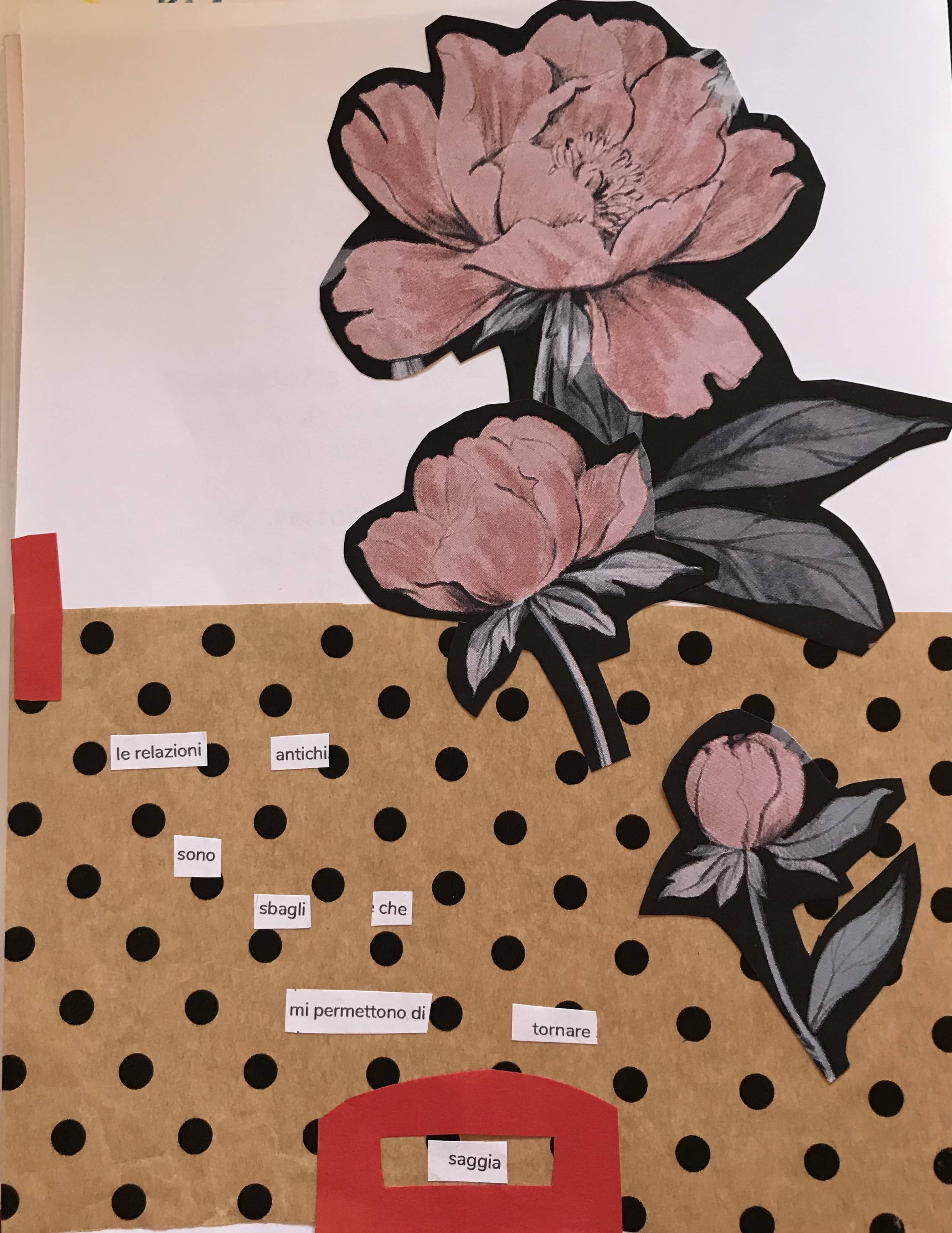
    • Are you the creative type? Try things like blackout poetry or collage in Spanish. Blackout poetry (or found poetry) is a form of poetry where you select words that catch your attention from any printed text. To ‘get rid’ of the words you don’t want, you normally use a black marker, hence the name blackout poetry. I’ve only recently started doing this, as part of my Italian learning efforts and I am amazed by how much I’m learning. All you need is a page of text in Spanish, a marker and your creativity.
    incorporate Spanish into your daily life - collage

    A couple of examples of blackout poetry and collage, so you can get a better idea of what I’m talking about.

    How many of these are you going to try? You know what they say: the more the merrier. So, go on! Try them all and see which one suits you best. Or come up with your own ideas and share them with us in a comment. You never know who you might inspire.


    Today’s Spanish words


    Want more?

    Make sure you don’t miss any posts or announcements by subscribing for free here. You’ll receive a free Spanish vocabulary guide with your first Spanish words + cultural tips. And… you’ll get access to exclusive content too.


    ¡Buen Camino!