It’s your Camino

It’s your Camino

It’s your Camino

Does that sound familiar? If you’ve been planning and/or thinking about your Camino de Santiago for a while I’m sure you’ve heard it or read it before.

To me, it means that it’s OK to ask for advice and read about other pilgrims’ experiences, but you should make your own decisions. You know yourself best and you are, therefore, the most qualified person to decide what the best choices for you are.

Your Camino, your rules. After all, a pilgrimage is “a journey to a shrine or other sacred place”. There is nothing in the definition to indicate how far you have to walk (it doesn’t even say you have to walk), where you must sleep or how much weight you should carry.

Everyone’s experience is different and the fact that someone has already done a Camino (or dos or diez) does not mean that what worked for them is going to work for you. OK, some things are plain common sense but many of them are really just a personal choice.

And if you don’t believe me, read on.

Someone recently asked in a Camino forum the following question:


What’s one item you packed and never used?

It was funny to read how items that some people packed and never used were essential for some other people.

  • Saco de dormir (sleeping bag). Whether you need one or not will depend a lot on the time of the year you are doing your Camino and where you are sleeping. Generally speaking, you will need one if you are staying in the municipal albergues and you won’t if you stay in private accommodation. But there are exceptions too.


  • Ropa de lluvia (rain gear). Again, whether you will need it or not will depend on a number of factors such as the time of the year or the Camino you’ve chosen. However, the weather can be a bit of a lottery, so it’s hard to know what’s going to happen.

Last year, for instance, was exceptionally dry and so it didn’t rain during months that are generally wet. This year, on the other hand, has been quite wet (more than usual) so you might need some ropa de lluvia even now, in verano (summer).


  • Bañador (swimming suit). Time of the year is again a deciding factor, as well as the chosen route: you are more likely to need a bañador in the summer months and/or if you do one of the Caminos along the coast (Camino del Norte or Portugués por la Costa, for instance). But that doesn’t mean you won’t need it elsewhere: some albergues have piscinas (swimming pools) and you could also decide to take a rest day and stay in a nice hotel with a spa!


  • Almohada (pillow). Some people take an inflatable almohada and use it; others take it and don’t use it; some others manage with whatever almohadas are available in their albergue and some make one out of their spare clothes. It’s up to you!
 

What else?

  • Tendedero (clothesline). Some people took one and used it daily; some others never used it. Alternatively, you can pack a spare pair of shoe laces and use them as your tendedero if you ever need one. Albergues generally have space for you to hang your clothes to dry.


  • Spork. I have to admit I didn’t have a clue if there was a word in Spanish for a spork. After some searching, I found cuchador, a combination of cuchara (spoon) and tenedor (fork). However, I’m not sure how widely used this word is (I’ve never heard it).

Anyway, whether the word cuchador is used in Spanish or not, the fact is that it’s one of those items that some people used all the time and some others packed but never used.

Can you add anything to this list? I’d love to hear your experiences.


Today’s Spanish words


Want more?

Make sure you don’t miss any posts or announcements by subscribing for free here. You’ll receive a free Spanish vocabulary guide with your first Spanish words + cultural tips. And… you’ll get access to exclusive content too.

 

¡Buen Camino!

Santiago de Compostela

Santiago de Compostela

Santiago de Compostela |

Maybe you’ve been walking for weeks. Or days.

Maybe you’ve walked 800km to get to Santiago de Compostela. Or 100.

Maybe you’ve done your Camino in one go. Or you’ve done it over a few years, a section at a time.


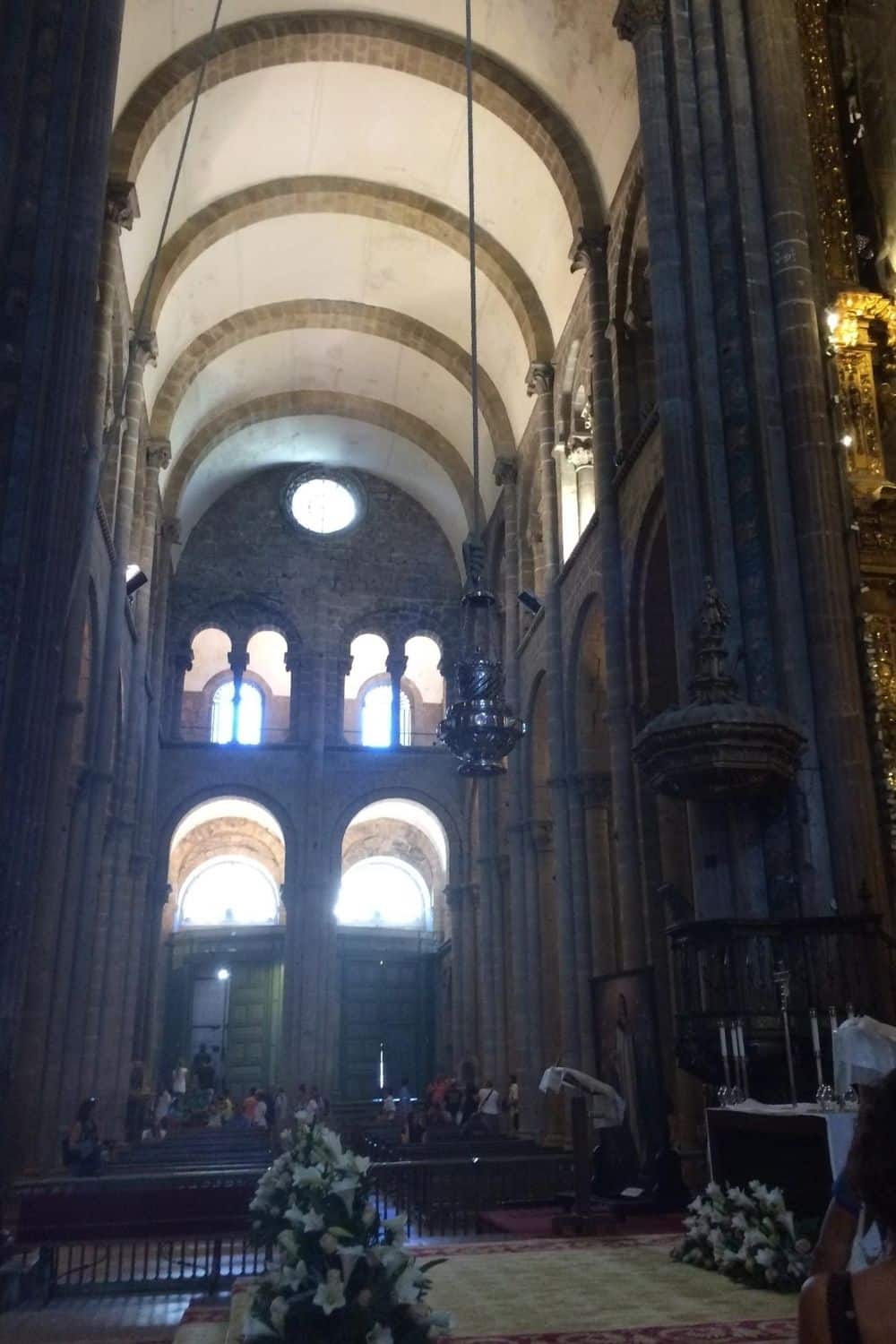
It doesn’t really matter. Arriving in Santiago, entering the Plaza del Obradoiro and finally seeing the catedral is always a very special moment.

There are several rituals and traditions that pilgrims generally follow, such as greeting fellow pilgrims with ¡Buen Camino! or Ultreia; getting your credencial stamped at least once a day; drinking Rioja from the wine fountain outside Estella or leaving a stone at Cruz de Ferro, on the Camino Francés, to name just a few.

So, of course, Santiago and its catedral have their own rituals too. The Cathedral’s webiste lists them: http://catedraldesantiago.es/en/pilgrimage/#rites


El Pórtico de la Gloria 

As you access the catedral from Plaza del Obradoiro, the first thing you see is the wonderful Pórtico de la Gloria, built by Maestro Mateo in the 12th century. Well, that’s the way it used to be. The Pórtico de la Gloria was closed for almost 10 years for restoration. It has reopened now and it can be visited, but you can no longer enter the cathedral through here.

So, if you’ve already done a Camino in the past 10 years, you missed it and you need an excuse to come back, this is it! The Pórtico de la Gloria was beautiful before, but it’s just amazing now.

There used to be a couple of rituals attached to the Pórtico de la Gloria, but they were causing damage to this work of art, so it’s not possible to do these anymore. One of them, which you can see in the movie The Way, was to place your hand on the centre pillar, under the statue of St. James.

At the back of this, there’s another little statue known as Santo dos Croques (literally the saint of the bumps). This is not really the image of a saint, but that of Maestro Mateo. According to tradition, you had to bump your head against the head of this “saint” in order to get wisdom and intelligence.


La cripta

Once inside the catedral, you should visit the cripta (crypt). There is a one-way system to access it, with stairs going down at one side of the main altar and going up the other way. The cripta is where the sepulchre of St. James is kept. On your way up, you can also embrace the image of the Apostle (or at least you could before Covid).


El Botafumeiro

Botafumeiro Santiago de Compostela

 El Botafumeiro, I’m sure you already know, is this big censer that gets used during special occasions. It weighs over 50kg (over 100 pounds) and measures around 1.5 metres in height (5ft). It hangs from the main dome of the cathedral and it takes 8 men to swing it.

When can you see it? It has some fixed dates you can check in advance:  http://catedraldesantiago.es/liturgia/#botafumeiro

You can also request it by contacting the Cathedral (and paying around €500). Groups do this all the time, so you might be lucky and be able to see the Botafumeiro in action outside of those fixed dates.


During Holy Years, the Botafumeiro used to swing daily during the Pilgrim’s Mass or Misa del Peregrino, but that’s not the case anymore. 

La Puerta Santa

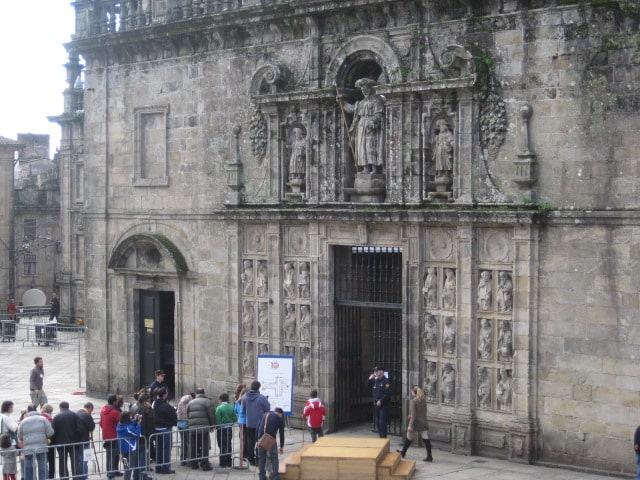
You can only enter the cathedral through the Puerta Santa (Holy Door) during Año Santo or Holy Year (it can also be referred to as Xacobeo, in Galician), i.e. those years when July 25 falls on a Sunday.

The day before an Año Santo begins,  the Puerta Santa is opened in a ceremony performed by the Archbishop. At the end of the year, this door will be closed again and remain so until the next Año Santo. Access to the Puerta Santa is from Plaza de la Quintana.

Puerta Santa in Santiago, opens during Holy years.
Bedbugs and other creatures

Bedbugs and other creatures

Bedbugs and other creatures |

There’s one tiny thing that worries many pilgrims even before they start their journey: chinches (bedbugs). Other tiny, little creatures too, but bedbugs are the main concern. The bad news is that chinches are not attracted to dirt, so they can be found anywhere, even in 5-star hotels.


Should you worry about bedbugs on the Camino de Santiago?

It’s mainly a matter of luck whether you come across chinches or not. Some people have done several Caminos and never had an issue; other are not as lucky.

Their picaduras (bites) usually happen on exposed skin, such as cara, cuello, manos and brazos. Keep yourself covered!

They don’t transmit any diseases but they can cause itchy red bumps on your skin and some people can experience a reaction. Picaduras can become infected if scratched. Try  to resist the temptation! You can visit the next farmacia and buy something to alleviate the itchiness.


What can you do about bedbugs?

Some people spray permethrin on their stuff. If you choose this option, you should do it 2-3 days before you travel. But be careful! Permethrin is toxic while wet (and very toxic to cats in particular). It’s safe once it dries, though. You can also use natural remedies such as peppermint oil.

But no matter what you use, keep in mind that, if you stay in albergues, you’ll be sharing your space with many other people. So, think of them too and make sure you don’t use anything with a very strong scent or that can cause an allergic reaction to others.

Once you are on the Camino, there are some precautions you can take too:

  • Chinches can be easily transported in your mochila or clothes. So, don’t put your mochila on your bed.


  • Check the bunk frame and colchón (mattress) for signs of chinches such as tiny black spots. If you find any, notify your hospitalero immediately and move on to a new place.


What to do if you’ve been bitten by bedbugs

  • You should tell your hospitalero, so they can act on it and prevent future pilgrims being affected too. Picaduras by chinches are usually in a line. If you don’t notice them until after you’ve left the albergue, please inform your next hospitalero. They will make the call for you.


  • Before you settle in your next albergue, you need to debug. The easiest way is to wash all your belongings in hot water and dry them in a hot dryer. If you can’t do this at once, put all your stuff in a big plastic bag and close it tightly until you get to a lavadora (washing machine).

Then examine all the seams and pockets to make sure there are no chinches left. If you fail to act promptly and thoroughly you could be spreading chinches along the Camino and even taking them home. Not a nice souvenir, is it?


Any other creatures you should worry about? 

Unless you have some serious allergy, not really. There are several types of arañas (spiders) but none is particularly dangerous. And in the warmer months, you’ll probably come across moscas (flies), mosquitos, abejas (bees) or avispas (wasps).

Moscas are basically annoying but harmless. The others could potentially bite you. If they do and the picadura is bothering you, visit the next farmacia and ask for some antihistamínico cream/gel.


All this writing about chinches and other creepy crawlies is making me feel itchy. So, that’s it for today! I hope you have an insect-free Camino.


Today’s Spanish words


For the pronunciation of cara and cuello, check I’m not feeling well.

For the pronunciation of brazo and mano, check Your body.


Want more?

Make sure you don’t miss any posts or announcements by subscribing for free here. You’ll receive a free Spanish vocabulary guide with your first Spanish words + cultural tips. And… you’ll get access to exclusive content too.


¡Buen Camino!

La tarta de Santiago

La tarta de Santiago

Tarta de Santiago |

Galicia is well known for its gastronomy. Pescado (fish) and marisco (seafood) are one of its main culinary attractions. You can read a bit about it and learn how to prepare pulpo á feira in this previous post.

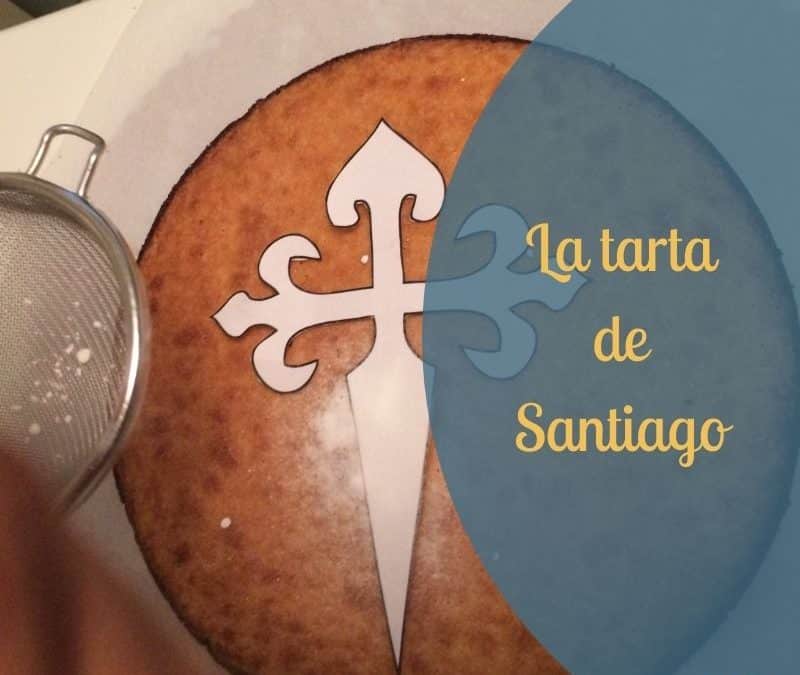
But there’s more than fish and seafood. If there is one traditional dish that also symbolises the Camino, that’s the tarta de Santiago. In case you haven’t heard about it, tarta de Santiago is an almond cake, typically decorated with the shape of a Santiago cross.

The origin of this cake is unknown, but the first written reference to an almond cake dates back to 1577. Back then it was referred to as torta real or royal cake. However, we must wait until 1838 to find the first recipes of tarta de almendra (almond cake).

The decoration in the shape of a cruz (cross) was introduced in 1924 by Casa Mora, a pastelería (cake shop) in Santiago de Compostela. In fact, this pastelería is still in business, although its name has changed a bit: it’s now Pastelería Mercedes Mora and you can find it at rúa do Vilar, 50.

You can find it on many shops and pastelerías along the Camino, but if you want to try it at home, it’s very simple to make.


So, let’s bake a tarta de Santiago


The traditional recipe is made up of just tres ingredientes (ingredients) in equal parts: almendra (almond), azúcar (sugar) and huevos (eggs), so it’s sin gluten. You can add a bit of limón (lemon) or canela (cinnamon) flavouring if you prefer.


  • First, take 3 huevos, 200 g de azúcar and 200g de almendra (get whole almonds and grind them yourself or buy almond flour; both options are fine).


  • Then, mix all 3 ingredientes. This cake doesn’t have any raising agent, so it’s a good idea to beat the eggs and sugar together first, before adding the almond. But your cake will still be yummy if you don’t. You can add lemon zest or cinnamon if using any flavourings. The resulting mixture will be quite thick.


  • Pour the mixture into a round cake tin and bake in a preheated horno (oven) for about 30 minutes at 180ºC. It needs to be cooked inside and slightly golden outside.


tarta de santiago ingredients
tarta de santiago mix
tarta de santiago


  • And finally, decorate it! There are hundreds of cross templates online. I used this: https://www.hogarmania.com/archivos/201407/plantilla-cruz-tarta-santiago.pdf. Just print it, cut it out, place it on top of my cake and sprinkle with powdered/icing sugar. I was in a bit of a hurry to finish, so my decoration didn’t turn out as well as I would have liked. But the cake was still delicious!


If you want to reuse your template (and prevent messing the presentation up like I did), my suggestion is to copy your cruz on a harder material than paper.


Today’s Spanish words


Want more?

Make sure you don’t miss any posts or announcements by subscribing for free here. You’ll receive a free Camino food guide. And… you’ll get access to exclusive content too.


¡Buen Camino!

Vía de la Plata

Vía de la Plata

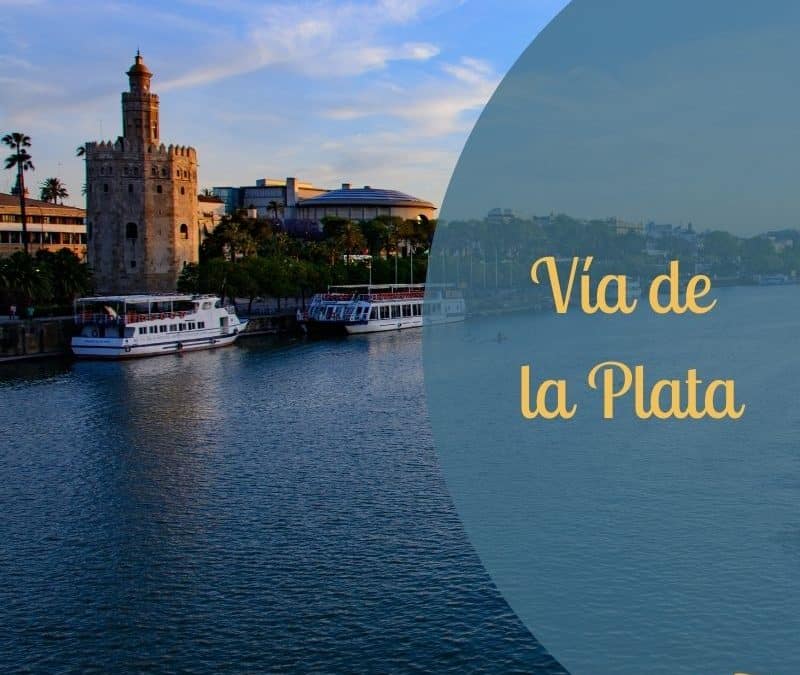
The Vía de la Plata crosses Spain from south to north, making it one of the longest Caminos in Spain. It starts in Sevilla, in the region of Andalucía and continues through Extremadura and Castilla y León, before entering Galicia.

The distance covered is around 1000 km, depending a bit on the variant you take. You have two options:

  • You can walk up to Astorga and then join the Camino Francés for the final stages (260 km).


  • Or you can head towards Galicia before you reach Astorga, through the Camino Sanabrés. Granja de Moreruela (in Zamora) is the town where you must decide which way to continue.


The Vía de la Plata is not a difficult route in terms of terrain and elevations, but you will be facing other challenges such as the weather. It is not advisable to walk it during the months of julio (July) and agosto (August) due to the extreme heat. You should still be careful in junio (June) and septiembre (September). The best months would be marzo, abril, mayo (May) and octubre (October).

The distances between towns are long and the services are few, so you need to be prepared and make sure you have enough agua and snacks to make it to the next town. It might be hard if you are planning to do shorter stages.

The signage is not as abundant as in other Caminos but it’s adequate. The Vía de la Plata follows old Roman roads, so you will also see many Roman milestones

I think I’m not making it sound very attractive, but that’s not true. It’s just not the Camino Francés, so you should adjust your expectations and be prepared. It is a much lonelier Camino (only 3.04% of pilgrims chose this route in 2017 according to the Pilgrims office statistics)* and you will be walking a lot through pastures (with lots of cattle). Some of the best cured hams come from this part of the country.

What to see on the Vía de la Plata

But it’s not all cows and pigs. The Vía de la Plata also goes through wonderful cities. In fact, it is the Camino with the highest number of towns on UNESCO’s World Heritage List:


But these are not the only interesting places to see. Zafra, in Extremadura, is a lovely medieval town worth a visit. And Zamora, in Castilla y León, is full of Romanesque arquitecture and also worth a visit.

So, do you think this is the Camino for you?


*Source: https://oficinadelperegrino.com/estadisticas/

Today’s Spanish words

Want more?

Make sure you don’t miss any posts or announcements by subscribing for free here. You’ll receive a free Spanish vocabulary guide with your first Spanish words + cultural tips. And… you’ll get access to exclusive content too.


¡Buen Camino!