Samaín

Samaín

This time of the year is the end of the harvest season; the days start getting shorter, the weather gets colder… In short, the end of octubre (October)-beginning of noviembre (November) marks the transition into otoño (autumn) and invierno (winter). It’s time for Samaín and other celebrations.

 We don’t celebrate Halloween as such in Spain, although in recent years it’s common to see both kids and adults dressing up on October 31 and Halloween parties being advertised. This is not a traditional celebration, though; but I guess any excuse is good to party! There are, however, some traditional celebrations:


Día de Todos los Santos (All Saints Day) & Día de Difuntos (Day of the Dead)- 1 & 2 de noviembre

These two days are all about remembering those who passed away. Most of the activity takes place on November 1, which is a national festivo (public holiday). On this day, people visit their loved ones in cemeteries and take flowers to them. Christianity has been honouring the dead on these dates from the 9th century, but there are older traditions…

Samaín (from the Irish Samhain)

It’s an old Celtic celebration marking the end of the harvest season and the beginning of winter. It was a time when the limits between this world and the next one got blurred, meaning that spirits could cross over to this world more easily. In Galicia there was a tradition of carving calabazas (pumpkins) and leaving them on the roads in order to scare passers by. People would also leave fires on all night, as well as food, for the spirits. Since 1990 there have been attempts to recover this old tradition.

Samaín pumpkin carving workshop

Pumpkin carving workshop.

Magosto (chestnut party)

Linked to the end of the harvest season, magosto is celebrated mostly in northern Spain, as well as Portugal. The main elements of a magosto are castañas (chestnuts) and fire to roast them. People would gather around a bonfire, roast castañas (other foods too, but chestnuts are essential), sing and dance. It was also the perfect opportunity to taste the new vino (wine). There is not fixed date to hold a magosto. It could be any time between mid-October and mid-November. Usually, the last day to celebrate a magosto is November 11, festivity of St. Martin. Magostos apart, it’s common to see chestnut sellers on the streets once autumn starts. So, when you are out for a walk you can just buy a cone full of warm, freshly-roasted chestnuts. Delicious and a great way to warm your hands on cold days!
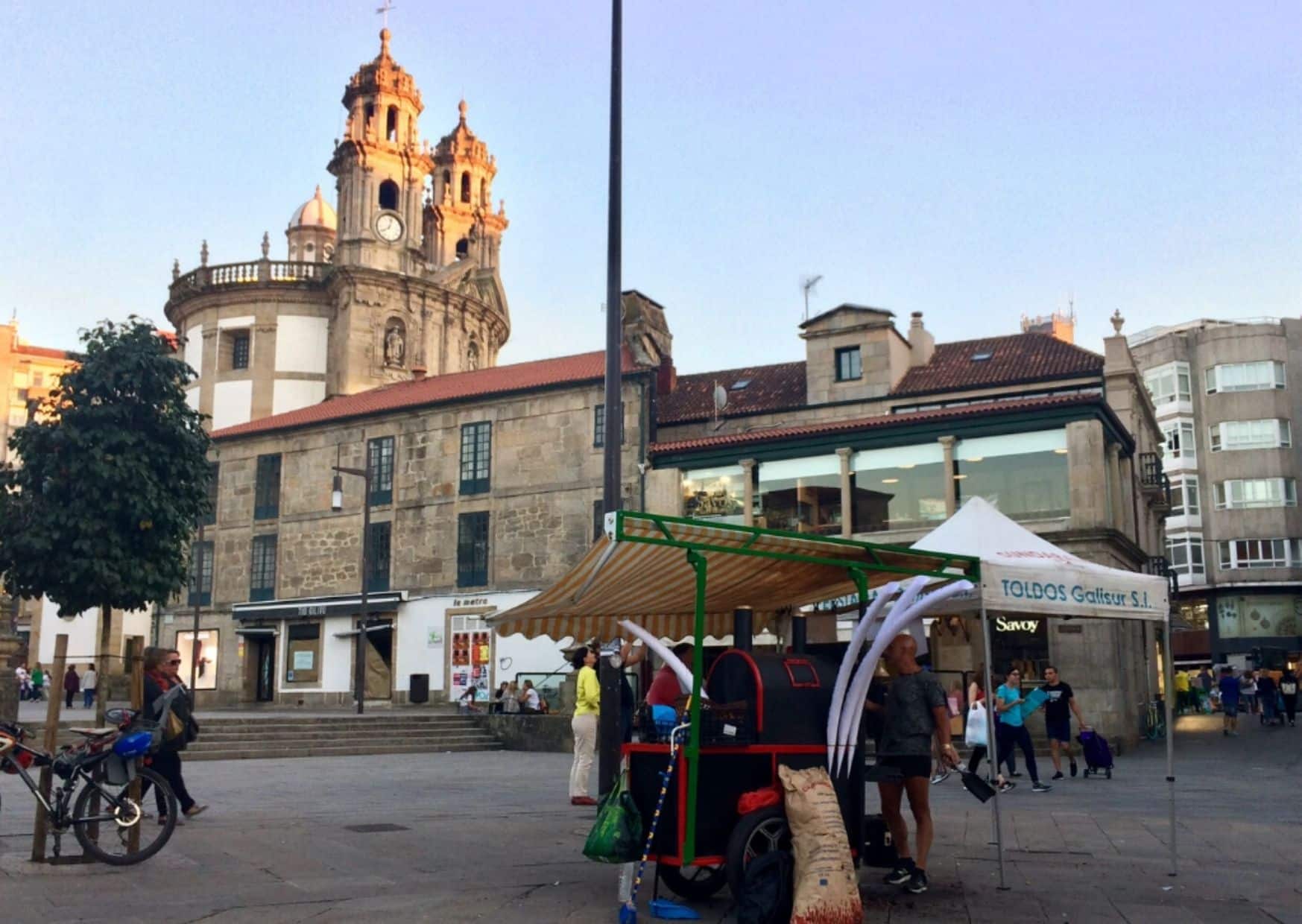
 

Samaín - roasted chestnuts

You can buy roasted chestnuts on the street.

Today’s Spanish words

Would you like to know about other Spanish celebrations? Check these posts:

El Carnaval, about the Carnival celebrations that usually take place around the end of February or beginning of March.

Feliz Navidad, about the celebration of Christmas in Spain.

Semana Santa, about the Easter celebrations.

Want more?

Make sure you don’t miss any posts or announcements by subscribing for free here. You’ll receive the transcripts + vocabulary guides + interactive exercises of episodes 1-5 of the Spanish for the Camino podcast. And… you’ll get access to exclusive content too.
 

¡Buen Camino!

O Camiño de Santiago

O Camiño de Santiago

O Camiño de Santiago |

Imagine you are on the Camino Francés… or on the Camino del Norte, or the Primitivo or even on the Vía de la Plata. It doesn’t really matter.


The thing is, you are walking across Spain. Maybe you’ve prepared before your trip and learned a bit of Spanish. Or you’ve been picking up a few words along the way. And then you enter Galicia and you get the impression that people sound different.


What’s worse: things start getting confusing. Now you see Fisterra… later you see Finisterre… Are they different places? Is it the same place?


The good news is that you are not going crazy. Let me explain


Spain has not always been Spain as we know it today. A few centuries ago, there were several smaller kingdoms, ruled by different kings and queens. One of these kingdoms was the Kingdom of Galicia, which included the north of modern day Portugal as well as part of Asturias and León.


Latin was the language generally spoken in the Iberian Peninsula, but at some stage it started developing differently in different areas until it became several different languages. Some of them have survived until our days and they are co-official, together with Spanish, in their respective territories.


Such is the case of gallego (Galician), or galego in the Galician language. And that’s what you are hearing!


So, instead of teaching you Spanish, today I decided to teach you a few Galician words. After all, no matter what Camino you choose, the last 100km will always be in Galicia.


O Camiño de Santiago |


But let me give you a bit of background info first


  • The first written documents in gallego date back to the 12th century and during the Middle Ages, gallego was the language of poetry in all of Spain.


  • Gallego and portugués were initially the same language, but by the 14th century, that language had already split into the two separate languages we have today. This means that gallego and portugués have a lot in common. So, knowing a bit of gallego will help you in Portugal too!


  • Towards the end of the Middle Ages, gallego ceased to be used by the higher classes, due to political circumstances. It survived till our days thanks to peasants and fishermen, who kept it alive even if it was only orally.


  • In the 18th century, a group of intellectuals started becoming interested in the Galician language. One of them was Padre Sarmiento, whose pilgrimage to Santiago inspired the Variante Espiritual route.


  • One of the first and most popular authors to write in galego was Rosalía de Castro, who lived in Padrón, on the Camino Portugués.


  • We Galician people like to add the diminutive -iño/-iña to almost any word! It adds proximity, familiarity and even affection. So grazas (thank you) becomes graciñas and ata logo (see you later) becomes ata loguiño!


And here are the words… 

Today’s (not Spanish) words


If you’d like to increase your Galician vocabulary, check Galician on the Camino.

The podcast transcripts.

Want more?

Make sure you don’t miss any posts or announcements by subscribing for free here. You’ll receive the transcripts + vocabulary guides + interactive exercises of episodes 1-5 of the Spanish for the Camino podcast. And… you’ll get access to exclusive content too.


Bo Camiño!

El Camino Inglés

El Camino Inglés


El Camino Inglés

It was the fifth Camino in number of pilgrims last year (https://oficinadelperegrino.com/en/statistics/). In 2018 it continues to grow its popularity. I’m talking about the Camino Inglés, or English Way.

It’s so called because it was mainly British and Irish pilgrims who followed this route. From the 12th century onwards they used to travel by boat to the Galician coast and then they would continue their pilgrimage a pie (on foot). After the 15th century, when king Henry VIII separated from the Catholic Church, the number of pilgrims choosing this Camino decreased dramatically.

These medieval pilgrims arrived at several ports along the northern coast of Galicia, A Coruña being one of the main ones. However, A Coruña is less than 100km from Santiago (and 100km, as you probably know already, is the minimum distance required in order to obtain a Compostela). So, in recent times, Ferrol has become the most popular starting point, since it’s over 100km from Santiago.


Can you still start the English Way in A Coruña?

But that doesn’t mean you can’t start in A Coruña anymore. In fact, you can. And you can still be eligible to obtain a Compostela. How is this possible? You can can walk the first 25km in your own country or area.

If you are planning to do this, don’t forget to get your credencial stamped during that first stage. You will need evidence that you’ve completed the required 100km in order to get your Compostela.

Whether you start in A Coruña or Ferrol, you should remember that you need to get your credencial stamped twice per day if you are planning to get a Compostela once you arrive in Santiago.

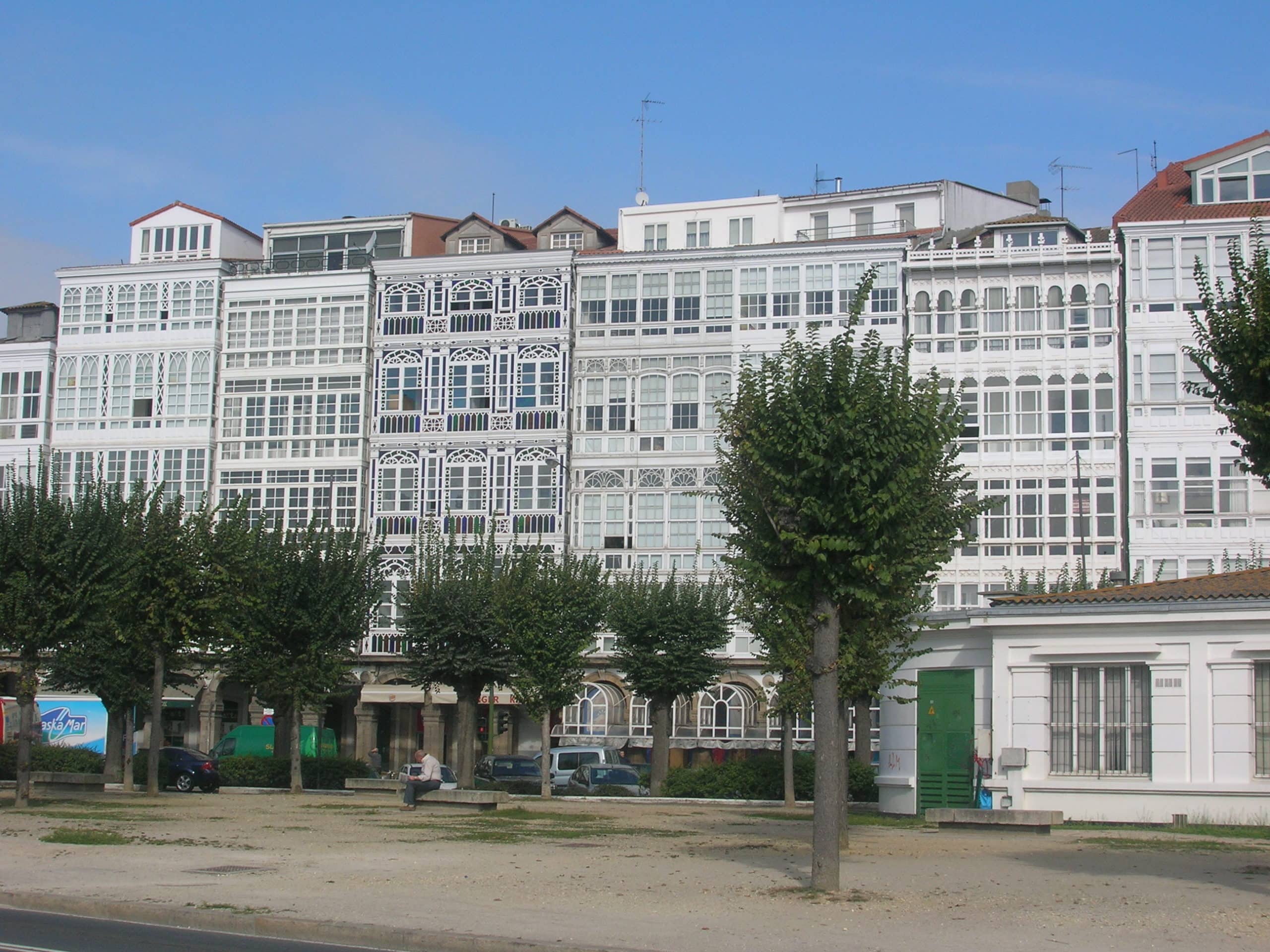
Galerías in A Coruña

Galerías in A Coruña

Torre de Hércules. A Coruña

Torre de Hércules

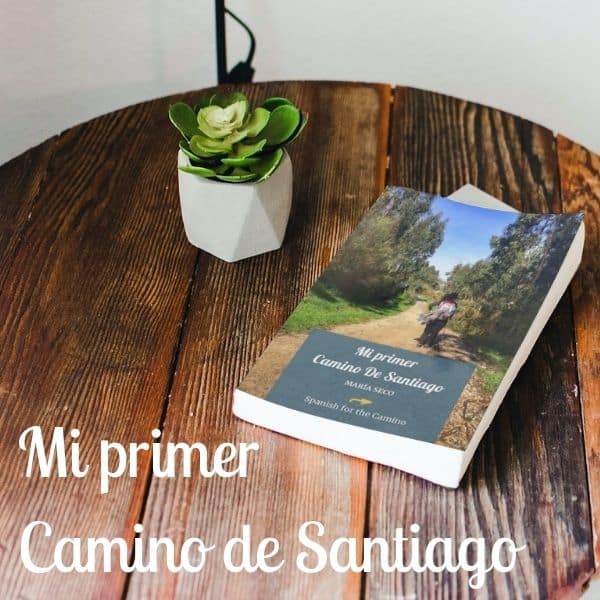
Mi primer Camino short novel for beginners

Mi primer Camino de Santiago is a short novel written in easy Spanish (A1-A2), perfect for those who have walked or are planning to walk the Camino de Santiago in Spain and want to improve their Spanish skills. But it’s also suitable for anyone looking for a fun and effective way to improve their Spanish through stories.

And it’s set on the Camino Inglés, so you can also learn about this route while you read.

For things to see and do in A Coruña, check this: Turismo Coruña website.


You can complete this pilgrimage in six days or less (check my review of Susan Jagannath’s guidebook). So the Camino Inglés could be a good choice if you only have a few days to do your pilgrimage.

This is not a particularly difficult Camino, although there are a couple of hills that could prove a bit challenging. Also, it goes mostly through rural areas and small villages. So there are some long stretches without bares or tiendas (shops). Make sure you have plenty of agua (water) and some snacks with you!


The Camino Inglés from Ferrol

As I mentioned above, the most popular starting point these days is Ferrol, where you can find a stone marker signalling the beginning of the Camino quite close to the tourist office, in the port area. For more info on Ferrol: http://www.turismo.gal/que-visitar/cidades/ferrol?langId=en_US

After you get out of town, you will be bordering the Ría de Ferrol, which provides stunning views. If you prefer to make your Camino shorter, you can walk up to Pontedeume on your first day (31km). If you’d rather take things slower, then Neda is the best place to stop (15km).


After Pontedeume, your next stop is Betanzos, an interesting town with a lovely old quarter. If you have time to explore a bit more, you should consider going to the Parque do Pasatempo, an astonishing place built by the García brothers.

These two brothers emigrated to Argentina (1870), made a fortune there and returned to Betanzos. Here, they created schools, hospitales… and this park where you can find all sorts of unexpected things (https://www.galiciamaxica.eu/galicia/a-coruna/pasatempo/#respond).


Oh! And let’s not forget that in Betanzos you can find the best tortilla in Spain: http://www.expansion.com/fueradeserie/gastro/2018/08/06/5b617442ca4741f5728b45e0.html


After Betanzos, you will go through Hospital de Bruma and Sigüeiro before you reach Santiago.


The stage between Betanzos and Hospital de Bruma is the longest and possibly the hardest too: it’s mostly up and coffee break opportunities are limited.

To compensate, the next stage is quite flat and goes through some very beautiful forests.

Hospital de Bruma takes its name from an old hospital for pilgrims that does no longer exist. The current albergue is beside the spot where this old hospital used to be. Hospital de Bruma is also the place with the least services (including accommodation), so keep that in mind when planning your Camino Inglés.


*May 2025 update: some parts of the Camino Inglés have been rerouted since I first walked it in 2019 but it is still well signposted and you will not have any problems finding your way.

One thing that hasn’t changed since 2019: the lack of English. The relief of most servers when they realize you speak Spanish is obvious. Several business owners commented on it in 2019 when they found out I teach Spanish to pilgrims.

And the situation hadn’t changed much when I walked again in May 2025. In fact, I helped a couple of English-speaking pilgrims who were having trouble communicating, one at a restaurant and the other one in a hotel.

So, if you’re planning to walk the Camino Inglés, do yourself a favour and learn at least some basic Spanish. You’ll be glad you did.


Do you think this could be the Camino for you?


Well, it is the Camino for me! You can start reading about my experience on the Camino Inglés in Empezando el Camino Inglés and Walking with strangers.


Today’s Spanish words

For the pronunciation of a pie, credencial and Compostela, check ¿Cómo vas a hacer el Camino?

Want more?

Make sure you don’t miss any posts or announcements by subscribing for free here. You’ll receive a free Spanish vocabulary guide with your first Spanish words + cultural tips. And… you’ll get access to exclusive content too.


¡Buen Camino!

It’s your Camino

It’s your Camino

It’s your Camino

Does that sound familiar? If you’ve been planning and/or thinking about your Camino de Santiago for a while I’m sure you’ve heard it or read it before.

To me, it means that it’s OK to ask for advice and read about other pilgrims’ experiences, but you should make your own decisions. You know yourself best and you are, therefore, the most qualified person to decide what the best choices for you are.

Your Camino, your rules. After all, a pilgrimage is “a journey to a shrine or other sacred place”. There is nothing in the definition to indicate how far you have to walk (it doesn’t even say you have to walk), where you must sleep or how much weight you should carry.

Everyone’s experience is different and the fact that someone has already done a Camino (or dos or diez) does not mean that what worked for them is going to work for you. OK, some things are plain common sense but many of them are really just a personal choice.

And if you don’t believe me, read on.

Someone recently asked in a Camino forum the following question:


What’s one item you packed and never used?

It was funny to read how items that some people packed and never used were essential for some other people.

  • Saco de dormir (sleeping bag). Whether you need one or not will depend a lot on the time of the year you are doing your Camino and where you are sleeping. Generally speaking, you will need one if you are staying in the municipal albergues and you won’t if you stay in private accommodation. But there are exceptions too.


  • Ropa de lluvia (rain gear). Again, whether you will need it or not will depend on a number of factors such as the time of the year or the Camino you’ve chosen. However, the weather can be a bit of a lottery, so it’s hard to know what’s going to happen.

Last year, for instance, was exceptionally dry and so it didn’t rain during months that are generally wet. This year, on the other hand, has been quite wet (more than usual) so you might need some ropa de lluvia even now, in verano (summer).


  • Bañador (swimming suit). Time of the year is again a deciding factor, as well as the chosen route: you are more likely to need a bañador in the summer months and/or if you do one of the Caminos along the coast (Camino del Norte or Portugués por la Costa, for instance). But that doesn’t mean you won’t need it elsewhere: some albergues have piscinas (swimming pools) and you could also decide to take a rest day and stay in a nice hotel with a spa!


  • Almohada (pillow). Some people take an inflatable almohada and use it; others take it and don’t use it; some others manage with whatever almohadas are available in their albergue and some make one out of their spare clothes. It’s up to you!
 

What else?

  • Tendedero (clothesline). Some people took one and used it daily; some others never used it. Alternatively, you can pack a spare pair of shoe laces and use them as your tendedero if you ever need one. Albergues generally have space for you to hang your clothes to dry.


  • Spork. I have to admit I didn’t have a clue if there was a word in Spanish for a spork. After some searching, I found cuchador, a combination of cuchara (spoon) and tenedor (fork). However, I’m not sure how widely used this word is (I’ve never heard it).

Anyway, whether the word cuchador is used in Spanish or not, the fact is that it’s one of those items that some people used all the time and some others packed but never used.

Can you add anything to this list? I’d love to hear your experiences.


Today’s Spanish words


Want more?

Make sure you don’t miss any posts or announcements by subscribing for free here. You’ll receive a free Spanish vocabulary guide with your first Spanish words + cultural tips. And… you’ll get access to exclusive content too.
 

¡Buen Camino!

Bedbugs and other creatures

Bedbugs and other creatures

Bedbugs and other creatures |

There’s one tiny thing that worries many pilgrims even before they start their journey: chinches (bedbugs). Other tiny, little creatures too, but bedbugs are the main concern. The bad news is that chinches are not attracted to dirt, so they can be found anywhere, even in 5-star hotels.


Should you worry about bedbugs on the Camino de Santiago?

It’s mainly a matter of luck whether you come across chinches or not. Some people have done several Caminos and never had an issue; other are not as lucky.

Their picaduras (bites) usually happen on exposed skin, such as cara, cuello, manos and brazos. Keep yourself covered!

They don’t transmit any diseases but they can cause itchy red bumps on your skin and some people can experience a reaction. Picaduras can become infected if scratched. Try  to resist the temptation! You can visit the next farmacia and buy something to alleviate the itchiness.


What can you do about bedbugs?

Some people spray permethrin on their stuff. If you choose this option, you should do it 2-3 days before you travel. But be careful! Permethrin is toxic while wet (and very toxic to cats in particular). It’s safe once it dries, though. You can also use natural remedies such as peppermint oil.

But no matter what you use, keep in mind that, if you stay in albergues, you’ll be sharing your space with many other people. So, think of them too and make sure you don’t use anything with a very strong scent or that can cause an allergic reaction to others.

Once you are on the Camino, there are some precautions you can take too:

  • Chinches can be easily transported in your mochila or clothes. So, don’t put your mochila on your bed.


  • Check the bunk frame and colchón (mattress) for signs of chinches such as tiny black spots. If you find any, notify your hospitalero immediately and move on to a new place.


What to do if you’ve been bitten by bedbugs

  • You should tell your hospitalero, so they can act on it and prevent future pilgrims being affected too. Picaduras by chinches are usually in a line. If you don’t notice them until after you’ve left the albergue, please inform your next hospitalero. They will make the call for you.


  • Before you settle in your next albergue, you need to debug. The easiest way is to wash all your belongings in hot water and dry them in a hot dryer. If you can’t do this at once, put all your stuff in a big plastic bag and close it tightly until you get to a lavadora (washing machine).

Then examine all the seams and pockets to make sure there are no chinches left. If you fail to act promptly and thoroughly you could be spreading chinches along the Camino and even taking them home. Not a nice souvenir, is it?


Any other creatures you should worry about? 

Unless you have some serious allergy, not really. There are several types of arañas (spiders) but none is particularly dangerous. And in the warmer months, you’ll probably come across moscas (flies), mosquitos, abejas (bees) or avispas (wasps).

Moscas are basically annoying but harmless. The others could potentially bite you. If they do and the picadura is bothering you, visit the next farmacia and ask for some antihistamínico cream/gel.


All this writing about chinches and other creepy crawlies is making me feel itchy. So, that’s it for today! I hope you have an insect-free Camino.


Today’s Spanish words


For the pronunciation of cara and cuello, check I’m not feeling well.

For the pronunciation of brazo and mano, check Your body.


Want more?

Make sure you don’t miss any posts or announcements by subscribing for free here. You’ll receive a free Spanish vocabulary guide with your first Spanish words + cultural tips. And… you’ll get access to exclusive content too.


¡Buen Camino!

Vía de la Plata

Vía de la Plata

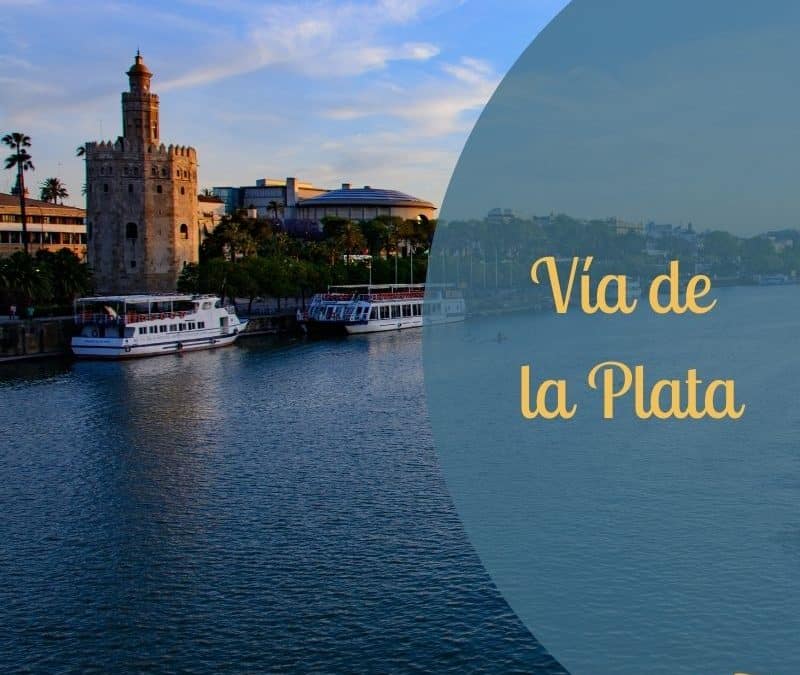
The Vía de la Plata crosses Spain from south to north, making it one of the longest Caminos in Spain. It starts in Sevilla, in the region of Andalucía and continues through Extremadura and Castilla y León, before entering Galicia.

The distance covered is around 1000 km, depending a bit on the variant you take. You have two options:

  • You can walk up to Astorga and then join the Camino Francés for the final stages (260 km).


  • Or you can head towards Galicia before you reach Astorga, through the Camino Sanabrés. Granja de Moreruela (in Zamora) is the town where you must decide which way to continue.


The Vía de la Plata is not a difficult route in terms of terrain and elevations, but you will be facing other challenges such as the weather. It is not advisable to walk it during the months of julio (July) and agosto (August) due to the extreme heat. You should still be careful in junio (June) and septiembre (September). The best months would be marzo, abril, mayo (May) and octubre (October).

The distances between towns are long and the services are few, so you need to be prepared and make sure you have enough agua and snacks to make it to the next town. It might be hard if you are planning to do shorter stages.

The signage is not as abundant as in other Caminos but it’s adequate. The Vía de la Plata follows old Roman roads, so you will also see many Roman milestones

I think I’m not making it sound very attractive, but that’s not true. It’s just not the Camino Francés, so you should adjust your expectations and be prepared. It is a much lonelier Camino (only 3.04% of pilgrims chose this route in 2017 according to the Pilgrims office statistics)* and you will be walking a lot through pastures (with lots of cattle). Some of the best cured hams come from this part of the country.

What to see on the Vía de la Plata

But it’s not all cows and pigs. The Vía de la Plata also goes through wonderful cities. In fact, it is the Camino with the highest number of towns on UNESCO’s World Heritage List:


But these are not the only interesting places to see. Zafra, in Extremadura, is a lovely medieval town worth a visit. And Zamora, in Castilla y León, is full of Romanesque arquitecture and also worth a visit.

So, do you think this is the Camino for you?


*Source: https://oficinadelperegrino.com/estadisticas/

Today’s Spanish words

Want more?

Make sure you don’t miss any posts or announcements by subscribing for free here. You’ll receive a free Spanish vocabulary guide with your first Spanish words + cultural tips. And… you’ll get access to exclusive content too.


¡Buen Camino!